
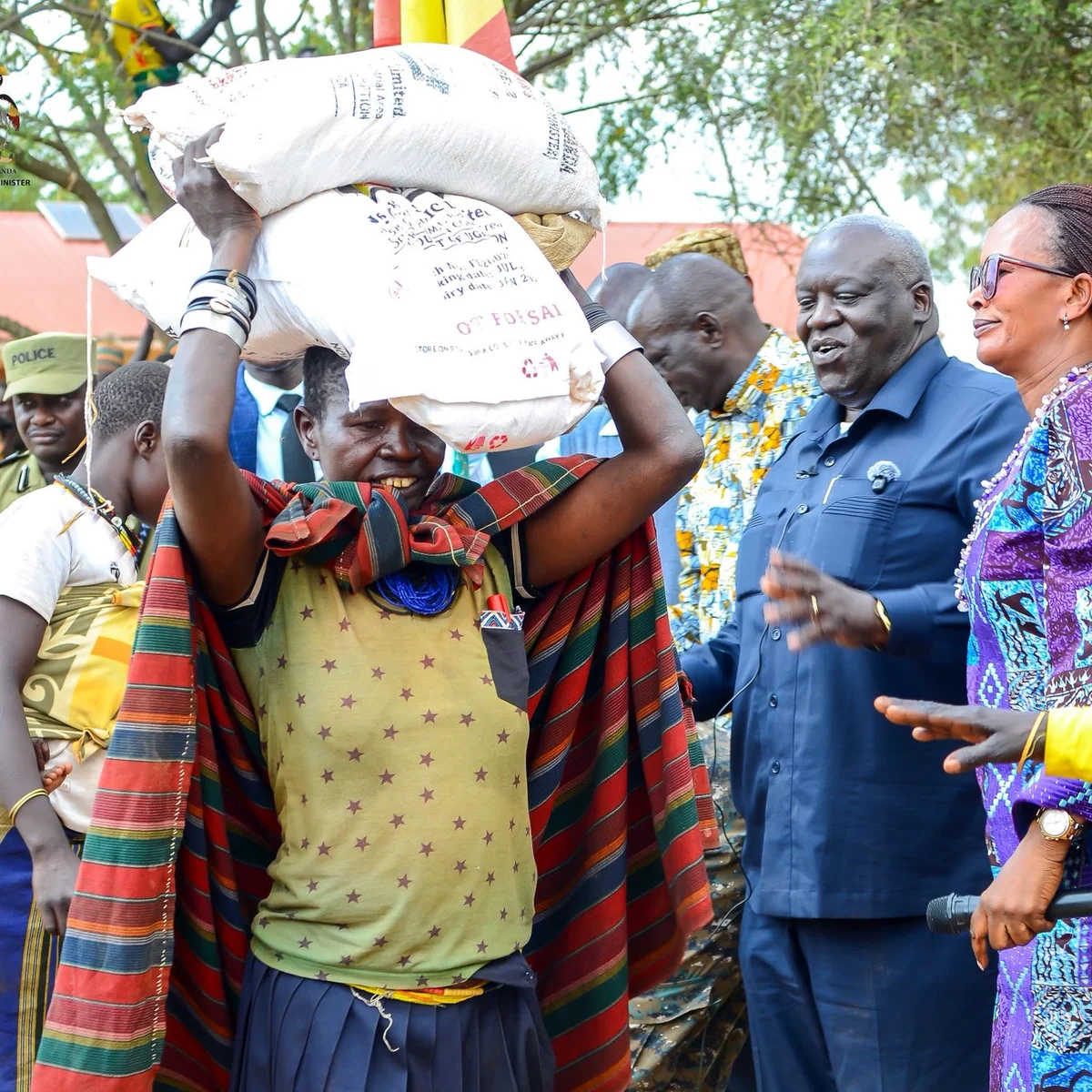
KAMPALA, October 27, 2026 – The United Nations [ UN ] and its humanitarian partners are seeking an additional US$ 50.2 million to provide emergency assistance to 560,000 vulnerable people in Uganda as prolonged drought, worsening food insecurity and anticipated El Niño-related flooding threaten livelihoods across the country.
The funding appeal comes amid warnings that the number of people facing severe food insecurity in Uganda could rise from 3.6 million to 4.4 million by June 2027, driven by climate shocks, depleted household food stocks, rising food prices and declining humanitarian assistance.
According to the El Niño and Karamoja Food Insecurity and Nutrition Crisis: United Nations-Partners’ Appeal, Uganda 2026–2027, the humanitarian response requires US$ 61.26 million, of which US$ 11.08mln is available, leaving a funding shortfall of US$ 50.19mln.
The six-month appeal, covering October 15, 2026, to April 15, 2027, targets 130,000 people in 32,000 households affected by severe food insecurity in Karamoja and another 430,000 people threatened by flooding and landslides in other parts of the country.
The planned response covers all nine districts of Karamoja, up to 28 districts exposed to El Niño-related disasters and eight refugee settlements.
The UN warns that Uganda is facing an increasingly complex humanitarian emergency, with prolonged drought devastating agricultural production in Karamoja while forecasts indicate that unusually heavy rainfall could trigger widespread flooding and landslides elsewhere.


The report states that the overlapping climate threats present an unusual challenge for humanitarian agencies, government institutions and communities already struggling with poverty, food shortages and limited access to essential services.
It warns that without timely intervention, the anticipated shocks could worsen hunger, increase malnutrition, destroy agricultural livelihoods, displace vulnerable households and heighten the risk of disease outbreaks.
Karamoja faces worst food insecurity crisis since 2018
The report identifies Karamoja as one of the country’s most severely affected regions, with an estimated 673,000 people, representing 42 percent of the sub-region’s population, already experiencing crisis-level or worse food insecurity.
Of these, approximately 118,000 people are facing emergency levels of food insecurity, the highest number recorded in the sub-region since the Integrated Food Security Phase Classification [IPC] assessments began in 2018.
The September 2026 IPC assessment attributes the deteriorating situation to prolonged drought, widespread crop failure, depleted household food reserves, high food prices and limited income-generating opportunities.
The situation is expected to worsen between November 2026 and February 2027, when the number of people facing crisis-level or worse food insecurity is projected to increase to 679,000.
The report indicates that households are increasingly struggling to secure adequate food, with some resorting to selling livestock, agricultural tools and other productive assets to survive.
Such coping strategies, although providing temporary relief, are weakening families’ capacity to recover from successive climate shocks and increasing their dependence on humanitarian assistance.
The crisis is particularly worrying for pastoral and agro-pastoral communities, whose livelihoods depend heavily on livestock production and seasonal agricultural activities.
The UN warns that the anticipated transition from prolonged drought to excessive rainfall could further damage agricultural production, increase livestock diseases, disrupt markets and destroy already fragile infrastructure.


More than 168,000 children and mothers need malnutrition treatment
The food crisis has also triggered serious concerns about the nutritional status of children and women in Karamoja.
According to the report, approximately 154,200 children below five years and 13,900 pregnant and breastfeeding women are expected to require treatment for acute malnutrition between August 2026 and February 2027.
The humanitarian response will prioritise nutrition screening, treatment and referral services, particularly in communities where access to healthcare facilities remains limited.
The report identifies an estimated 38,000 cases of severe acute malnutrition and 115,467 cases of moderate acute malnutrition requiring targeted interventions.
Health authorities and humanitarian partners plan to intensify community-based screening, strengthen treatment facilities and ensure uninterrupted supplies of therapeutic food and essential medicines.
The interventions will also include maternal and child healthcare, emergency obstetric services, disease surveillance and mobile medical outreach programmes targeting remote communities.
Particular attention will be given to vulnerable children, pregnant women and breastfeeding mothers, whose nutritional needs are often compromised during prolonged food shortages.
The UN warns that flooding could further aggravate malnutrition by contaminating water sources, damaging sanitation facilities and increasing the incidence of diarrhoea, malaria and other diseases.


El Niño threatens millions with floods and landslides
Beyond Karamoja, the report warns that anticipated El Niño-related rainfall could expose millions of Ugandans to flooding, landslides and widespread disruption of agricultural livelihoods.
Citing forecasts from the World Meteorological Organization [WMO] and Uganda’s Department of Meteorological Services [DMS], the report indicates that wetter-than-normal conditions are expected during the October–December 2026 rainfall season, with strong El Niño conditions likely to persist into early 2027.
The outlook from the 74th Greater Horn of Africa Climate Outlook Forum, released on August 18, 2026, indicates a probability exceeding 90 percent of rainfall surpassing 400 millimetres in parts of the Lake Victoria Basin.
The report warns that such rainfall could overwhelm drainage systems, increase lake and river levels and trigger flooding in densely populated and agriculturally productive areas.
A climate vulnerability assessment cited in the report indicates that approximately 12mln Ugandans, representing 26.3 percent of the population, are exposed to flooding of at least one metre in depth.
Of these, approximately 1.2mln people are considered to be at particularly high risk.
Another two million people, representing about five percent of the population, are highly exposed to landslide hazards.
The most vulnerable areas include the Mt Elgon region, Rwenzori, southwestern and northwestern Uganda, Teso, parts of Karamoja and low-lying districts hosting refugees.
The report warns that more than six million people could potentially be affected by flooding and related climate shocks across particularly exposed regions.
Semuliki River floods threaten 40,000 families
The UN report singles out the Semuliki River basin in western Uganda as an area requiring urgent preventive measures.
Hydrological assessments conducted by the Food and Agriculture Organization [FAO] identified approximately 15 kilometres of weak river embankments along the Semuliki River.
The vulnerable sections expose more than 40,000 families, 10,000 hectares of farmland and approximately 40,000 livestock to flooding.
The report warns that flooding in the Rwenzori region regularly destroys crops, damages irrigation systems, disrupts market infrastructure and isolates communities.
In the Mt Elgon region, steep terrain, environmental degradation and heavy rainfall are expected to increase the likelihood of landslides and flash floods.
These disasters could destroy agricultural produce, damage food storage facilities and disrupt transport networks, affecting both household food consumption and agricultural trade.
The report emphasises the need for early intervention to protect agricultural investments and reduce the economic and humanitarian consequences of anticipated disasters.


https://thecooperator.news/cooperatives-could-help-tackle-global-hunger-report-says/
Buy your copy of thecooperator magazine from one of our country-wide vending points or an e-copy on emag.thecooperator.news


