
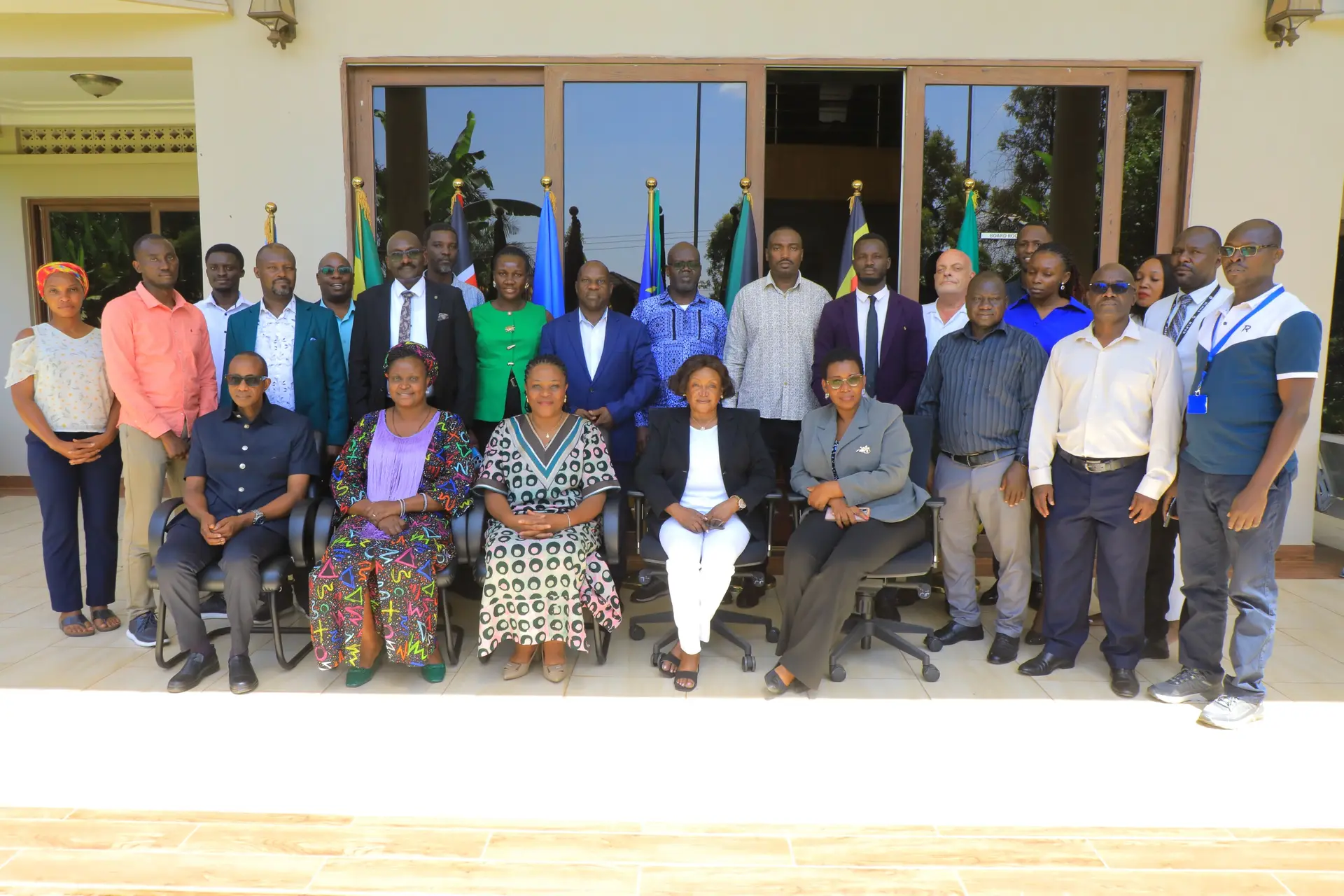
KAMPALA, August 27, 2026 — The Government of Uganda has proposed a five-year development plan worth Shs 15.1 trillion to transform the semi-arid Karamoja Sub-region, where communities largely depend on livestock herding despite years of government efforts to promote crop farming.
The region, considered one of the most underdeveloped in the country, continues to grapple with poverty, food insecurity and prolonged drought, with residents periodically facing severe hunger.
The plan, which places livestock, peace, markets and resilience at the centre of development, is supported by the Inter-Governmental Authority on Development [IGAD] and seeks to improve livelihoods, market access, health services and resilience to climate change.
Under the proposed Integrated Livestock Development, Peace-building and Resilience Enhancement for Sustainable Livelihoods in Karamoja [ILPRE-Karamoja], government aims to move the sub-region beyond a cycle of insecurity, poverty and dependence on humanitarian assistance.
The five-year plan will run from January 2027 to December 2031 under a partnership involving the Government of Uganda, IGAD and other development partners.
It is intended to consolidate years of investment in Karamoja around fewer, higher-impact interventions linking livestock production with peace, water, markets and land-use management.
Five key pillars
The plan is built around five pillars:
- Improving livestock productivity;
- Sustainable cross-border management of grazing land and water;
- Conflict prevention;
- Strengthening market systems; and
- Improving land-use governance.
Livestock remains central to livelihoods in Karamoja, but its potential to generate sustained commercial income has been constrained by insecurity, inadequate infrastructure, limited market access, climate pressures and insufficient value addition.
“Peace and social cohesion are prerequisites for communities to access markets, education, and health services,” Joselyn Bigirwa, Head of the IGAD Mission to Uganda, said during an engagement at the Office of the Prime Minister in Kampala.
She urged development partners to move beyond conventional livestock interventions and support animal health, water infrastructure, rangeland management, value addition and market access.
Bigirwa said ILPRE-Karamoja is intended to consolidate gains from the IGAD Drylands Strategy and the 14-year Karamoja Integrated Development Programme, which have supported development efforts in the region.
Building on existing programmes
The plan is expected to be implemented within Uganda’s existing national planning architecture, including the Karamoja Integrated Development Programme [KIDP] and the Fourth National Development Plan [NDPIV].
IGAD will coordinate with Operation Wealth Creation, the Office of the Prime Minister and the Ministry of Foreign Affairs.
Edith Namutebi Nsubuga, Head of the Peace and Security Department at the Ministry of Foreign Affairs, said durable security was critical to creating an environment in which development actors could focus on livelihoods and resilience.
Namutebi acknowledged that previous interventions, despite attracting substantial investment, had produced outcomes that required better coordination, sharper prioritisation and stronger accountability.
Major infrastructure investments
As approved by Cabinet, the new development plan is valued at Shs 15.1 trillion and is projected to transform Karamoja from a predominantly nomadic and agro-pastoral economy into a more settled and commercially viable economy by 2035.
Proposed flagship investments include Kidepo International Airport, an industrial park and cement plants in Moroto District.
Other planned investments include meat and hide processing facilities in Kotido and the establishment of Karamoja Peace and Technology University.
The plan also proposes expanding boarding facilities for primary and secondary schools, subsidising tertiary education for Karimojong students and establishing a dedicated water budget to address the region’s persistent water shortages.
Poverty and food insecurity
According to the 2023/24 National Household Survey, poverty in Karamoja stands at 74.2 per cent, alongside persistent food insecurity and significant infrastructure deficits.
Officials at the consultation stressed that the success of the plan will depend on disciplined implementation, community ownership and accountability.
They warned that the Shs 15.1 trillion investment must translate into productive capacity on the ground rather than becoming another cycle of disconnected projects that fail to deliver lasting transformation.
A region under climate pressure
Located in northeastern Uganda, the Karamoja Sub-region covers 27,528 square kilometres and comprises the districts of Kotido, Kaabong, Karenga, Nabilatuk, Abim, Moroto, Napak, Amudat and Nakapiripirit.
According to data from the Uganda Bureau of Statistics [UBOS] 2022, the region is home to approximately 1.4 million people.
Karamoja faces significant water scarcity, with most water sources being seasonal and heavily affected by unreliable and uneven rainfall. This has contributed to prolonged periods of extreme dry spells.
Climate extremes in Karamoja, including unpredictable rainfall, bushfires, droughts, floods and landslides, are becoming more frequent and intense.
These conditions threaten livelihoods, food security and social stability in the semi-arid region, whose communities also depend heavily on communal forests.
The World Bank Food Security Update 2025 estimates that 61.6 million people are currently food-insecure in East Africa, while nearly 50 million people are projected to face food insecurity in Western and Central Africa, with Karamoja particularly hard-hit.
The worsening food security crisis, compounded by drought, highlights the urgent need for comprehensive and coordinated interventions to address the interconnected challenges of climate change, water scarcity and food insecurity in the Karamoja Sub-region.
https://thecooperator.news/govt-flags-off-food-relief-to-drought-hit-karamoja/
Buy your copy of thecooperator magazine from one of our country-wide vending points or an e-copy on emag.thecooperator.news
-

-

-

-


