
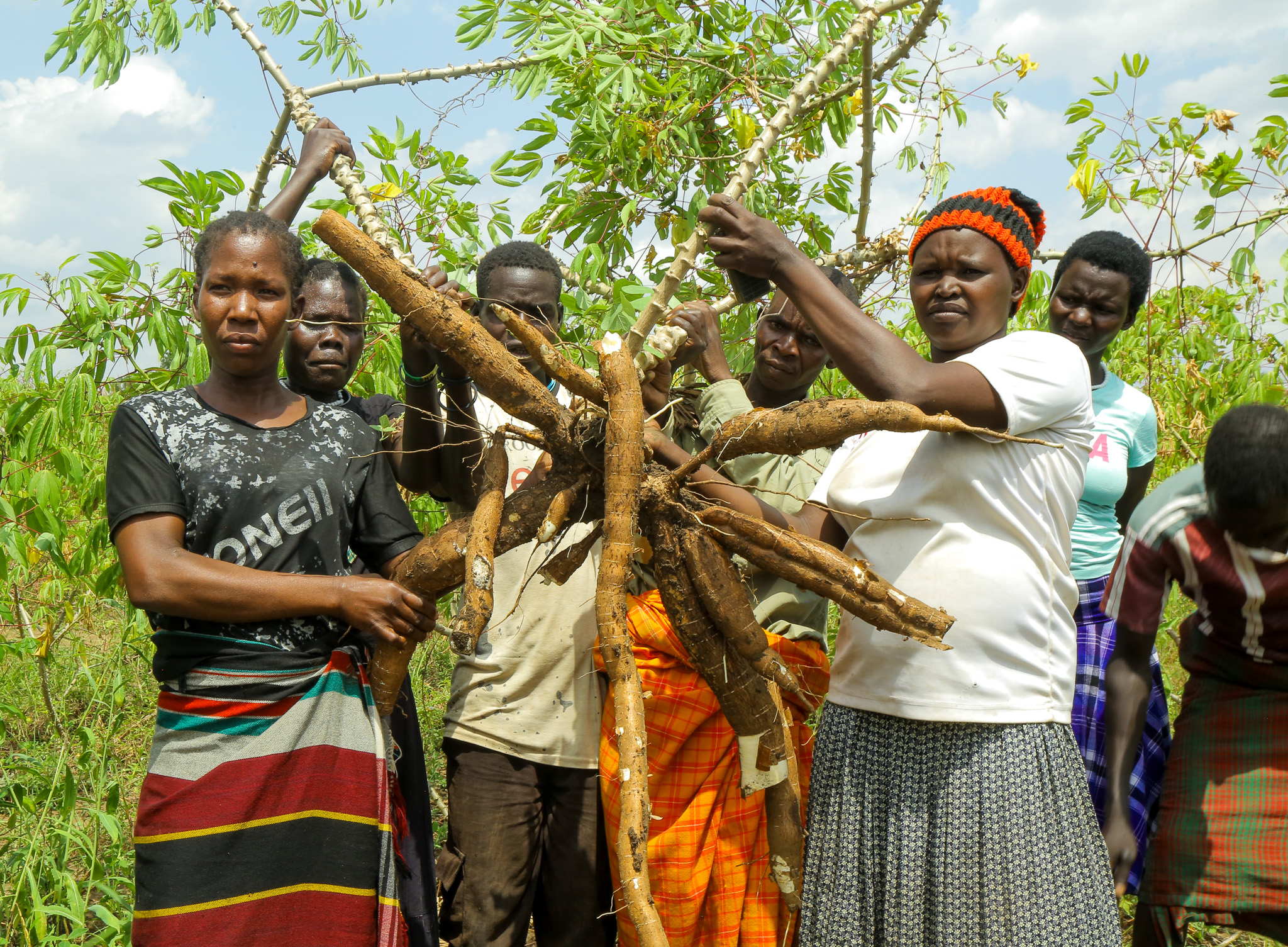
MOROTO, September 7, 2026 — An EU-funded project has strengthened food production, household incomes and resilience to climate shocks among communities in Karamoja, as the region grapples with its worst drought since 2022.
The gains were highlighted at the final closure workshop of the Improving Food Security and Resilience of Food Production Systems in Karamoja [FOSTER] Project, held in Moroto town recently.
The workshop brought together representatives of the European Union, the Government of Uganda, the Food and Agriculture Organisation of the United Nations [FAO], the World Food Programme [WFP], district local governments, development partners and implementing organisations to review the project’s achievements, lessons and prospects for sustaining and scaling up its interventions.
The workshop followed the project’s Fourth and Final Steering Committee Meeting and field visits to selected project sites, where participants assessed the impact of FOSTER investments on agricultural production, livelihoods and community resilience.
Funded by the European Union [EU] with €5 million, FOSTER was implemented jointly by FAO and WFP in partnership with the Government of Uganda between September 2023 and August 2026.
The project directly supported 16,000 households and more than 80,000 people across Karamoja’s nine districts.
The project’s closure comes as Karamoja faces severe drought conditions. Stakeholders said humanitarian assistance remains essential to address immediate needs, but warned that it must be accompanied by long-term investment in resilience to enable communities to withstand and recover from recurring climate shocks.
Without sustained investment, they said, droughts will continue to undermine livelihoods, increase humanitarian needs and slow development.
Opening the meeting on behalf of FAO, James Terjanian said FOSTER had demonstrated the value of investing in agriculture, local institutions and community resilience.
“The resilience built by the project helped vulnerable households cope with the debilitating drought that has struck the region this year. The project presents a model that could help Karamoja move away from dependence on humanitarian assistance,” Terjanian said.
Increased production and household incomes
FOSTER established and strengthened 300 Farmer Field School groups and trained 9,120 farmers in climate-smart agriculture and livelihood diversification, including 5,761 women.
The project also trained 443 extension workers and other frontline agricultural service providers, including community animal health workers and community extension facilitators, to bring crop and livestock advisory services closer to communities.
The interventions have also provided a platform for government programmes, including the Parish Development Model [PDM], the Ministry of Agriculture, Animal Industry and Fisheries’ Uganda Climate-Smart Agricultural Transformation Project [UCSATP], the Uganda Intergovernmental Fiscal Transfer Programme [UGIFT] and the National Agricultural Mechanisation Programme [NAMP].
In Abim district, one Farmer Field School group cultivated 40 acres of maize using mechanisation, improved seed and better agronomic practices. The group harvested about 400 bags of grain, earning Shs 65 million in one season while retaining part of the harvest for household consumption.
Across Karamoja, about 70 per cent of supported groups are producing vegetables and earning at least Shs 2 million per harvest, with some groups harvesting up to three times a year.
Poultry enterprises have also generated income. One group in Abim earned Shs 9 million from the sale of 300 chickens, while two women’s groups in Amudat collectively earned Shs 13.5 million from poultry activities.
Moroto Resident District Commissioner Benon Kwikiriza said the project’s contribution to household food security was evident during field visits.
“As I moved with FAO teams in the district, I observed that all the groups that were supported under FOSTER were able to harvest their crops and did not suffer hunger like most households in the region,” Kwikiriza said.
The project trained 300 farmer groups in business development, while 65 groups received productive assets and in-kind grants worth about Shs 1 billion.
Two farmer cooperatives received tractors and implements, enabling beneficiaries to plough more than 100 acres within two weeks.
Through Village Savings and Loan Associations [VSLAs], participating farmer groups mobilised about Shs 1.35 billion in savings. A further 170 groups were linked to financial institutions, while 21 accessed loans through Savings and Credit Cooperative Organisations [SACCOs].
Early warning and climate resilience
FOSTER also strengthened communities’ ability to anticipate and respond to climate-related shocks.
The project reached approximately 1.35 million people with climate information and early-warning messages and supported the production of 198 district-specific and 22 regional early-warning bulletins.
It also supported the installation of two automated weather stations to improve climate monitoring and information.
Anticipatory cash transfers reached 11,453 households in the districts of Napak, Karenga, Kotido, Moroto and Kaabong, enabling vulnerable families to prepare for and respond to climate-related shocks before they escalated into crises.
Water investments benefited more than 251,000 people, including through the rehabilitation of 45 boreholes, nine piped water systems, six micro-scale irrigation systems and one valley tank.
The project also strengthened 18 tree nurseries, distributed 10,000 fruit-tree seedlings and established demonstration sites for integrated crop, livestock and tree production.
“These achievements confirm an important lesson: when communities are equipped with knowledge, productive assets, market opportunities and timely information, they become more resilient, more productive and better able to withstand shocks,” Terjanian said.
Calls to sustain FOSTER gains
With the project now concluded, stakeholders called for successful FOSTER interventions to be integrated into district plans, budgets and government programmes.
Priority areas identified for continued investment include water production, mechanisation, quality seed systems, agro-processing, extension services, agroforestry, digital agriculture and early-warning systems.
Participants also identified cassava as a strategic crop for strengthening food security in Karamoja.
They noted that while traditional cereals suffered significant losses during the 2026 drought, cassava demonstrated greater drought tolerance and continued to provide food for households participating in project-supported demonstrations.
Stakeholders called for increased community seed multiplication, improved access to disease-tolerant planting materials and investment in processing and value addition to strengthen local cassava value chains and household resilience.
Terjanian thanked the European Union for funding the project and recognised the contributions of WFP, the Ministry of Agriculture, Animal Industry and Fisheries [MAAIF], the Office of the Prime Minister, other government institutions and district local governments in its implementation.
https://thecooperator.news/how-the-shs-15-trillion-plan-will-transform-drought-hit-karamoja/
Buy your copy of thecooperator magazine from one of our country-wide vending points or an e-copy on emag.thecooperator.news
-

-

-

-


