
KAMPALA, October 22, 2026 — Uganda’s agriculture sector grew by 6.4 percent in the 2025/2026 financial year, exceeding its 10-year average of 4.2 percent, according to the Ministry of Agriculture, Animal Industry and Fisheries [MAAIF].
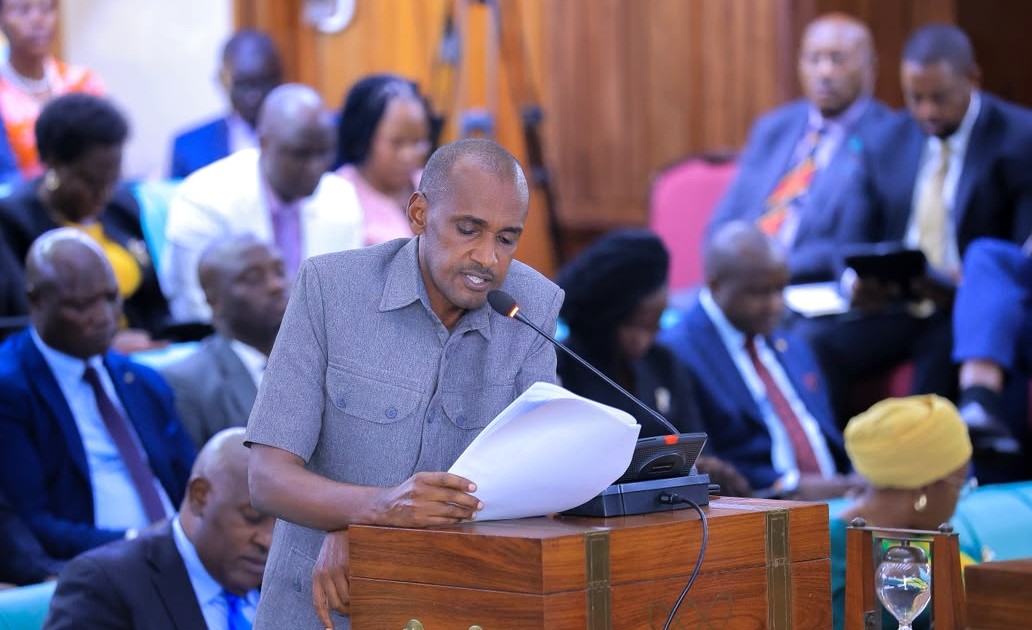
Presenting the sector’s performance report to Parliament on Wednesday, Agriculture Minister Frank Tumwebaze said the sector now contributes 26.2 percent of Uganda’s Gross Domestic Product [GDP], with about 7.1 million of the country’s 10.8mln households depending on the sector for employment.
Tumwebaze also reported a significant increase in cocoa earnings, which rose from US$ 93mln in the 2022/2023 financial year to US$ 620mln, underscoring the crop’s growing contribution to export revenue.
Despite the growth, the ministry acknowledged persistent challenges, including gaps in livestock vaccination, agricultural mechanisation and the establishment of planned facilities.
Tumwebaze said the government would prioritise mechanised agriculture over the next five years to boost production and drive rural transformation, noting that dependence on human labour and unpredictable weather remained major constraints to agricultural productivity.
He said mechanisation would enable farmers to cultivate larger areas more efficiently, support value addition, create jobs and stimulate the development of related businesses and infrastructure.
Irrigation, he added, would help farmers produce more consistently throughout the year amid increasingly unpredictable weather patterns.
To expand mechanisation, the government plans to provide 10,000 tractors over the next five years to increase the utilisation of arable land and make agricultural machinery more accessible and affordable.
“Our policy strategy proposes two lines of intervention, that is the establishment and operationalisation of 21 mechanisation centres and a cost-sharing approach to tractor acquisition involving government, commercial farmers, and producer groups,” Tumwebaze said.
Since 2018, the government has acquired and distributed 1,080 assorted tractors, together with their implements, and 1,350 single-axle walk-behind tractors fitted with various accessories.
“This equipment is directly allocated to farmers, farmer groups, associations and institutions through a memorandum of understanding signed between the beneficiaries and the ministry,” he said.
The minister added that 2,036 tractor operators and technicians had been trained at the Namalere Mechanisation Centre and deployed across the country to ensure the safe, efficient and productive use of the equipment.
Irrigation expansion
On irrigation, Tumwebaze said the ministry was working with the Ministry of Water and Environment to reduce agriculture’s dependence on rainfall and stabilise production.
“Following guidance from H.E the President and the directive from Cabinet, the ministry in collaboration with Ministry of Water and Environment has submitted a detailed National Irrigation Development Plan to Finance Ministry for funding under a project called the National Irrigation Development Project [NIDEP] proposed to cover the whole country,” he said.
The proposed project aims to strengthen food security through climate-resilient agriculture and improve income security through sustainable commercial farming.
According to Tumwebaze, the Ministries of Agriculture and Water have completed 10 large-scale irrigation schemes, increasing the area under formal irrigation by 7,203 hectares.
The completed schemes include Doho II rice irrigation scheme in Butaleja district, Ngenge in Kween District and Mubuku II in Kasese district.
Other schemes under construction include Kabuyanda in Isingiro district, Namaitsu in Bududa district and Chembobai in Bukwo district.
PDM financing
Tumwebaze also credited the Parish Development Model [PDM] with improving household economies, particularly among communities that depend largely on agriculture.
He said the programme had expanded financial inclusion, especially for smallholder farmers who previously had limited access to formal financial services.
The government has cumulatively injected Shs4.4 trillion into parish savings and credit cooperative organisations [SACCOs] since the programme was introduced five years ago, according to the minister.
For medium- and large-scale farmers who are not covered by the PDM, Tumwebaze said the government would continue implementing other support interventions under the Agriculture Value Chain Development Strategy.
He said agriculture’s contribution to GDP had risen from a 10-year average of 23 percent to 26.2 percent by the end of the 2025/2026 financial year.
The sector also accounts for an average of 40 percent of Uganda’s export earnings, highlighting its importance to the country’s economy.
Members of Parliament are expected to debate the minister’s report during next week’s plenary sittings.
Buy your copy of thecooperator magazine from one of our country-wide vending points or an e-copy on emag.thecooperator.news
-

-

-

-


