
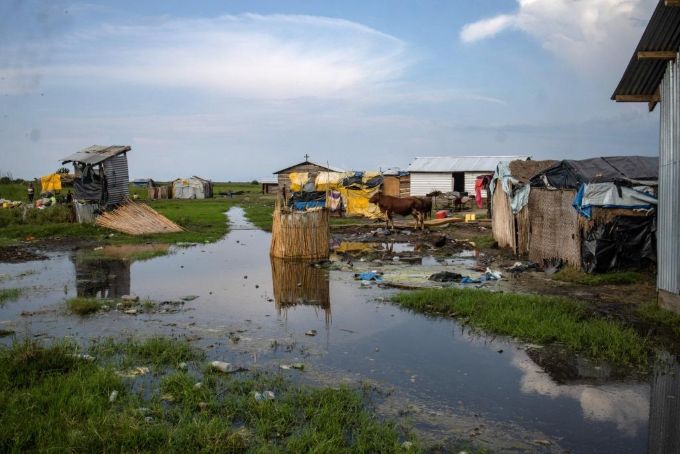
KAMPALA, September 7, 2026 — The United Nations Children Fund [UNICEF] has issued an urgent call for immediate action to protect children across Eastern and Southern Africa from a rapidly escalating climate crisis, warning that more than 162 million children — representing over two-thirds of all children in the region — live in areas exposed to the impacts of the strengthening 2026/2027 El Niño phenomenon.
Intensifying drought, extreme heat and severe flooding threaten children’s nutrition, health and safety, as well as their access to safe water, sanitation and education. Current meteorological forecasts provide a narrow but critical window to act before the most devastating consequences are felt on the ground.
“The threat from El Niño is growing, and the risks for children are already clear,” warned Etleva Kadilli, UNICEF Regional Director for Eastern and Southern Africa. “Across the region, children are facing food and water insecurity, overstretched health services and disrupted learning. Further major climate shocks will likely push children and the systems they rely on to breaking point.”
UNICEF assessments highlight overlapping risks across 13 priority countries: Djibouti, Eritrea, Ethiopia, Kenya, Madagascar, Malawi, Mozambique, Somalia, South Sudan, Sudan, Uganda, Zambia and Zimbabwe.
Under worst-case scenario mapping in Somalia, flooding could directly affect up to 2.5 million people, causing widespread displacement and cutting off access to basic health and education services.
In Ethiopia, tens of thousands of vulnerable children in food-insecure areas face heightened risks, while in South Sudan, drought, extreme heat and localised flooding threaten to compound famine risks and drive large-scale displacement.
Despite these forecasts, less than one per cent of international humanitarian assistance is currently allocated to anticipatory action, even though early intervention is essential to saving lives and protecting hard-won development gains.
Every dollar invested in disaster risk reduction can save up to 15 dollars in future recovery costs. UNICEF is therefore appealing for US$ 173 million within its existing 2026 Humanitarian Action for Children requirements.
The funds would be used to pre-position life-saving nutrition supplies, strengthen disease surveillance and vaccination campaigns, protect safe water systems, construct alternative learning spaces and expand shock-responsive social protection mechanisms, including anticipatory cash assistance, across the 13 affected countries.
“We know what is coming, which children are most at risk and how to protect them,” Kadilli emphasised. “The choice is whether the world responds now, or waits until the crisis escalates, and children pay an even greater price.”
Uganda demonstrates impact of early action
In Uganda, practical climate-adaptation measures demonstrate the profound impact of timely intervention.
Two new solar-hybrid piped water supply systems have eliminated exhausting three-kilometre journeys to collect water for thousands of refugees in mid-western Uganda.
Funded by the European Union’s Civil Protection and Humanitarian Aid Operations and implemented by UNICEF in partnership with the Lutheran World Federation, the three-month project has increased daily water availability from nine litres to 20 litres per person.
The increase meets international standards while reducing the burden of water collection and giving women and children more time to pursue education and economic activities.
https://thecooperator.news/can-agricultural-insurance-shield-ugandas-farmers-from-el-nino/
Buy your copy of thecooperator magazine from one of our country-wide vending points or an e-copy on emag.thecooperator.news
-

-

-

-


