
KAMPALA, November 2, 2026 — Recent climate alerts from Uganda’s Ministry of Water and Environment indicate an elevated risk of El Niño weather conditions. This phenomenon brings above-normal rainfall, flash floods, severe weather disruptions, and landslides across the country. For an economy deeply rooted in agrarian livelihoods, unmitigated climate shocks threaten crop yields, household food security, and rural financial stability.
El Niño originates from warm air coming from the Pacific Ocean, which leads to excessive rainfall in the East African region. While crop growth requires water, an overabundance of rain causes severe damage. Excessive rain prevents crops from receiving necessary sunlight to manufacture and store food. It causes root tubers—such as cassava and potatoes—to rot in silty soil, while prolonged waterlogging leads to crop suffocation and death. Additionally, heavy rainfall causes soil erosion that carries away essential nutrients, forcing farmers to bear higher costs for fertilizers. Deep rainfall also leaches soils, washing nutrients down to levels inaccessible to plant roots.
Mitigating and Transferring Risk
To prepare for these events, farmers must implement physical risk-mitigation measures. Those in low-lying areas should clear run-off trenches to prevent standing water. Farmers on mountain slopes are encouraged to plant trees and establish contour bands to stabilize soil and control erosion.
However, physical preparation alone cannot completely prevent damage when disaster strikes. Farmers must also engage in risk transfer through agricultural insurance. Pre-disaster financial mechanisms compensate farmers for climate-induced losses, providing stability when mitigation measures fall short.
The Ripple Effect of Climate Disasters
Climate shocks impact stakeholders across the entire agricultural value chain:
- Small-Scale Farmers: Relying on agriculture for their entire livelihood, smallholders risk having their income completely wiped out by a single severe season. Suffering losses over consecutive seasons destroys their ability and morale to reinvest, forcing them into financial dependency.
- Commercial Farmers: Commercial growers rely heavily on borrowed capital to invest in equipment, inputs, and machinery. Crop losses severely undermine their ability to repay loans, impairing their credit ratings. Consequently, they face difficulties securing future loans or are subjected to high interest rates due to being categorized as high-risk borrowers.
- Financial Institutions: Banks and lenders face rising non-performing assets when farmers default. To offset risks and maintain regulatory standards set by the Bank of Uganda, financial institutions may be forced to increase overall interest rates, which depresses overall agricultural lending.
- General Consumers: Non-farmers are affected as reduced agricultural output leads to food supply shortages and rising market prices.
Shifting from Relief to Pre-Disaster Planning
Traditionally, responses to climate shocks have relied on post-disaster humanitarian relief. However, emergency relief functions only as a temporary fix; while it provides food for immediate survival, it cannot replace lost investment capital, pay school fees, or protect lenders from default.
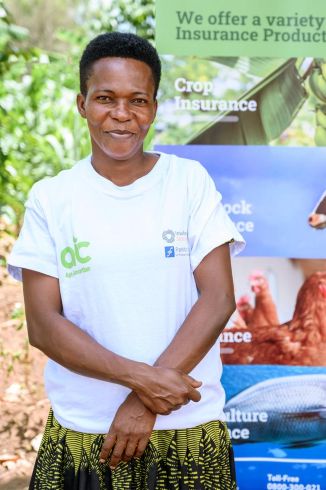
To address these vulnerabilities, the Uganda Agriculture Insurance Scheme [UAIS]—implemented through Agro Consortium [AIC]—works to de-risk agricultural investments. As explained by John Makosya, Chief Operations and Impact Officer at AIC, UAIS establishes pre-disaster financial structures that guarantee expected incomes, allowing smallholders, commercial growers, and Savings and Credit Co-operative Organisations [SACCOs] to recover, reinvest, and sustain operations.
Tailored Insurance Products
AIC provides specialised insurance coverage adapted to different agricultural operations:
- Multiple Crop Insurance: Designed for large-scale farmers, this policy covers losses caused by multiple combined risks, including flooding, excessive rainfall, windstorms, and hailstorms. It also accounts for secondary effects, such as increased outbreaks of pests and diseases triggered by heavy rains, helping cover the elevated costs of crop protection.
- Area Yield Index Insurance: Tailored for smallholders operating on less than five acres with seasonal incomes under Shs 20 million. This product protects against risks including drought, excessive rainfall, hailstones, and uncontrollable pest or disease outbreaks.
- Livestock Insurance: Protects livestock owners against animal mortality.
For more information on agricultural insurance in Uganda, visit: https://www.aic.ug/
https://thecooperator.news/can-agricultural-insurance-shield-ugandas-farmers-from-el-nino/
Buy your copy of thecooperator magazine from one of our country-wide vending points or an e-copy on emag.thecooperator.news
-

-

-

-


