
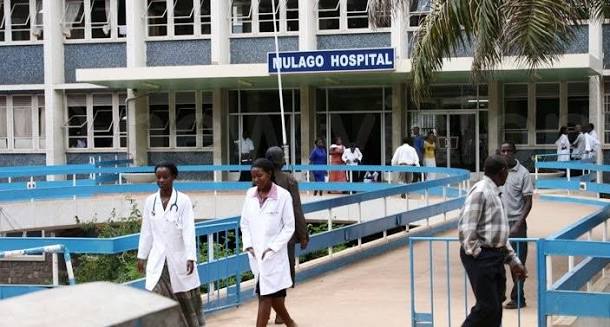
KAMPALA, November 26, 2026 – The Ministry of Health plans to recruit 17,000 health workers over the next 10 years to address staffing shortages in regional referral hospitals and public health facilities across the country.
The Minister of State for Health in charge of Primary Health Care, Charles Ayume, disclosed this during a plenary sitting of Parliament on Tuesday, where legislators debated reports by the Committee on Health.
The reports followed oversight visits by the committee to national referral hospitals in the Kampala Metropolitan Area and regional referral hospitals in Eastern Uganda.
Ayume said the Ministry of Health, in collaboration with the Ministry of Public Service, had revised and expanded staffing norms to accommodate the growing demand for health services, including specialised care.
He cited Health Centre IVs, whose staffing requirements had increased from 48 to 150 health workers under the revised staffing norms.
The planned recruitment, he said, would increase the country’s health workforce staffing level from the current 33 per cent to 55 per cent.
“All this needs money, but deploying health workers to facilities without the necessary infrastructure, equipment or staff accommodation would not provide value for money. We therefore have to implement the recruitment in phases,” Ayume said.
His remarks followed concerns raised by MPs over persistent staffing shortages in public hospitals and health centres across the country.
The Rukiga County Member of Parliament [MP] Patrick Kiconco Katabaazi called for the deployment of specialist doctors to regional referral hospitals, particularly geriatricians and paediatricians, to improve access to specialised healthcare.
He said Uganda had only three specialists in geriatric medicine, one working at Mulago National Referral Hospital and two in the private sector.
“Diseases affecting older persons have been changing over time, yet we have only three specialised doctors for older persons in Uganda. One is employed at Mulago Hospital and two are in the private sector,” Kiconco said.
He also expressed concern over the shortage of specialised paediatric nurses, saying the country needed more nurses trained to handle children’s healthcare needs.
Kiconco urged government to support the Jinja School of Nursing and Midwifery to train more nurses specialising in child healthcare, saying this would contribute to reducing child mortality.
Buzaaya County MP Martin Mugabi also called on Parliament to prioritise funding for the recruitment and deployment of health workers in the Ministry of Health’s budget.
Meanwhile, Burahya County MP Joseph Mugyenyi raised concerns over the high cost of ambulance services, saying many ordinary Ugandans could not afford emergency transportation to health facilities.
He said legislators were frequently forced to contribute money to help patients access ambulance services, particularly those requiring referrals to hospitals outside their districts.
“Every week, I get calls from Fort Portal to sponsor patients to go to hospitals outside Kabarole. The ambulance cost for the driver and attendant nurse is high, and fuel prices have also gone up,” Mugyenyi said.
He urged the government to provide adequate funding for ambulance operations, including fuel and staff facilitation, in the next financial year.
Mukono District Woman MP Sheilah Amaniyo said communities on the islands lacked reliable access to ambulance services, citing the Koome Islands, where the water ambulance often lacked fuel.
She said some expectant mothers had been forced to give birth in locally operated boats because they could not afford the cost of fuelling the ambulance to transport them to the mainland.
“This month, we had about eight women giving birth on local boats because they did not have money to fuel the ambulance to bring them to the mainland, which costs about Shs 800,000. I would like the Ministry of Health to look into this matter urgently,” Amaniyo said.
In response, Ayume said the government had started procuring 52 ambulances using the Shs 20 billion allocated under the 11th Parliament.
The procurement covers 50 Type B ambulances and two Type A ambulances, which are expected to improve access to emergency and referral services.
Type A ambulances are designed to transport stable, non-emergency patients, while Type B ambulances provide basic life support and stabilisation for emergency patients.
Ayume urged MPs to increase the annual allocation for ambulance procurement, saying sustained funding would help address the country’s ambulance shortage.
“If we continue allocating Shs 20bln every financial year for the next three financial years, the issue of ambulances should be history. I call upon you, colleagues, during the budgeting cycle to even double the allocation to Shs 40bln so that we can buy about 100 units in the next financial year,” he said.
The minister also said the government planned to expand healthcare services in island communities by establishing more health facilities to bring services closer to residents.
He added that the government was considering the use of smaller fibre boats to improve movement between islands and strengthen healthcare capacity through the provision of facilities such as X-ray services.
The plenary sitting was chaired by Deputy Speaker Thomas Tayebwa.
Buy your copy of thecooperator magazine from one of our country-wide vending points or an e-copy on emag.thecooperator.news


