
SOROTI CITY, November 18, 2026 – The Government of Uganda has been urged to integrate community-led monitoring into routine health service oversight to ensure that concerns raised by patients and communities translate into improvements in healthcare delivery.
The call follows findings from 40 health facilities across eight districts, which revealed persistent challenges, including medicine stock-outs, understaffing, poor infrastructure, long waiting times and delays in accessing healthcare.
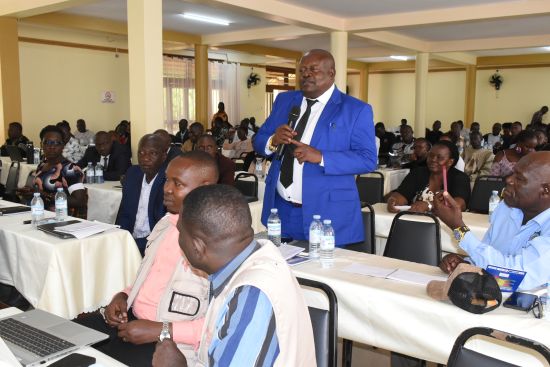
The findings were presented at a regional community-led monitoring [CLM] dialogue symposium held at Sparrow Hotel in Soroti City recently. The meeting brought together district leaders, health officials, community organisations and other stakeholders to examine service delivery gaps and identify possible interventions.
The discussions centred on how evidence gathered by communities could be incorporated into government planning, budgeting, supervision and performance reviews rather than remain confined to individual projects supported by external funding.
Kiplangat Walter, the programme’s Monitoring and Evaluation Officer, said the third cycle of community-led monitoring covered 40 health facilities in Kotido, Abim, Moroto, Amudat, Amuria, Kapelebyong, Dokolo and Bugiri districts.
Project supervisors from participating implementing organisations presented the findings, providing district leaders and health service providers with an opportunity to examine the challenges and discuss possible responses.
Existing government accountability structures
Uganda already has constitutional provisions requiring government to ensure the delivery and oversight of public services, including healthcare.
National Objective XX of the Constitution requires the State to take all practical measures to ensure the provision of basic medical services to the population.
Article 176 also provides for local governments to oversee government employees delivering services in their areas and monitor the implementation of government programmes and projects.
These provisions provide a basis for incorporating community-generated evidence into existing government accountability mechanisms.
The Ministry of Health has also established standards intended to improve accountability in healthcare delivery.
In March 2026, the ministry launched its Client Charter and Service Delivery Standards, outlining the services citizens should expect, the standards governing healthcare delivery and the rights and responsibilities of patients and health workers.
The framework provides for public feedback, reporting of service delivery gaps and mechanisms for seeking redress.
Community-led monitoring could complement these arrangements by providing organised evidence from patients and other service users to help authorities identify recurring problems that may not be adequately captured in routine administrative reports.
However, stakeholders observed that having accountability frameworks in place does not automatically guarantee that concerns raised by communities are acted upon.
They called for clear procedures to ensure that monitoring findings reach responsible government offices, inform planning and result in corrective action.
Medicine shortages, understaffing persist
Presentations at the symposium highlighted challenges affecting healthcare delivery across the participating districts.
Naluwede Edith Kotenge, a team leader involved in monitoring in Bugiri District, presented findings from 14 health centres, identifying long waiting times, medicine stock-outs, laboratory delays and inadequate patient privacy among the concerns reported.
Other issues raised included land ownership disputes affecting government health facilities, insecurity in some communities and the need to strengthen training for community health extension workers.
Understaffing also emerged as a recurring challenge across the monitored facilities.
The findings highlighted the need for district authorities to strengthen supervision, improve health facility management and address resource constraints affecting service delivery.
For instance, recurring medicine shortages require authorities to examine procurement, supply and distribution arrangements, while prolonged waiting times and inadequate staffing should inform human resource planning.
Similarly, electricity and internet challenges require investment in health facility infrastructure to ensure that essential services are not disrupted.
For patients, these shortcomings can mean spending hours waiting for treatment, leaving facilities without prescribed medicines or struggling to access timely medical attention.
Stakeholders argued that the findings should inform government planning and supervision rather than simply be documented and discussed at meetings.
Amudat reports critical staffing levels
Amudat District provided an illustration of the human resource challenges facing health service delivery.
The District Health Officer reported that staffing levels stood at 18 per cent during the regional discussion, pointing to a severe shortage of health workers.
Amudat Resident District Commissioner Denis Okori said the district has 11 sub-counties, with seven health facilities operating at Health Centre II level.
He described staffing as critically low, adding that recruitment had been complicated by political issues.
The situation highlights the difficulties facing a district expected to provide healthcare to communities spread across a wide geographical area.
Okori also thanked Doctors with Africa CUAMM for providing fuel for the district ambulance used to assist pregnant women.
Although the support helps address immediate transport needs, it also raises questions about the sustainability of essential referral services and the ability of district authorities to maintain functional ambulances without relying on project assistance.
Stakeholders called for government intervention to address wage-bill constraints, improve coordination concerning health workers pursuing further studies and strengthen continuous professional mentorship.
They said community monitoring could help identify areas with the greatest staffing shortages and provide evidence to guide recruitment, deployment and retention decisions.
Digital health systems face implementation challenges
Government efforts to modernise healthcare delivery have also exposed challenges that could undermine access to services if not addressed.
Akongo Sophia Lowari, NARWOA’s Project Officer, raised concerns about delays associated with electronic patient registration, saying the process could slow down patients seeking medical attention.
She also highlighted challenges relating to health workers taking study leave.
Other participants reported that electronic devices, including tablets, sometimes froze during use, while poor internet connectivity affected the operation of digital health systems in some facilities.
Stakeholders called for improved internet access, appropriate equipment and practical support for health workers using electronic systems.
They also noted that the Ministry of Health had procured new tablets, although reliable connectivity remained a challenge.
The discussions highlighted the need for government to look beyond procuring digital devices and invest in the infrastructure, technical support and training required to ensure their effective use.
Participants warned that patients should not bear the cost of technological and administrative weaknesses through unnecessarily prolonged waiting times.
Ministry backs institutionalisation of community monitoring
Dr George Opentho, Commissioner for Community Health at the Ministry of Health, said the ministry recognises community-led monitoring as an important accountability mechanism and supports efforts to institutionalise the approach.
He indicated that work towards developing a national framework for community-led monitoring had advanced within the ministry.
Opentho, however, cautioned that the approach should complement rather than replace existing accountability mechanisms, including community barazas and routine performance reviews.
He said community evidence should inform discussions on health service performance, with citizens actively involved in identifying the indicators used to assess service delivery.
“There is nothing for us without us,” he said, emphasising the importance of community participation in monitoring public health services.
He also highlighted the potential to expand community-led monitoring beyond HIV services to other health priorities, including nutrition.
The ministry’s position provides an opportunity to integrate community-generated evidence into routine health sector planning and supervision.
However, institutionalising the approach will require clear responsibilities, implementation guidelines, sustainable financing and mechanisms to ensure that findings lead to corrective action.
A national framework would need to establish how community monitoring findings are received, assessed and referred to responsible offices, as well as how they are incorporated into district and national health planning.
It would also need to provide for feedback to patients and community monitors on complaints and concerns raised.
District leaders urged to act on findings
Stakeholders warned that community-led monitoring would have limited impact if findings were not followed by concrete interventions from district and national authorities.
Kotido Resident District Commissioner Charles Ichogor said he had worked with the NARWOA team to visit health facilities after receiving information from community advocates, sometimes offering his vehicle to facilitate the visits.
He called for action against health workers found issuing incorrect prescriptions and urged the Ministry of Health to address medicine stock-outs.
Ichogor also recounted cases involving two patients who reportedly required surgery but faced delays because of electricity challenges at a health facility.
The cases, he said, demonstrated the importance of community monitoring in alerting authorities to problems requiring urgent intervention.
However, stakeholders noted that such interventions should become part of routine government supervision rather than depend on individual leaders responding to emergencies.
Amuria District representative Etonu Vincent said community monitoring had helped district leaders access information about service delivery challenges and enabled residents to participate in assessing the quality of services in their communities.
He appealed for continued support to sustain the monitoring activities and improve healthcare delivery.
Dr Bernard Michael Etukoit, Executive Director of The AIDS Support Organisation (TASO), described community-led monitoring as a powerful social accountability mechanism, emphasising the importance of clearly defined leadership and accountability structures.
Using school management as an example, he said every level of the monitoring process needed identifiable people responsible for receiving information, taking action and ensuring accountability.
His remarks highlighted the need for clear lines of responsibility linking community monitors, health facility managers, district health departments and local government leaders.
One way of achieving this would be to incorporate community monitoring findings into routine District Health Management Team meetings, health facility supervision, quarterly performance reviews and district health work plans.
Where identified gaps require additional resources, the findings should inform budget discussions and priorities for subsequent financial years.
District authorities would also need to assign responsibility for implementing agreed interventions, establish timelines and provide feedback to communities.
Donor funding raises sustainability concerns
The initiative is funded by the Global Fund through TASO, with Doctors with Africa CUAMM supporting the programme.
Chemuko Wakuri Fred, a substantive representative for the Malaria Constituency on Uganda’s Country Coordinating Mechanism for the Global Fund, emphasised local ownership as a key requirement for sustainability.
He encouraged community organisations and district leaders to take responsibility for the monitoring process rather than regard it as an activity belonging exclusively to implementing organisations or external funders.
Dr Peter Lochoro, CUAMM’s Country Representative in Uganda, acknowledged that the monitoring process had helped stakeholders identify service delivery challenges and possible solutions.
He encouraged organisations to document problems openly and said he would advocate for the continuation of the activities if additional funding became available.
Their remarks highlighted concerns about the future of donor-supported accountability initiatives when project funding ends.
Stakeholders said government should consider integrating community monitoring into existing public health structures and establishing sustainable financing arrangements.
They also called for clarity on how community-based organisations and trained monitors would participate in the process, how their independence would be protected and how their findings would be considered alongside official health data.
They argued that institutionalisation should not compromise the independence of community monitors or their ability to report service delivery failures, but should provide a recognised and sustainable channel through which independently gathered evidence informs government decisions.
From community evidence to corrective action
The regional symposium identified five key stages in community-led monitoring: listening, analysis, engagement, action and follow-up.
Listening enables patients and service users to raise concerns, while analysis helps identify and understand service delivery gaps.
Engagement brings the findings to the attention of responsible authorities, action addresses identified problems, and follow-up establishes whether agreed interventions have been implemented.
In his closing remarks, Ichogor urged participating community-based organisations to take the monitoring tools back to their respective areas and continue using them.
He also encouraged stakeholders to extend the approach beyond healthcare to other government programmes, including the Parish Development Model and Emyooga.
For patients across the eight participating districts, the success of community-led monitoring will ultimately depend on whether it leads to improved access to medicines, adequate staffing, functional referral systems, reliable electricity and timely, respectful healthcare.
The cases of the two patients whose surgical treatment was reportedly affected by electricity challenges illustrate how information from communities can alert authorities to urgent service delivery failures.
However, stakeholders said emergency interventions alone were insufficient without a functioning public health system capable of addressing such challenges consistently.
The Ministry of Health and district authorities now face the task of translating their support for community-led monitoring into formal arrangements for incorporating its findings into health service planning, supervision, financing and performance assessment.
While communities have helped identify the gaps, the responsibility for addressing them ultimately rests with government.
Buy your copy of thecooperator magazine from one of our country-wide vending points or an e-copy on emag.thecooperator.news
-

-

-

-


