
DAR ES SALAAM, May 21, 2026 — Tanzania’s coffee industry is poised for another strong year, with green bean exports forecast to climb to 1.4 million 60-kilogramme bags in the 2026/27 marketing year, according to a new report by the United States Department of Agriculture’s Foreign Agricultural Service and the Global Agricultural Information Network.
The increase is being driven by rising production, improved farming practices, and expanding cultivation areas, particularly among robusta growers in the Kagera and Kigoma regions. Analysts expect coffee production to reach 1.6 million bags in 2026/27, marking a 10.3 percent increase from the previous season.
The report attributes the growth largely to rehabilitated coffee fields planted between 2019 and 2024 that are now reaching full maturity. Higher global coffee prices have also encouraged farmers to expand plantations, invest in fertilisers and modern equipment, and improve farm efficiency.
Coffee remains Tanzania’s most important cash crop, supporting more than 40 percent of the country’s farmers and accounting for nearly two-fifths of permanent cropland. Smallholder farmers dominate the sector, producing about 90 percent of the crop, while larger estates contribute less than 10 percent of national output.
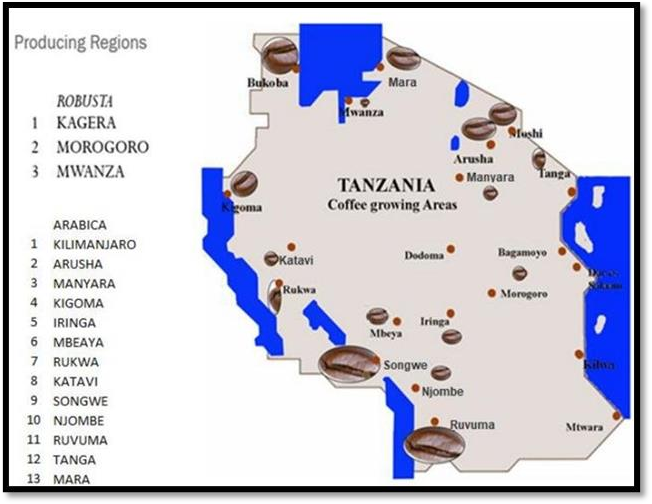
Tanzania continues to strengthen its reputation as one of the world’s leading producers of Colombian mild arabica coffee, supplying around six percent of global demand for the variety. Arabica is mainly cultivated in the northern and southern highlands, while robusta production is concentrated around Lake Victoria in Kagera Region.
The European Union remains Tanzania’s largest export market for green coffee, importing volumes estimated to be five times greater than those purchased by the United States. However, the report notes that the US market is rapidly emerging as an important destination, fuelled by growing demand from specialty coffee buyers.
Exports are projected to rise steadily despite continuing volatility in global coffee markets and uncertainty surrounding international trade policies. Strong demand from the EU and Japan, alongside growing interest from the United States, India, Morocco, and Australia, is helping to diversify Tanzania’s export profile.
The report also highlights government efforts to modernise the sector and improve competitiveness. Recent reforms include a USD 30 million agreement with Corus International focused on large-scale seedling distribution, disease control, digitalised coffee auctions, and stricter export licensing systems aimed at improving transparency and traceability.
Auction schedules for the 2026/27 season will follow a phased regional rollout beginning in Kigoma and Mara on 30 April, followed by Kagera on 1 May, Mbeya and Songwe in mid-June, and the northern and Ruvuma zones in July. Officials say the staggered calendar is intended to maintain quality standards, prevent market oversupply, and stabilise prices for farmers.
Meanwhile, domestic coffee consumption is also expected to rise modestly from 85,000 to 90,000 bags as urban coffee culture expands in cities such as Dar es Salaam and Arusha. Growing tourism, increasing incomes, and the rise of cafés and mobile coffee kiosks are encouraging more Tanzanians — particularly younger consumers — to adopt coffee as part of their daily routines.
Despite the positive outlook, the report warns that coffee stocks are likely to increase sharply to 157,000 bags in 2026/27, up from 51,000 bags the previous year. The buildup reflects production growth outpacing both domestic consumption and export demand, potentially creating pricing pressure in future seasons.
The soluble coffee segment remains a major concern. Tanzania’s soluble coffee exports have collapsed by more than 92 percent since 2022, falling from 10,858 bags to just 814 bags by 2025 after steep declines in key markets including the EU, Kenya, and Turkey. Analysts say the downturn reflects a broader contraction in Tanzania’s value-added coffee sector, even as green coffee exports continue to perform strongly.
Overall, the report paints a picture of a coffee industry undergoing rapid expansion and structural change, supported by favourable weather, strong global demand, and policy reforms aimed at positioning Tanzania more competitively in premium international markets.
https://thecooperator.news/co-operative-bank-of-tanzania-reports-strong-growth-after-first-year/
Buy your copy of thecooperator magazine from one of our country-wide vending points or an e-copy on emag.thecooperator.news


