
NAIROBI, May 20, 2026 — Kenya’s coffee industry is poised for a significant rebound in the 2026/27 marketing year, with production forecast to rise sharply as farmers expand cultivation and reinvest in their farms after two years of favourable global prices.
According to the latest Coffee Annual report released in Nairobi by the United States Department of Agriculture, the country’s coffee output is expected to increase by nearly 12 per cent to 950,000 60-kilogramme bags, up from an estimated 850,000 bags in 2025/26.
Analysts attribute the recovery to improved crop management, expanding harvested acreage, and stronger flowering in the country’s key coffee-growing regions following the end of a prolonged drought earlier this year.
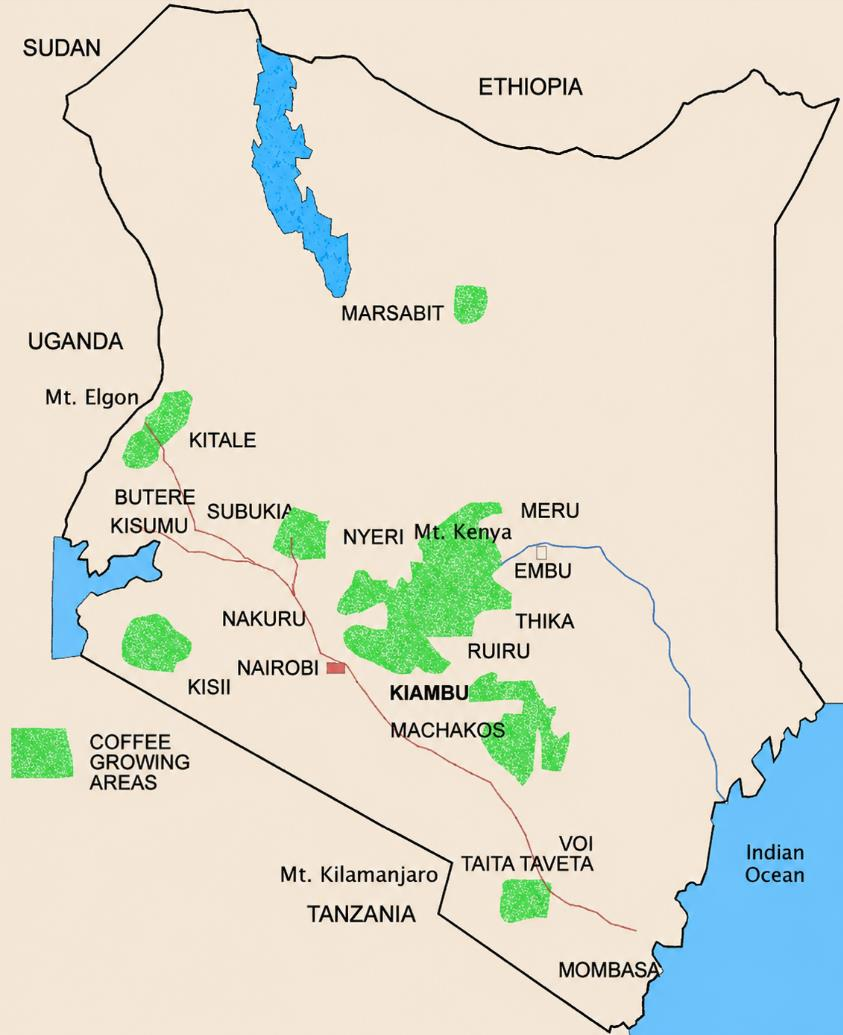
Farmers across the Mt Kenya region are reportedly benefiting from sustained high market prices, enabling them to purchase fertilisers and strengthen pest and disease control measures that had previously constrained yields. Harvested area is also expected to edge upwards to 106,000 hectares as newly planted coffee trees mature.
The Kenyan government has intensified efforts to revitalise the sector through a nationwide coffee expansion programme covering Central, Eastern and Rift Valley counties. The initiative, implemented through the New Kenya Planters Co-operative Union, provides farmers with subsidised seedlings and fertilisers through a revolving support fund. County governments have also introduced grant schemes aimed at helping growers expand production.
However, the rapid expansion has exposed weaknesses in the country’s seedling supply system. The Coffee Research Institute is struggling to keep pace with soaring demand for planting materials, with officials acknowledging a substantial backlog despite efforts to scale up production.
For much of the past decade, Kenya’s peri-urban coffee belt suffered extensive losses as farmland was converted into residential developments, particularly around Nairobi, Thika, Kiambu and Nyeri. That trend has slowed over the last two years amid stagnation in the property market, providing what industry observers describe as a temporary reprieve for coffee farming. Analysts warn, however, that without stronger land protection policies, coffee acreage could again come under pressure if prices weaken.
Kenya’s coffee sector is also entering a new regulatory era following the enactment of the Coffee Act 2026. The legislation restores oversight powers to a revived Coffee Board of Kenya, replacing the Agriculture and Food Authority as the sector’s principal regulator.
The reforms also establish an independent Coffee Research and Training Institute and formally entrench several modernisation measures introduced since 2022. Among them is the Direct Settlement System, a digital payment platform designed to ensure faster and more transparent payments from buyers directly to farmers.
Meanwhile, the Nairobi Coffee Exchange [NCE] continues to dominate the marketing system, handling more than 95 per cent of coffee sales. Around 80 per cent of Kenya’s coffee is marketed through co-operatives, with the remainder sold by estates and private growers.
Despite expectations of higher production, coffee prices have softened in recent months as global supplies improve. Average prices at the NCE fell to approximately US$ 268.77 per 50kg bag in April 2026, down 28.4 per cent from the peak recorded in October 2025. The decline follows projections of increased global Arabica production after improved rainfall in major producing regions.


Domestic coffee consumption, however, is forecast to remain stagnant at 62,000 bags. Rising inflation and weakening purchasing power are making coffee less affordable for many households, while the once-booming urban café culture has slowed considerably. The departure of several international organisations and donor agencies from Nairobi has reduced demand among expatriates and middle-income consumers who traditionally supported premium coffee outlets.
Tourism, another major source of domestic coffee demand through hotels and lodges, is also showing signs of strain amid rising travel costs for both local and international visitors.
On the export front, Kenya is expected to ship approximately 940,000 bags in 2026/27, an increase of nearly 12 per cent from the previous year. The European Union remains the country’s largest export destination, although trade patterns are evolving rapidly.
While the United States continues to hold the largest share of Kenya’s coffee exports, Belgium, France and Canada have all recorded strong growth in recent years. Germany and Sweden, once dominant markets, have experienced declining shares as Kenya diversifies towards new destinations across Western Europe and North America.
Kenya is also preparing exporters for compliance with the European Union Deforestation Regulation, which requires proof that coffee imports are not linked to land deforested after 2020. Larger exporters must comply by December 2026, while smaller firms have until mid-2027.
One of the most dramatic developments in recent trade data came in January 2026, when coffee exports surged to a record 231,561 bags — four times higher than the same period a year earlier. The spike followed the retroactive extension of duty-free access to the United States under the African Growth and Opportunity Act, alongside a substantial one-off shipment to Sudan.
Looking ahead, ending coffee stocks are forecast to rise by nearly 24 per cent to 120,000 bags in 2026/27 as higher production boosts available supplies. Most inventories are expected to remain in the hands of co-operative societies as growers and brokers take advantage of stabilising market conditions.
https://thecooperator.news/kenya-govt-tightens-oversight-of-cooperatives-in-major-reform-drive/
Buy your copy of thecooperator magazine from one of our country-wide vending points or an e-copy on emag.thecooperator.news


