
KAMPALA, October 8, 2026 – The Ministry of Education and Sports has announced that teacher training will remain solely under the jurisdiction of the Uganda National Institute for Teacher Education [UNITE].
On paper, this move aims to standardise teacher training and improve quality. In reality, it raises more questions than answers and risks plunging Uganda’s education sector into a severe crisis.
UNITE currently operates through only five campuses—Kabale, Mubende, Unyama, Kaliro, and Muni—to serve the entire nation. Uganda has over 40,000 primary and secondary schools and a rapidly growing population of learners.
Can five campuses train enough teachers for all these schools? The answer is a clear no. Centralising teacher training will inevitably create shortages, leaving schools without qualified staff—particularly in hard-to-reach areas.
For years, National Teachers’ Colleges [NTCs], Primary Teachers’ Colleges [PTCs], and both public and private universities have met this demand. Removing them from teacher preparation is not reform; it creates an artificial bottleneck.
Furthermore, the geographical distribution of UNITE campuses is inequitable and will exclude teachers in distant districts.
An examination of Uganda’s regional map illustrates this issue. UNITE has campuses in Kabale, Mubende, Unyama [Gulu], Kaliro, and Muni [Arua]. However, regions such as Karamoja, Teso, Bunyoro, Ankole, Bukedi, Bugisu, and parts of Kigezi and West Nile are left without direct local access.
A teacher in Moroto or Kotido must travel over 400 kilometres to reach Muni or Unyama. A teacher in Kasese must travel to Kabale or Mubende. These distances impose prohibitive travel and accommodation costs on low-earning educators.
Yet, local universities already serve these communities effectively. In Karamoja, Gulu University established its Kotido Campus at the former Kotido PTC, offering distance-learning Bachelor of Education [Primary] programmes during holidays for over 3,000 Grade III teachers. The Karamoja Peace and Technology University [KAPATU] in Losilang, Kotido, is also preparing to offer Education qualifications from certificate to doctoral levels.
In Kasese, teachers have accessed training via Bugema University, Mountains of the Moon University, Team University, Uganda Christian University study centres, and Rwenzori International University.
These initiatives demonstrate that proximity is vital for effective access. If regional universities can offer holiday programmes that allow teachers to remain at their posts, forcing educators to travel hundreds of kilometres to a UNITE campus undermines access and exacerbates teacher scarcity in remote regions.
Additionally, UNITE’s operational focus leans heavily towards science training, risking the neglect of the humanities.
While government policy prioritises sciences, humanities subjects—including History, Geography, Christian Religious Education [CRE], Literature, and Art and Design—remain core components of the lower secondary competency-based curriculum.
If teacher preparation focuses disproportionately on sciences, who will teach humanities subjects? A balanced education system requires qualified educators across both arts and sciences. Restricting training pathways risks creating a critical shortage of arts teachers.
Furthermore, public and private universities pay taxes, employ thousands of staff, and support local economies. Their faculties of education generate significant operational revenue.
Stripping these institutions of teacher training rights inflicts financial strain, potentially leading to job losses, reduced tax revenue, and institutional instability across established universities.
Maintaining high educational standards is essential, but quality assurance does not require a training monopoly.
The Ministry of Education and Sports should regulate rather than monopolise. UNITE could serve as the standard-setting and regulatory body, while accredited universities and colleges across the country deliver training under UNITE’s curriculum guidelines and supervision.
Allowing decentralised implementation under centralized quality control maintains high standards without creating severe supply constraints.
Without a policy adjustment, a centralised UNITE model risks creating regional teacher shortages, weakening humanities education, and placing undue financial pressure on existing higher education institutions.
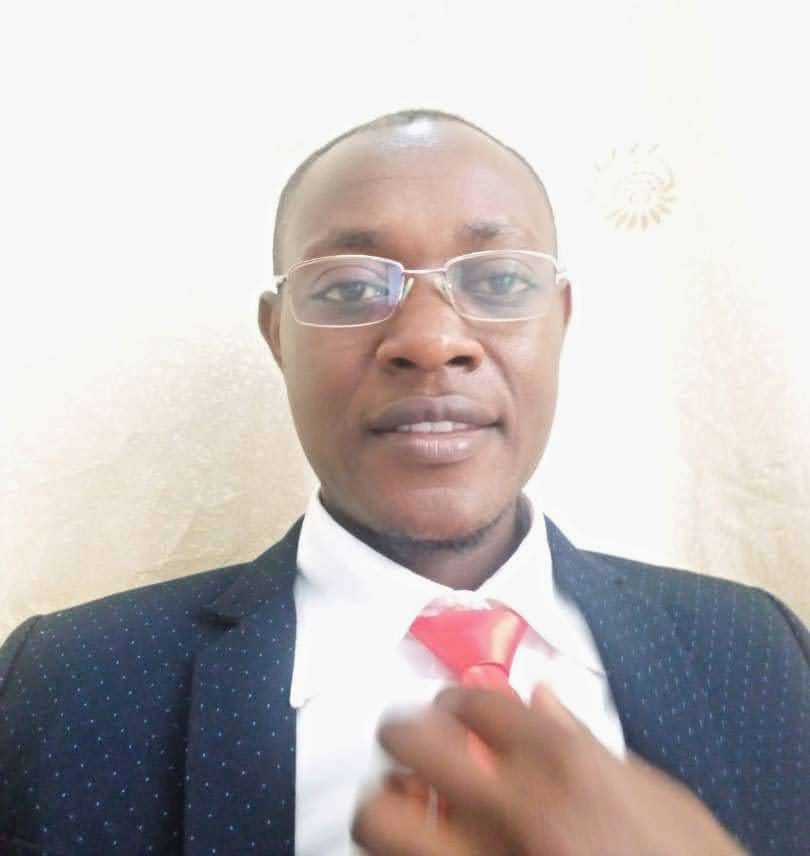
The writer is a journalist at theCooperator Media Ltd.
https://thecooperator.news/headteachers-urged-to-join-asshu-sacco-to-improve-their-welfare/
Buy your copy of thecooperator magazine from one of our country-wide vending points or an e-copy on emag.thecooperator.news


