
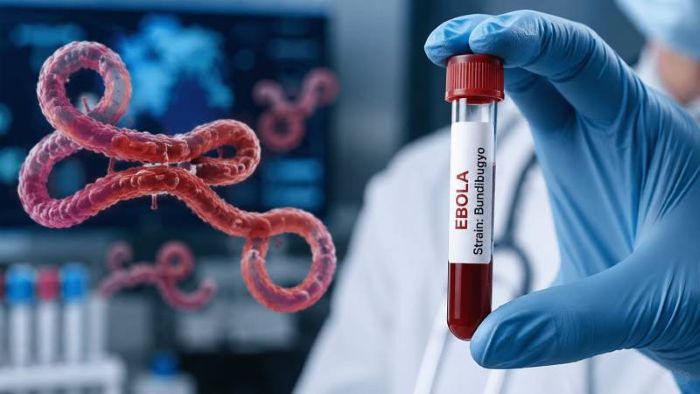
KAMPALA, July 14, 2026 – The Africa Centres for Disease Control and Prevention [ Africa CDC ] has called for stronger protection of frontline health workers and humanitarian responders battling the Ebola outbreak in the Democratic Republic of Congo [DRC], following the confirmed infection of a United States humanitarian worker.
Africa CDC said that, as of July 9, 2026, a total of 112 health workers had been infected with the Bundibugyo strain of the Ebola virus in the DRC since the outbreak began. Of those, 35 have died.
The continental public health agency said the latest case involving an international humanitarian worker supporting the response in Bunia highlights the urgent need to improve the safety of all personnel involved in containing the outbreak.
Authorities and the response team have launched an epidemiological investigation, identified contacts and carried out exposure risk assessments. The source of the humanitarian worker’s infection remains under investigation.
Health workers, humanitarian personnel, laboratory staff, community responders, volunteers and other operational teams continue to work under difficult conditions, identifying cases, treating patients, tracing contacts and helping to prevent further transmission.
Africa CDC Director-General Dr Jean Kaseya paid tribute to those serving on the frontlines, saying their work remains critical to bringing the outbreak under control.
“We honour the 112 health workers infected during this outbreak, especially the 35 who lost their lives. We also recognise every responder serving affected communities with courage and commitment,” Dr Kaseya said.
He stressed that those leading the response must be adequately protected.
“Every responder needs reliable protective equipment, strong infection prevention systems, continuous training, mental health support and safe working conditions. Protecting them is essential to stopping the spread of the virus,” he said.
Kaseya also welcomed the financial and operational support pledged by governments and development partners but urged that the funds be released without delay.
“Rapid disbursement of existing commitments, together with additional resources, will strengthen the response, protect frontline teams and help break every chain of transmission,” he said.
Africa CDC said governments and partners are already supporting surveillance, laboratory testing, case management, infection prevention and control, contact tracing and community engagement.
However, the agency warned that additional funding is still needed to address critical gaps, including the supply of personal protective equipment, infection prevention materials, staff training, psychosocial support, safe working environments and other operational requirements.
Through its Continental Incident Management Support Team, Africa CDC said it will continue supporting the governments of the DRC and Uganda while coordinating efforts with affected Member States and response partners.
The agency also urged all organisations operating in affected areas to strengthen workplace safety measures, report suspected exposures promptly and ensure continuous support for their personnel.
Africa CDC said the infected humanitarian worker’s confidentiality and medical privacy would be protected, with any further information to be released by the relevant authorities in accordance with established public health protocols.
Buy your copy of thecooperator magazine from one of our country-wide vending points or an e-copy on emag.thecooperator.news


