
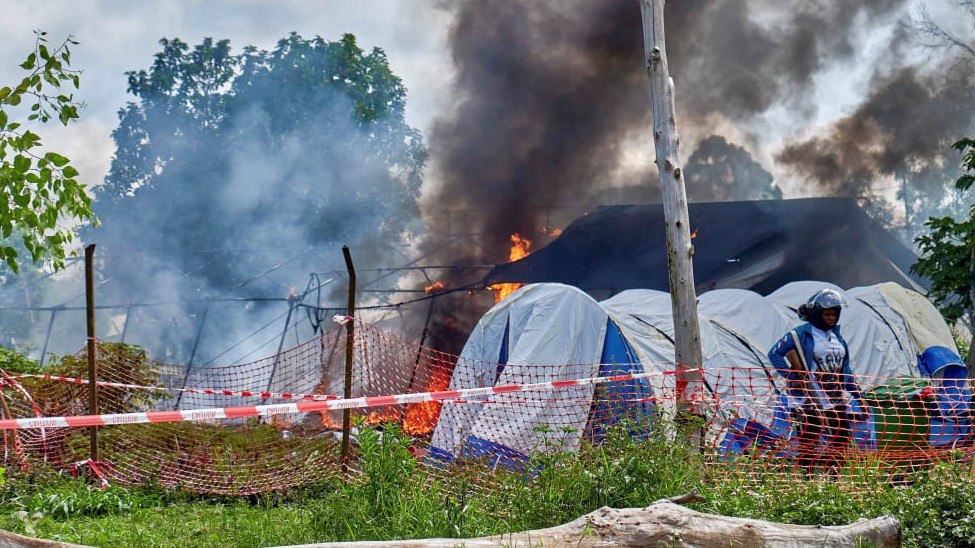
KAMPALA, June 2, 2026 — The Africa Centres for Disease Control and Prevention [Africa CDC] has condemned the destruction of a treatment facility serving communities affected by the Bundibugyo Virus Disease outbreak in eastern Democratic Republic of the Congo [DRC], warning that violence against health infrastructure threatens efforts to contain the disease.
In a statement released on Monday, the continental public health agency expressed concern over the recent attack on a treatment centre in Ituri Province and called for the protection of healthcare workers, patients and response teams operating in the outbreak zone.
The agency said attacks on treatment facilities undermine disease control efforts by disrupting patient care, surveillance activities and contact tracing operations, while placing frontline responders at greater risk.
“Communities are not the enemy in an outbreak response. Fear, misinformation, mistrust, and lack of engagement are often the greatest barriers to controlling disease outbreaks,” Africa CDC Director General Dr Jean Kaseya said.
He stressed that public health authorities must work alongside communities through dialogue, transparency and trust-building rather than relying solely on technical interventions.
The statement comes amid growing concerns that misinformation and community mistrust could hamper efforts to contain the outbreak, creating what Africa CDC described as a “parallel crisis” alongside the spread of the disease.
The agency noted that lessons from previous Ebola outbreaks in the region, particularly the 2018–2020 North Kivu epidemic, demonstrated that successful outbreak control depends heavily on community acceptance and participation.
Despite the challenges, Africa CDC pointed to recent positive developments, including the discharge of Ebola survivors in Bunia, which it said offered a message of hope and recovery to affected communities.
The agency added that survivors could play a key role in countering misinformation and encouraging people to seek medical care early. The ongoing training and deployment of Community Health Workers was also expected to strengthen public awareness, surveillance and infection prevention measures.
“We must approach communities with humility, respect, and solidarity,” Dr Kaseya said. “Communities must remain at the centre of the Bundibugyo Virus Disease response.”
Africa CDC reaffirmed that Risk Communication and Community Engagement [RCCE] remains a central pillar of the response and said it was intensifying support to Congolese authorities and partners through social listening, rumour management, behavioural insights and community-led initiatives.
The organisation pledged to continue mobilising technical and operational resources to strengthen local engagement efforts and foster dialogue between health responders, community leaders and affected populations.
It also called on all parties to respect and protect healthcare workers and health infrastructure in line with humanitarian and public health principles.
Africa CDC said it remained committed to supporting the Government of the Democratic Republic of the Congo and affected communities as they work to halt the spread of Bundibugyo Virus Disease under what it described as extremely challenging circumstances.
https://thecooperator.news/uganda-hosts-ebola-preparedness-and-response-meeting-in-kampala/
Buy your copy of thecooperator magazine from one of our country-wide vending points or an e-copy on emag.thecooperator.news
-

-

-

-


