
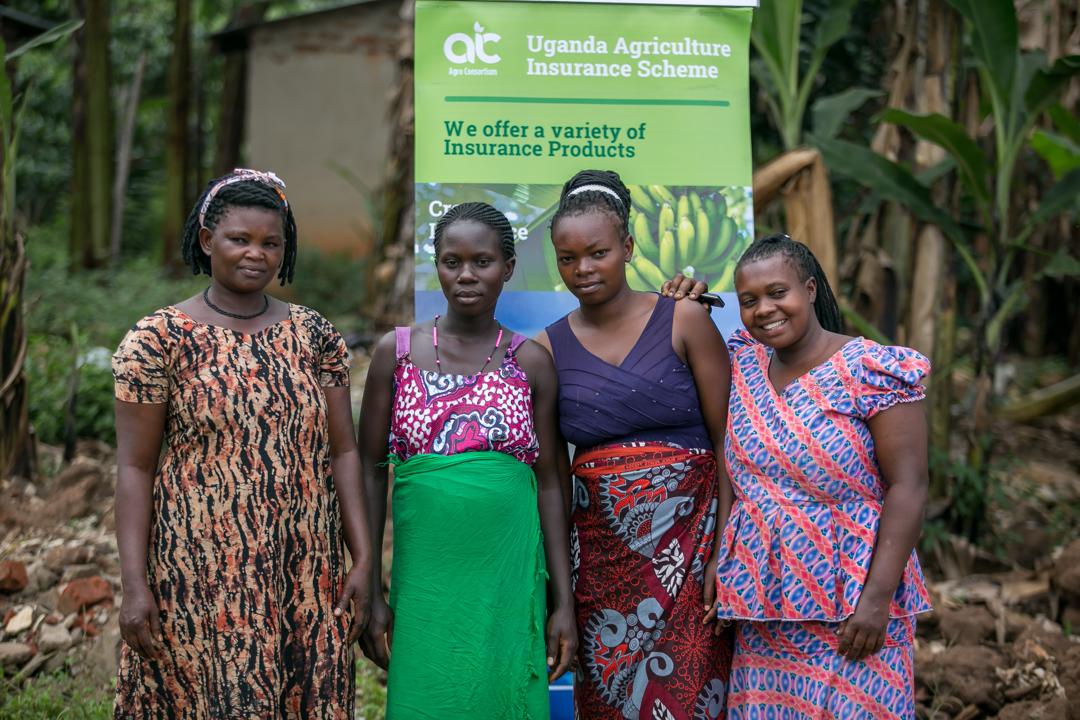
KAMPALA, October 1, 2026 -– As Uganda’s Savings and Credit Cooperative Organisations [SACCOs] expand their support for agricultural production, industry stakeholders are challenging them to look beyond credit provision and make insurance part of the financial services they offer.
The proposal is to integrate agricultural insurance into lending, helping farmers protect their investments while giving SACCOs an additional tool for managing the risks associated with financing agriculture.
Speaking to theCooperator News in an exclusive interview, John Makosya, Chief Operations and Impact Officer at AgroConsortium Uganda Limited, said SACCOs should consider insuring agricultural loans issued to their members rather than leaving farmers and lenders exposed to the full consequences of production losses.
“What is stopping the SACCOs from insuring those loans they are giving to their members?” Makosya asked.
He added that SACCOs in Uganda could also support local farmers in insuring the expected yields from their agricultural investments.
For many SACCOs, agricultural finance is an important part of serving their members. Farmers borrow to purchase inputs, prepare land, acquire equipment and meet other production costs. However, repayment may depend on the performance of a harvest, livestock production or another agricultural activity.
Integrating insurance into agricultural finance could allow SACCOs to offer a broader package of services, combining credit with protection against certain production risks.
Agro Consortium is a coalition of 11 insurance companies in Uganda that offers Crop and Livestock Insurance under the Uganda Agriculture Insurance Scheme [UAIS], a public-private Partnership with the Government of Uganda.
Evidence from the UAIS points to both the opportunity and the challenge. According to an independent evaluation of the scheme conducted by the National Planning Authority [NPA] in May 2025, only 20.6 per cent of subsidised beneficiaries in the 2023/24 financial year were enrolled directly through SACCOs, cooperatives or licensed brokers.
These intermediaries are considered critical for reaching unbanked, subsistence and remotely located farmers. Their limited participation, the evaluation noted, reinforces the scheme’s dependence on formal financial channels. Strengthening their capacity, formalising partnerships and introducing performance incentives could therefore expand UAIS’s reach and bring it closer to its inclusive-development objectives.
The evaluation also found significant regional differences in how farmers access insurance. Regions with strong SACCO, banking and agribusiness networks, including Buganda and Ankole, record higher farmer contributions, partly because insurance is bundled with input loans or working capital. In much of Uganda’s rural economy, however, standalone insurance paid for in cash remains unaffordable and difficult to access.
This suggests that SACCOs could play a central role in making insurance more accessible by linking it to products farmers already use. Instead of requiring members to purchase standalone cover, SACCOs could work with insurers to incorporate premiums into agricultural loans, input financing or broader value-chain packages.
By mitigating production risk, UAIS is also enabling lenders to provide working capital with reduced collateral requirements. This can unlock access to finance for farmers who were previously excluded because they lacked sufficient assets to secure a loan.
The approach could take different forms, depending on the SACCO’s operations, the insurance products available and the needs of its members. A SACCO may work with an insurer to offer cover alongside selected agricultural loans, help members understand available products, or facilitate insurance for crops, livestock and other agricultural investments.
For SACCOs financing organised farmers through cooperatives, insurance could be incorporated into broader agricultural value-chain support, linking financial services with production and risk management.
However, such arrangements would require clear communication about the insurance product, the risks covered, the cost of premiums and the conditions under which claims are paid. SACCOs would also need to ensure that members understand the distinction between a loan and an insurance policy, including the circumstances under which insurance may or may not respond to a loss.
Makosya also highlighted the role of technology in making agricultural insurance IN Uganda easier to administer.
“Leverage satellite data, GPS mapping, and weather analytics to monitor farmers remotely, reduce field visits, and lower administrative costs for smallholder farmers,” he said.
For SACCOs, these systems could support partnerships with insurers by making it easier to identify farms, monitor agricultural conditions and manage information about insured members. Technology could also reduce some of the administrative challenges associated with serving geographically dispersed farmers, although its effectiveness would depend on the insurance product and the quality of the available data.
Making insurance part of SACCO services would nevertheless require investment in staff capacity, member education and claims support. SACCOs would also need clear agreements with insurers defining responsibilities for premium collection, policy administration and claims handling.
For producer cooperatives, the discussion raises a broader question: whether insurance can become part of an integrated package of services that protects members’ enterprises, improves access to credit and strengthens the resilience of Uganda’s agricultural economy.
The UAIS addresses a major structural barrier in Uganda’s economy, where high-risk profiles restrict agricultural lending to less than 12 percent of total formal credit. By underwriting production risks, the UAIS has significantly improved borrower bankability. In the eyes of lenders insured farmers are a less risky profile of client. Per the 2025 evaluation of the scheme by the NPA, field survey findings revealed that “every respondent surveyed reported improved credit access due to their insurance participation”.
The drivers of this shift include improved financial credibility, enhanced savings and borrowing behaviour, increased access to collateral and better affordability of travel to financial institutions. These findings position the UAIS as a soft de-risking mechanism for smallholders, improving their bankability and fostering rural financial inclusion. In the financial year 2023/24, 20.6 per cent of subsidised beneficiaries were enrolled directly in the Scheme via SACCOs, producer cooperatives, or licensed brokers, intermediaries critical for engaging the unbanked, subsistence, or remotely located farmers.
Per the NPA, strengthening these partnerships by capacity building, formalising the partnerships through MoUs, and embedding performance incentives would expand UAIS’s equity reach and better align with inclusive development objectives.
For more information visit: aic.ug #UAIS10
Buy your copy of thecooperator magazine from one of our country-wide vending points or an e-copy on emag.thecooperator.news


