
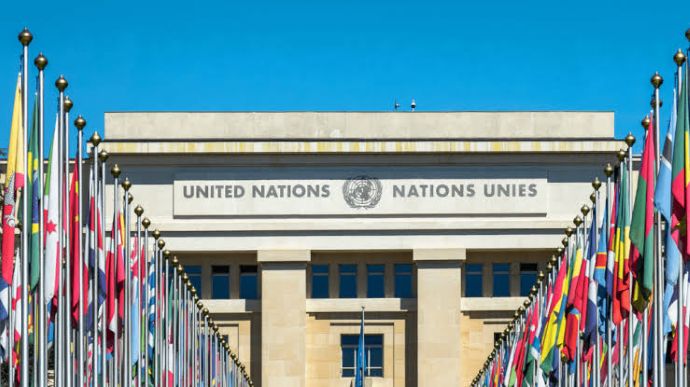
KAMPALA, September 3, 2026 — The United Nations [UN] has highlighted growing global recognition of the social and solidarity economy [SSE], including co-operatives, and their contribution to sustainable development, decent work and social justice.
In a report titled Promoting the Social and Solidarity Economy for Sustainable Development, the UN Secretary-General says the sector has received increased legal, policy and institutional attention in recent years.
However, the report warns that progress in turning political commitments into effective implementation and sustained results remains uneven.
The SSE encompasses co-operatives, associations, mutuals, foundations, social enterprises, self-help groups and other organisations that place people and social objectives at the centre of economic activity.
The sector is guided by principles including voluntary co-operation, mutual assistance, participatory governance and the primacy of people and social purpose over capital.
The report cites a number of national initiatives demonstrating the growing policy focus on the sector.
Brazil has established a national solidarity economy policy and system, while Spain has adopted comprehensive legislation covering the social economy and co-operatives. India adopted a national co-operation policy in 2025, Saudi Arabia its first national strategy for the co-operative sector, and Türkiye a co-operative strategy for 2025–2029.
Indonesia, meanwhile, has set a target of establishing, developing or revitalising 80,000 village and urban community co-operatives.
The developments build on the momentum generated by the International Year of Co-operatives in 2025, according to the report.
In December 2025, the UN General Assembly encouraged countries to continue implementing and sharing practices developed during the International Year and called for an International Year of Co-operatives to be proclaimed every 10 years after 2025.
The report also notes that the growing importance of co-operatives and the wider SSE has been recognised in major international agreements.
The Doha Political Declaration of the World Social Summit recognised the role of the SSE in poverty eradication, social inclusion and social transformation, while the Sevilla Commitment called for measures to facilitate the sector’s growth and improve access to tailored financial and non-financial support.
The economic and employment contribution of the sector is also highlighted.
In France, the social economy accounted for nearly 11 per cent of all employee posts in 2023, while Spain estimated that it contributed 4 per cent of gross value added and 5.8 per cent of total employment.
Honduras reported 584 active co-operatives employing 10,782 people directly, while India classified approximately 659,000 co-operatives as functional.
Despite the growing momentum, the report identifies persistent challenges, including gaps in data and statistics and limited access to appropriate financing.
It calls for stronger legal and institutional frameworks, increased financial and non-financial support, improved data collection and greater integration of the SSE into policies covering employment, social protection, care, housing, agriculture and food systems, energy and climate action, culture and territorial development.
Looking towards 2030 and beyond, the report calls for growing political recognition of the SSE to be translated into effective policies, institutions, financing and sustained international co-operation.
It says this will be critical to strengthening the contribution of co-operatives and the wider social and solidarity economy to sustainable development and social justice.
Buy your copy of thecooperator magazine from one of our country-wide vending points or an e-copy on emag.thecooperator.news


