
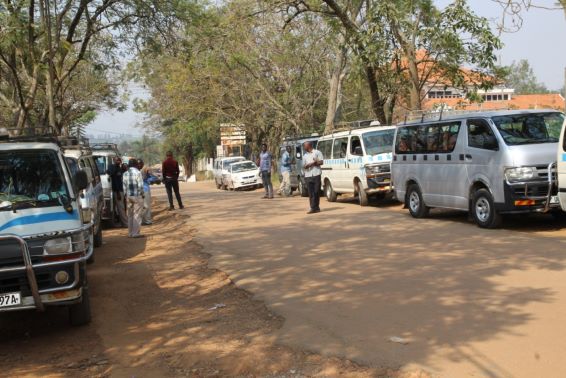
MBARARA CITY, 20 November 2026 — Public transport fares across western and south-western Uganda have increased following a sustained rise in fuel prices, adding to the financial pressure on travellers, traders and small business owners ahead of the Christmas festive season.
In Ntungamo district, the Chairman of Abamwe Transporters, Francis Agaba, announced revised fares covering several routes within the district and neighbouring areas.
Under the new tariff structure, passengers travelling from Ntungamo to Itojo, Nyamukana, Rubaare, Rwentobo, Rwashamaire and Kagamba will pay Shs 5,000. Fares to Nyeihanga, Muhanga, Nyamunuuka and Kebisoni have been set at Shs 7,000, while journeys to Mbarara, Kabale and Rukungiri will cost Shs 15,000.
Agaba said the revised fares were comparable to those charged in 2008, when regional fuel supply disruptions linked to post-election violence in neighbouring Kenya pushed transport costs upwards.
Meanwhile, Ntungamo Taxi Owners’ representative Apollo Rucwagura Twesigye said the increases were temporary and would be reviewed once fuel prices stabilised.
“We want to allay travellers’ fears and assure the public that these transport fares will be reduced once the global and local fuel situation stabilises,” Twesigye said.
Bus operators increase fares on upcountry routes
The increases have also affected long-distance bus services connecting Kampala to towns across western Uganda.
A revised fare chart issued by the United Bus Owners Association Ltd shows that fares along the Kampala–Mbarara–Ishaka–Rukungiri–Ibanda–Kabale–Kisoro corridor have increased from the previous range of Shs 30,000–45,000 to between Shs 40,000 and Shs 60,000, depending on the destination.
Passengers travelling along the Kampala–Fort Portal–Kasese–Bwera–Bundibugyo route now pay between Shs 30,000 and Shs 55,000, while fares on the Kampala–Hoima–Kagadi–Buliisa–Masindi route have risen to between Shs 30,000 and Shs 50,000.
The increases have raised concerns among parents whose children attend boarding schools outside their home districts, particularly as schools prepare to close for the end-of-year holidays.
Urban workers and other travellers planning to return to their villages for Christmas are also facing higher travel expenses.
Traders struggle with rising delivery costs
The impact of rising fuel prices extends beyond passenger transport, with small businesses in Mbarara City reporting increased delivery costs and pressure on their profit margins.
Joset Natuhuriira, a handbag retailer in Kidongo, said rising transport charges had doubled the cost of distributing her merchandise to customers in distant towns.
She attributed the increases to higher fuel prices, which have pushed up charges by boda-boda riders and courier operators.
“Fuel prices have increased drastically, and whenever I arrange distant deliveries, boda-boda riders and couriers charge me heavily. Transport has affected my operations, although I have to keep moving,” Natuhuriira said.
She cited deliveries to Fort Portal as an example, saying the cost of transporting a handbag had increased from Shs 5,000 to Shs 10,000.
At Mbarara Central Market, wholesale produce dealer Donozio Kibanda said rising fuel costs and the poor condition of rural feeder roads had increased the cost of transporting agricultural produce to the city.
He said suppliers bringing yellow bananas, pineapples, sugar cane, avocados, onions and tomatoes from rural communities had raised their prices to compensate for higher transport expenses.
“When they reach town, they sell to us expensively, leaving us with no option but to adjust prices for final consumers. This forces some customers to buy less,” Kibanda said.
He called on the Government to explore measures to reduce fuel prices, arguing that the rising costs were affecting businesses and household purchasing power.
Kibanda said traders were increasingly being accused of exploiting customers through high prices, yet their selling prices reflected the rising costs of purchasing and transporting goods.
“People are even nicknaming us thieves, thinking traders want excessive profits, yet our purchasing costs are driven up by fuel and inflation,” he said.
Agricultural inputs and fish traders hit by transport costs
Businesses dealing in agricultural inputs have also reported higher operating costs, with suppliers passing increased transportation expenses on to farmers and retailers.
Edry Kekimuri, an agro-chemicals dealer at Mbarara Shopping Mall, said the rising cost of fuel had increased the prices of agricultural products, while local delivery charges had also gone up.
He said the price of a box of Indofil and Weedmaster had risen from Shs 480,000 to Shs 570,000, while NPK fertiliser was selling at Shs 600,000.
Kekimuri added that some agricultural products, including Dudu Cyper and Dudu Acelamectin, had become scarce on the market.
“We are heavily affected because high fuel prices have driven up the cost of the products we sell to farmers and resellers, while boda-boda delivery rates have also increased,” he said.
He expressed concern over the future of the business if fuel prices continued to rise.
Meanwhile, fresh fish traders transporting their supplies from the Ssese Islands in Kalangala District to Mbarara have also been affected by higher freight charges.
Abas Nsengimana, a fish trader, said transporting fish through the Nyendo–Masaka route had become increasingly expensive because of rising fuel costs.
He said the cost of transporting a consignment that previously stood at Shs 10,000 had doubled to Shs 20,000.
“Most of my fish comes from Ssese in Kalangala, and moving it from the ferry through Nyendo–Masaka to Mbarara requires a lot of money,” Nsengimana said.
He added that some passenger bus operators were reluctant to transport fish, citing concerns about cleanliness and odour, further complicating the movement of perishable goods.
The rising transport and distribution costs are adding pressure on businesses and consumers across western Uganda, with traders warning that continued increases could further push up the prices of essential commodities during the Christmas season.
Buy your copy of thecooperator magazine from one of our country-wide vending points or an e-copy on emag.thecooperator.news
-

-

-

-


