
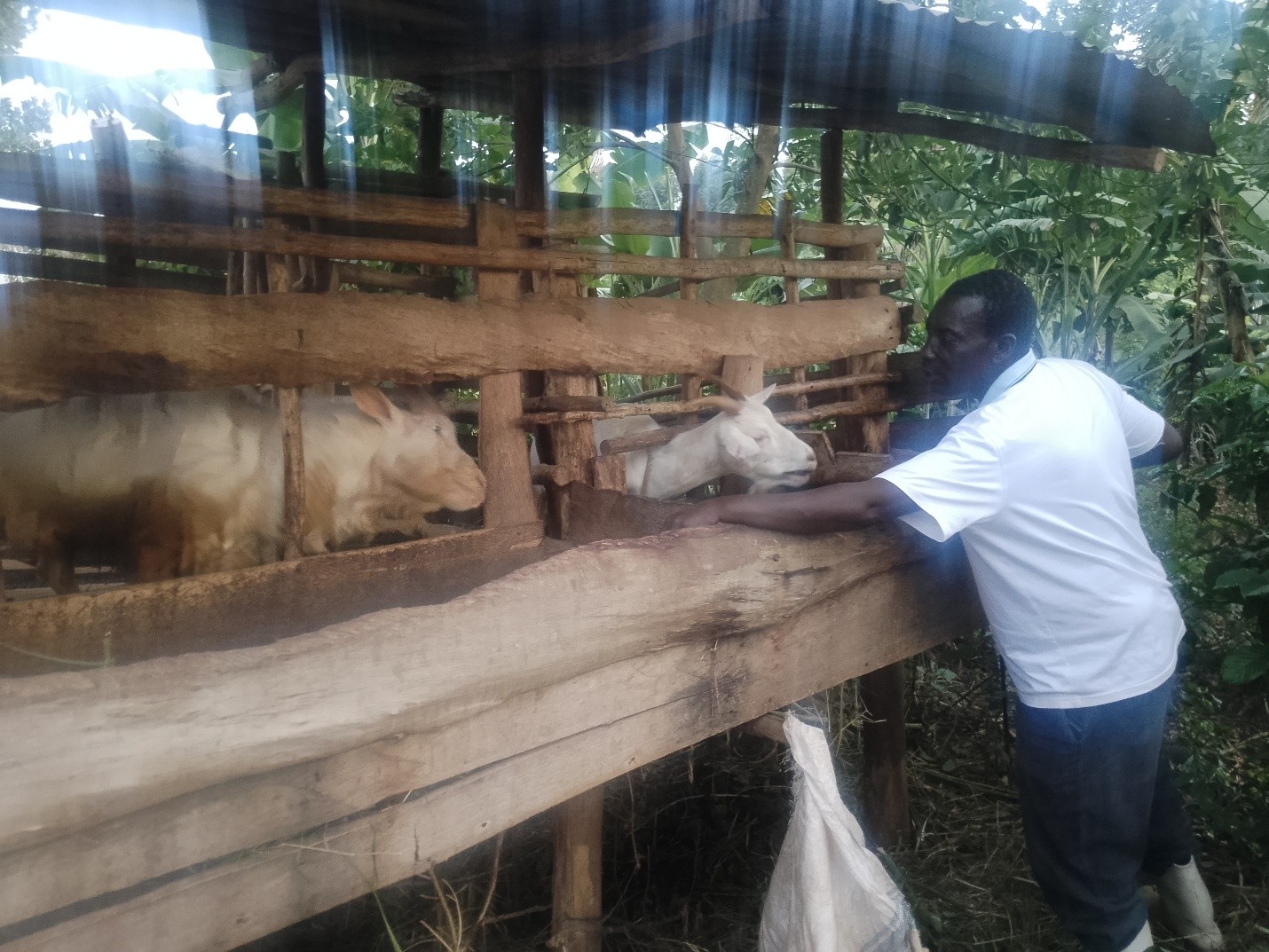
MUKONO, November 17, 2026 – A retired journalist turned farmer has urged salary earners to invest in businesses while still employed, warning that relying solely on monthly wages could leave them financially vulnerable after retirement.
James Francis Nyonyintono, a former journalist with Uganda Television [UTV], now rebranded as Uganda Broadcasting Corporation Television [UBC] TV], and the defunct WBS Television, who later ventured into farming in his home district of Mukono, says employees should set aside part of their salaries to establish income-generating businesses rather than wait until retirement to start investing in alternative sources of income.
He said starting a business while still employed enables individuals to gain valuable experience in managing and running an enterprise, unlike those who wait until retirement to venture into business. He noted that many people who start businesses after retirement make costly mistakes due to a lack of experience, often leading to the collapse of their enterprises.
Nyonyintono, also a cooperator, also encouraged young people to join cooperatives to benefit from shared knowledge, resources and markets, while embracing social media platforms such as TikTok to promote and sell their products.
He also encouraged young people to embrace entrepreneurship early in life, saying that starting a business while still energetic and capable offers greater financial rewards than relying solely on employment for a monthly salary.
“I tell young men, do not spend all your time working for the government or a private enterprise. If I had started when I had enough power, I would be a different person. Do it early when you still have energy, and do it well. It pays you more than waiting for a salary,” he said in an interview with this reporter.
Nyonyintono said his own transition into farming was prompted by changes in the media industry, particularly the growing use of mobile phones in photography, which threatened traditional photography businesses.
While still working in photography and media, he earned a good income and supported his children’s education. However, having anticipated changes in the industry, he decided to venture into farming before his earnings were affected.
Today, his farm comprises a variety of enterprises, including goat rearing, local poultry, duck keeping, rabbit farming, piggery and beekeeping.
He also processes his own coffee and okra tea, sells goat’s milk at Shs 8,000 per litre and markets local chickens to customers, some of whom discover his products through social media.
Nyonyintono advised salary earners to treat employment income as a source of investment capital rather than their only means of survival.
He urged aspiring entrepreneurs to think beyond small-scale production and focus on activities with the potential to attract larger markets.
“When you invest, you must think big and wider. If you plant only 50 tomatoes, that is for home use. But if you plant a lot, big buyers will come. You must insist on one or two things and aim higher,” he said.
He also cautioned against leaving businesses entirely in the hands of employees, saying active involvement by owners is essential for success.
“You must be there. When you start a farm and you think you will just bring workers, they will not respond. You must always be there”” he said.
Cooperatives as a pathway to success
For young people interested in entrepreneurship, Francis believes working collectively can make the difference between success and failure.
He attributed part of his progress to a network of former students of Bishop’s Senior School, who encouraged him to attend agricultural seminars covering coffee production, poultry and rabbit farming.
The group later established Twekembe Bee Keepers in Mukono, which has grown to nearly 30 members.
Members meet at least twice a month to exchange knowledge, assess one another’s progress and discuss opportunities and challenges in farming.
“It is almost a cooperative. They encouraged me so much. We sit together and discuss keeping chicken, rabbits and pigs,” he said.
Francis said cooperatives provide young entrepreneurs with opportunities to acquire practical skills, share costs, access markets and remain motivated.
He noted that individuals venturing into business without support networks could easily become discouraged, while collective efforts enable members to learn from one another and overcome common challenges.
TikTok opens up new markets
Despite the benefits of collective action, Nyonyintono identified access to markets as one of the biggest challenges facing young farmers.
He said digital platforms, particularly TikTok, have helped him reach customers beyond his immediate community, allowing buyers to place orders without having to meet him beforehand.
“When I have enough birds, I just put them on TikTok, and you find customers you don’t know come for them. They say, next month can you get me 50? Or the other one, can you get me 100?” he said.
According to Nyonyintono, social media has changed how he approaches marketing, with customers increasingly contacting him directly to inquire about the availability of his products and place repeat orders.
“They come and look for you. When they come, they take, and they call you again. Do you have another bunch? We need 50,” he said.
He encouraged young farmers to take advantage of digital platforms to showcase their products, build customer relationships and secure orders, rather than relying exclusively on traditional markets.
Francis said successful entrepreneurship requires commitment, adequate investment and the willingness to remain actively involved in the business.
“First, you must have love for what you want to do. Secondly, you must have land, which is capital. You need some good money to invest, and you must be there,” he said.
He urged young people and salaried workers to start investing early, identify viable enterprises, work collectively and embrace digital marketing, saying these steps could help them build sustainable sources of income before their regular salaries come to an end.
https://thecooperator.news/mukono-farmers-trained-in-integrated-vegetable-and-fish-farming/
Buy your copy of thecooperator magazine from one of our country-wide vending points or an e-copy on emag.thecooperator.news


