
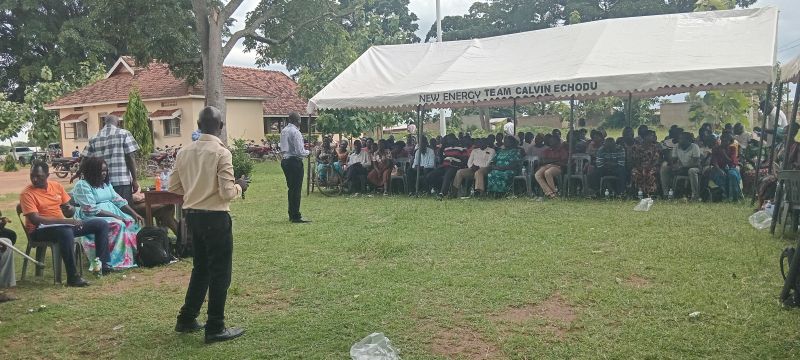
SOROTI CITY, May 19, 2026 — The first batch of beneficiaries who received soft loans under various Emyooga Savings and Credit Cooperative Organisations [SACCOs] in Soroti City West Division has failed to repay the funds, raising concerns about the programme’s long-term sustainability.
The reported defaults have sparked questions over loan recovery mechanisms, beneficiary selection, and oversight within the government-backed initiative.
The Emyooga programme is a presidential initiative on wealth and job creation launched in August 2019 as part of the government’s broader strategy to transform 68 per cent of homesteads from subsistence farming to market-oriented production. The programme aims to promote job creation and improve household incomes.
George William Tukei, Soroti City Commercial Officer, said that after the first group received the funds, some beneficiaries disappeared and authorities have been unable to trace them. The defaulters reportedly included boda boda riders, performing artists, and youth leaders.
“Of the 36 SACCOs that initially received Shs 30 million each, performing artists, youth leaders, and boda boda riders are not performing well, and we could not trace them,” Tukei said.
Tukei explained that authorities have since introduced new strategies and begun engaging the affected groups.
Regarding the boda boda SACCO, he said a new executive committee had to be appointed after it was discovered that several of the group’s documents had expired, preventing them from accessing banking services.
“So we had to submit their reports because they have to undergo an audit, and the documents must be submitted to the Ministry of Trade so that they can obtain a certificate,” Tukei added.
He urged the new leadership to use the funds responsibly once they receive them and encouraged more boda boda riders to join SACCOs.
“A number of people initially mistook this for a grant, but it is a loan and beneficiaries need to be responsible,” he noted.
Tukei further disclosed that authorities have also engaged performing artists and plan to subject their SACCOs to an audit before introducing a new management structure. He argued that many of the challenges facing the performing artists’ SACCO stem from poor management, noting that several defaulters are executive members who now fear enforcing loan recovery measures.
Agatha Ariokot, the representative of all Emyooga SACCOs in Soroti City West Division, said many SACCO executives lack adequate training in record-keeping and administration.
“There is a lot of paperwork, and many people do not understand some of it,” she said.
Ariokot added that communities need further sensitisation to understand that the money is a revolving fund and not a grant. According to her, many beneficiaries still regard the money as free funding, a perception she said continues to undermine the growth and effectiveness of the programme.
She also noted that some SACCOs have remained dormant for long periods, with no meetings, activities, or accountability to members. She warned that such inactivity weakens trust and limits the groups’ ability to access additional funds or support their members.
Currently, some Emyooga SACCOs have expanded their capital portfolios to as much as Shs 100 million due to strong performance, while others remain at the initial Shs 30mln government disbursed to them through the Microfinance Support Centre.
Ariokot attributed the difference to active management, strong member participation, and consistent savings.
The Auditor General’s reports (and related compliance/performance audits) have repeatedly highlighted weaknesses in the management of Emyooga SACCOs and funds, including governance, accountability, and loan recovery challenges.
Buy your copy of thecooperator magazine from one of our country-wide vending points or an e-copy on emag.thecooperator.news


