
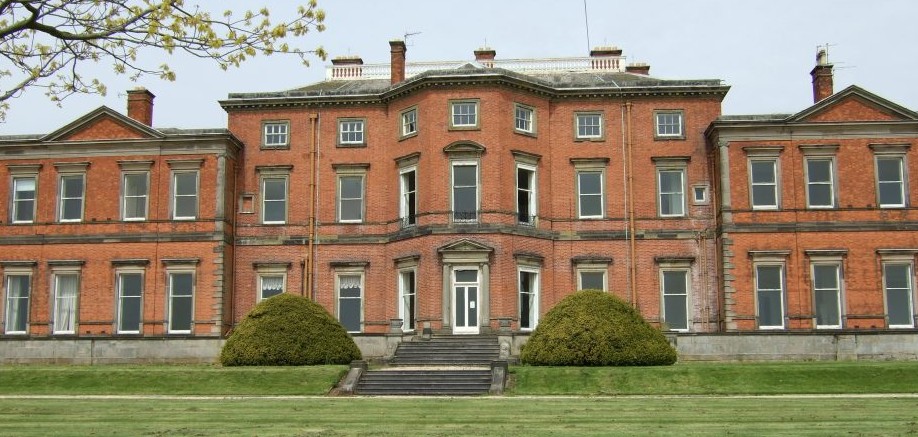
LONDON, May 18, 2026 — The Co-operative College will close its doors on October 31, 2026 after members voted to dissolve the charity, bringing to an end more than a century of co-operative education in the United Kingdom.
The resolution passed on May 13, presented during an online extraordinary general meeting [EGM], means the 107-year-old institution will begin winding up operations this autumn.
“Over the past 107 years, we’ve educated generations of co-operators, and as such, we know that the College holds much affection and nostalgia for our movement — and for good reason,” said Chris Jardine, chair of the Co-operative College.
“But nostalgia alone doesn’t educate a movement. We haven’t always been a charitable incorporated organisation, and we haven’t always been a digital organisation either. We have always adapted as a college to best serve the needs of co-operative education, and what our special resolution proposes is our latest adaptation.”
Following the EGM, the College board said it intends to transfer its remaining funds to the Co-op Foundation, subject to approval by the Foundation’s trustees. The funds would be used to establish and administer grants supporting education and co-operation.
“Our board believes that by winding up and transferring our grant-giving work into the Foundation, we can most effectively support the future of co-operative education, drawing on its expertise and connections within the movement, as well as, we hope, the backing of societies and the wider movement,” Jardine said.
Louise Snelders, head of funding and partnerships at the Co-op Foundation, said discussions with the College had focused on “ensuring the continuation of a hugely impactful legacy”.
“We have explored how the Co-op Foundation can facilitate a shift for the College from a delivery organisation to a grant-giving charity, ensuring any legacy funds are stewarded in a way that is impactful, credible and aligned with our shared co-operative values,” she said.
The Foundation, which describes itself as “delivering co-operative, young people-centred grant-making and campaigning”, has projected income of £3.3 million for 2026, of which £2.3 million is unrestricted.
Snelders added: “All the conversations we’ve had with the Co-operative College have reinforced our belief that there is a strong and natural alignment between the Foundation’s mission and the College’s charitable objectives, which centre on promoting education consistent with co-operative principles.
“The College brings an educational vision and priorities, anchors the work in co-operative history, values and legitimacy, and engages its members in shaping priorities. What we bring to the table is our grant-making expertise, governance, endowment, management and assurance, while also supporting participatory design and evaluation.
“We feel that together this creates a partnership where the College’s legacy is activated, not simply preserved.”
Alongside the financial transfer to the Foundation, the organisation will also leave behind a “learning legacy”, according to College chief executive Jacqui Thomasen.
She said the legacy would comprise four strands, including free online learning delivered in partnership with the Open University and collaboration with the Case Centre to integrate co-operative case studies into higher education curricula.
The College has also been working with the Association for Citizenship Teaching to include co-operatives in the citizenship curriculum, while the current Seeds of Change project, led by the Co-operative Heritage Trust, is documenting and digitising the College archive.
“Seeds of Change will enable the College collection — including learning resources, historical documents and materials relating to the College itself — to be made available to the public in future, for academics, co-operators and students,” Thomasen said.
The College has 102 individual members and 13 organisational members, with 29 attendees joining the meeting.
Delegates raised concerns that the College’s legacy in youth, adult and international education should be reflected in the grant design process, which the College has committed to co-designing with members. Others questioned what would happen to the College’s non-financial assets, including its intellectual property, brand, name and domain names. However, there was broad agreement that these assets should remain in trust within the co-operative movement, although the mechanism for doing so has yet to be determined.
Members voted 22 in favour of the resolution and one against, with two abstentions, meaning the motion passed with the required 75 per cent majority.
https://thecooperator.news/new-website-for-international-cooperative-business-education-consortium/
Buy your copy of theCooperator magazine from one of our countrywide vending points or an e-copy on emag.thecooperator.news
-

-

-

-


