
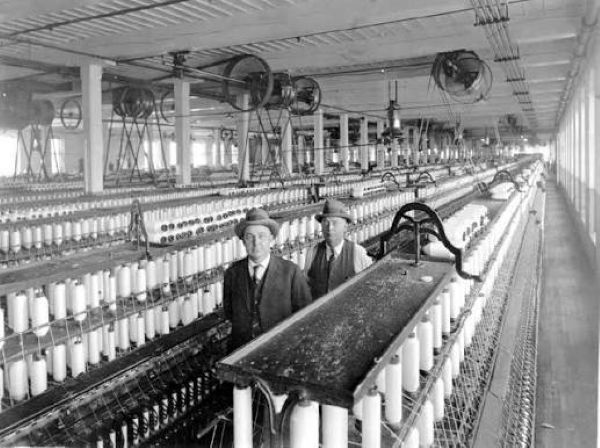
KAMPALA, September 4, 2026 — Oyam County North Member of Parliament Eunice Otuko says the revival of Lira Spinning Mill is key to promoting agro-industrialisation, creating employment, adding value to agricultural products and stimulating economic growth in Lango Subregion.
Appearing before the Committee on Tourism, Trade and Industry on Thursday, Otuko said the dormancy of Lira Spinning Mill for the past 40 years had negatively affected productive employment and deprived cotton farmers of a stable domestic and high-value market.
“The once thriving giant of the Lango sub-region was established as a strategic national asset designed to consume Ugandan-grown cotton. However, cotton farmers across Northern and Eastern Uganda now sell their cotton with little or no value addition,” Otuko said.
She added that revitalising the spinning mill was a vital economic necessity that could create employment for up to 7,000 unemployed young people and women in Lira City and neighbouring districts.
“Reviving Lira Spinning Mill will directly promote the Buy Uganda, Build Uganda [BUBU] framework by providing the domestic production capacity required to operationalise the restrictions on second-hand clothing imports under the newly enacted External Trade [Amendment] Act, 2026,” she said.


The law imposes a 30 per cent environmental levy on imported second-hand clothing and worn articles.
Otuko said an engagement with the Uganda Investment Authority had revealed that the Government would require US$ 58 million to establish a fully integrated, modern spinning mill through a structured government recapitalisation or public-private partnership model.
“Government needs to undertake a comprehensive technical, financial, legal and commercial assessment of Lira Spinning Mill to establish its current structural status and investment requirements. The required financing can be mobilised through the Uganda Development Corporation in strict compliance with public finance laws,” she proposed.
Committee members welcomed the proposal, noting that it would accelerate the transition of many Ugandans into the money economy.
Abraham Isamat, representing Kapir County, said the Teso Sub-region had previously relied heavily on cotton production but added that the lack of factories to support value addition had slowed the progress of the sector.
“We still have ginneries where cotton can be stored, but the Government is concentrating more on coffee production, which has taken time to be embraced in Teso. There is also vast land in Northern Uganda and, if this idea is pursued, they will turn to cotton growing,” Isamat said.
Sironko District Woman Representative Asha Mafabi proposed that the development of the cotton mill in Lira should be complemented by increased food production, saying local communities in the region would benefit from agriculture for both food and commercial production.
The committee is considering the proposal following a motion tabled in Parliament by Otuko in July 2026.
Background
Built with Soviet technical assistance and completed in April 1973, Lira Spinning Mill was once the second-biggest spinning facility in Africa. At its peak, it employed over 3,000 workers and served as the economic heartbeat of the Lango sub-region by buying local cotton and producing textiles.
The factory was grounded in the 1980s due to political instability, civil strife, and economic turmoil in Uganda.
Mill sold to Chinese
However, government sold the facility under its privatization scheme in 2004–2005 to the Jinda International Textile Corporation [JITCO], a Chinese investment company. But the new owners failed to revive operations, accumulated massive power debt leading to power cut-offs, and faced allegations of dismantling machinery to sell as scrap.
Revival efforts
The Lango Cultural Foundation, led by its leadership, has made multiple attempts to repossess or take over the management of the defunct mill to revive the regional cotton economy, though efforts have faced setbacks. Parliament and local leaders continue to push for its formal revival under agro-industrialization frameworks
https://thecooperator.news/wacu-revives-78-cooperatives-to-revitalise-cotton-production-in-acholi/
Buy your copy of thecooperator magazine from one of our country- wide vending points or an e-copy on emag.thecooperator.news
-

-

-

-


