
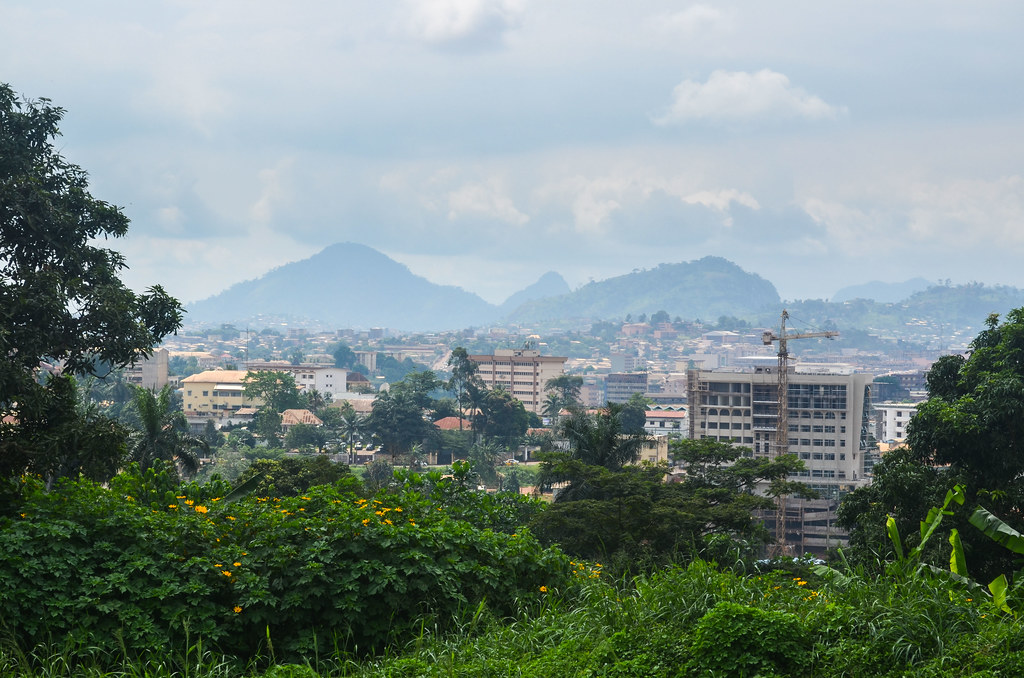
YAOUNDÉ, August 31, 2026 — African governments and regional institutions have been urged to dedicate at least 30 percent of public investments shaping food systems to agroecology as stakeholders from across Africa concluded the Second Congo Basin Convening in Yaoundé, Cameroon.
In a declaration adopted on August 27, participants called on member states and the African Union Commission to explicitly include agroecology in the implementation of the Comprehensive Africa Agriculture Development Programme [CAADP] Strategy and Action Plan for 2026–2035.
The declaration said national and regional agriculture and food systems investment plans should contain clear agroecology objectives, indicators and dedicated budget lines.
The three-day meeting, held from August 25 to 27 under the theme “Agroecology for Inclusion, Sustainable Food Systems, Biodiversity and Climate Justice in the Congo Basin,” brought together farmers, pastoralists, Indigenous Peoples, local communities, women and youth movements, civil society organisations, researchers, parliamentarians, governments, regional institutions, development partners, private-sector actors and the media.
Delegates came from Cameroon, the Central African Republic, the Republic of Congo, the Democratic Republic of Congo, Equatorial Guinea and Gabon, as well as several neighbouring African countries, including Uganda.
The meeting was convened by the Alliance for Food Sovereignty in Africa [AFSA] and the Concertation Nationale des Organisations Paysannes du Cameroun, in collaboration with Cameroon’s Ministry of Agriculture and Rural Development.
Participants warned that although agroecology is increasingly being adopted through policies and programmes in parts of the Congo Basin, it remains largely excluded from major public investment frameworks.
They said agriculture, land, forestry, environmental and trade policies remain fragmented, while successful agroecological initiatives continue to operate at pilot level because of limited advisory services, organic inputs, markets and sustainable financing.
The declaration also raised concern over continued forest loss in the Congo Basin, which it said contains about 300 million hectares of forest and is losing forest cover at an estimated rate of 0.3 percent annually.
Delegates further noted that more than half of the region’s food requirements are met through imports despite severe food insecurity and the major contribution of family farmers to food production.
The convening called on governments to incorporate agroecology into Nationally Determined Contributions, National Adaptation Plans, biodiversity strategies and restoration programmes by the end of 2027.
It also demanded stronger protection of community and customary land rights, including the application of free, prior and informed consent in conservation, extractive, agro-industrial and infrastructure projects.
The declaration condemned what participants described as “fortress conservation,” accusing some conservation approaches of displacing Indigenous Peoples and local communities from ancestral lands without consent, compensation or redress.
On agricultural biodiversity, delegates called on governments and regional institutions to protect farmer-managed seed systems and reject laws that criminalise or restrict farmers from saving, using, exchanging and selling their own seed.
The meeting also urged climate and biodiversity financing institutions to create simplified funding mechanisms that would allow at least 20 percent of climate, biodiversity and conservation finance entering the Congo Basin to reach farmer organisations, women, youth, Indigenous Peoples and local communities directly.
Participants further called for the creation of a dedicated regional financing mechanism for agroecology, alongside guarantee funds and community savings and credit systems.
Regional bodies, including Economic Community of Central African States [ECCAS], Economic and Monetary Community of Central Africa [CEMAC], and Central African Forests Commission [COMIFAC], were asked to develop a regional agroecology framework and strengthen cooperation with neighbouring regional blocs on cross-border drivers of deforestation, including timber and charcoal trade, mining, infrastructure development, pastoral movements and displacement.
The declaration also committed participating organisations to expand farmer field schools, community seed banks and farmer-to-farmer training, while promoting the My Food Is African campaign across markets and households.
Women, youth and Indigenous members are to occupy at least half of leadership positions within participating farmer, community and social movements under the commitments adopted at the meeting.
As part of the follow-up process, participants adopted a Congo Basin Regional Action Roadmap under the Congo Basin Biodiversity, Climate and Agroecology Initiative [COBCAI].
AFSA was mandated to mobilise resources for implementation until a regional coordination unit becomes sufficiently established to assume responsibility.
The meeting also agreed to establish or strengthen national agroecology platforms and coordination units in each of the six Congo Basin countries and to publish an annual Congo Basin agroecology review tracking the commitments and demands contained in the declaration.
Progress will be reviewed at the Third Congo Basin Convening.
The Yaoundé declaration builds on the Kinshasa Declaration adopted during the First Congo Basin Convening in August 2023 and signals a renewed push by regional stakeholders to place agroecology at the centre of food production, biodiversity protection, climate action and rural development.
Participants said their long-term ambition was clear: the Congo Basin should feed the Congo Basin and, from the Congo Basin, help feed Africa.
https://thecooperator.news/agroecology-proves-a-win-for-burkina-faso-farmers-report-finds/
Buy your copy of thecooperator magazine from one of our country-wide vending points or an e-copy on emag.thecooperator.news
-

-

-

-


