
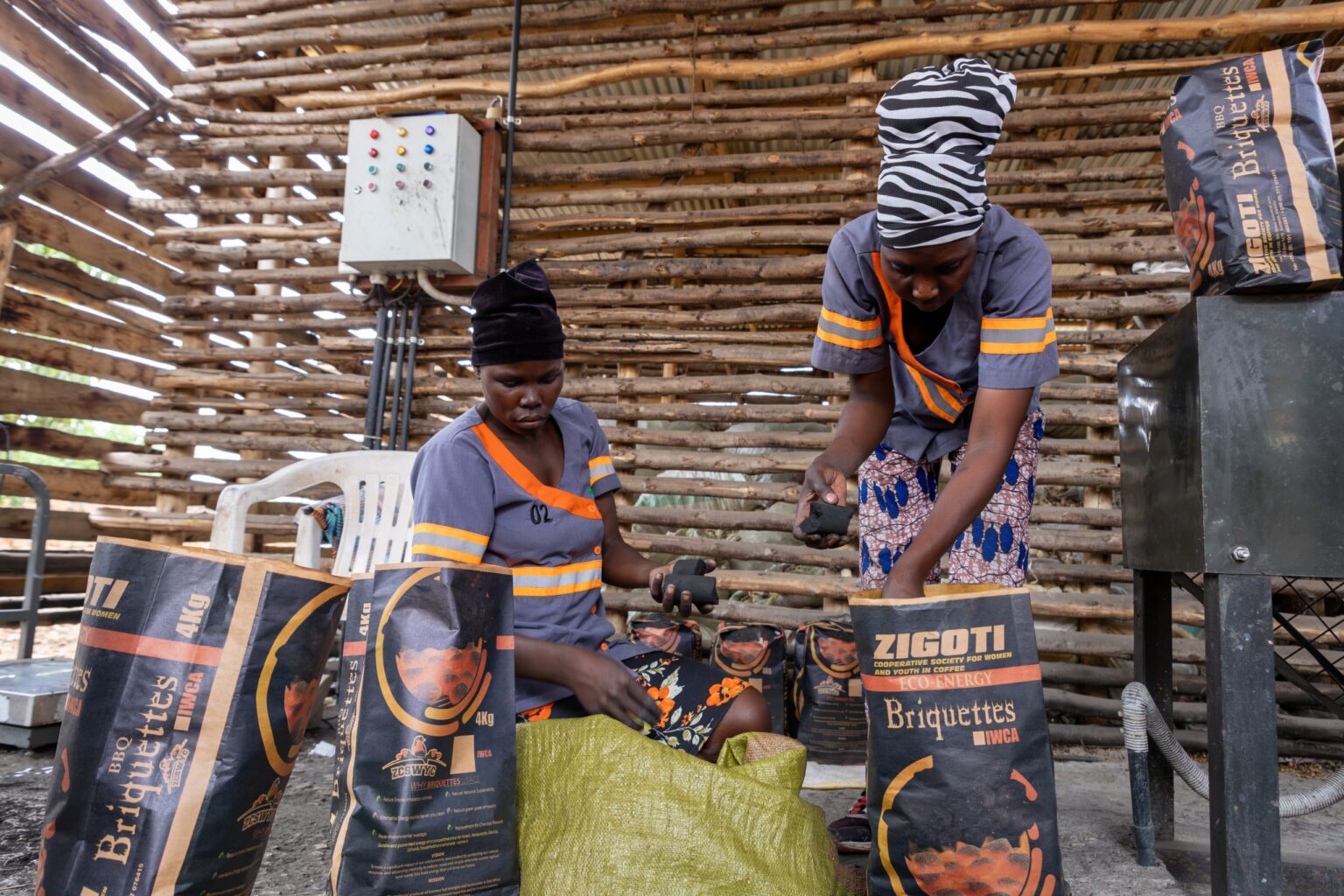
MITYANA, November 23, 2026 – A group of women coffee sorters in Mityana district has diversified into clean energy and organic fertiliser production, turning agricultural waste into alternative sources of income during the coffee off-season.
The women, operating under Zigoti Women in Coffee Savings and Credit Cooperative Organisation [SACCO], have ventured into producing cooking briquettes from coffee husks and organic fertiliser using black soldier fly larvae.
The initiative is helping the 68-member SACCO generate additional income at a time when coffee sorting activities decline, leaving many members without work.
Resty Nakayenga, 52, a single mother of four, has worked as a coffee sorter at Zigoti Coffee Factory for more than 12 years. She earns a monthly stipend of Shs 350,000 for her casual work and is among the group’s most experienced members.
Nakayenga says the SACCO was formed to improve members’ incomes and economic opportunities, particularly during periods when coffee-related work is limited.
The group initially faced challenges sustaining members’ incomes during the coffee off-season. However, members turned the challenge into an opportunity by investing in the production of briquettes from coffee husks.
Through pooled savings and collective investment, the SACCO acquired resources to start the business, taking advantage of the readily available coffee waste at the factory.
The women use the factory premises to manufacture the briquettes, which are increasingly finding a market among households in Mityana Municipality.
To produce the alternative cooking fuel, members recycle agricultural and other locally available waste, including coffee husks, maize cobs, charcoal dust and cassava flour.
A four-kilogramme pack of briquettes sells for between Shs 10,000 and Shs 18,000, depending on the distance to the market.
Suzan Namigadde, the SACCO treasurer, says the additional enterprises have improved members’ savings capacity over the past eight months.
“Our savings have grown during the past eight months because we started these other businesses and members started getting more money,” Namigadde says.
Beyond clean energy, the SACCO has also ventured into organic fertiliser production through the breeding of black soldier fly larvae.
The larvae feed on organic waste and produce nutrient-rich frass, which can be used as an organic soil amendment.
The group sells the fertiliser to farmers growing vegetables and flowers, as well as commercial agricultural producers in Mityana, Wakiso, Mpigi and Mubende districts.
Sarai Nansamba, a member of the SACCO, says the diversification has enabled members to earn income beyond the coffee harvesting and processing seasons while providing useful products to surrounding communities.
“These projects show how farm waste can keep earning money long after the coffee harvest ends, and this has helped us sustain ourselves. But we are also adding to the communities we live with,” Nansamba says.
During the coffee season, members undertake several activities at the factory and surrounding coffee farms, including sorting and cleaning coffee beans, tending coffee gardens, mulching fields and handling harvested coffee.
William Muyanja, the operations manager at Zigoti Coffee Factory, describes the SACCO as an example of how collective action can improve women’s economic opportunities.
“We have many women here, but they all come together from different areas and start small. Today they are a reflection of working smart, and cooperatively,” Muyanja told theCooperator News in Mityana.
“When you empower a woman, you empower a community. A woman who earns an income can support her children, contribute to her household and create opportunities for others,” he added.
Muyanja says the factory plans to support the SACCO in acquiring improved production technologies for its organic fertiliser business as demand for the product grows.
Meanwhile, Nakayenga, who chairs the group, says members are looking for reliable sources of organic raw materials to sustain production and meet the expanding market demand.
The SACCO’s expansion into fertiliser production comes at a time when farmers in the central agricultural corridor are increasingly grappling with changing weather patterns and declining soil productivity.
Agricultural areas covering Luwero, Nakaseke, Wakiso, Mityana, Mpigi, Gomba, Butambala, Mubende and Kiboga districts depend on soil fertility management to sustain agricultural production.
Prolonged dry spells, declining soil moisture and increasingly unpredictable rainfall patterns have also complicated farming seasons, putting pressure on farmers to improve soil management and maintain productivity.
For the women of Zigoti, however, the initiative demonstrates how agricultural waste can be transformed into commercially valuable products, while creating alternative livelihoods and strengthening rural women’s participation in enterprise development.
https://thecooperator.news/coffee-farmers-in-mityana-please-with-slight-increase-in-coffee-prices/
Buy your copy of thecooperator magazine from one of our country-wide vending points or an e-copy on emag.thecooperator.news
-

-

-

-


