
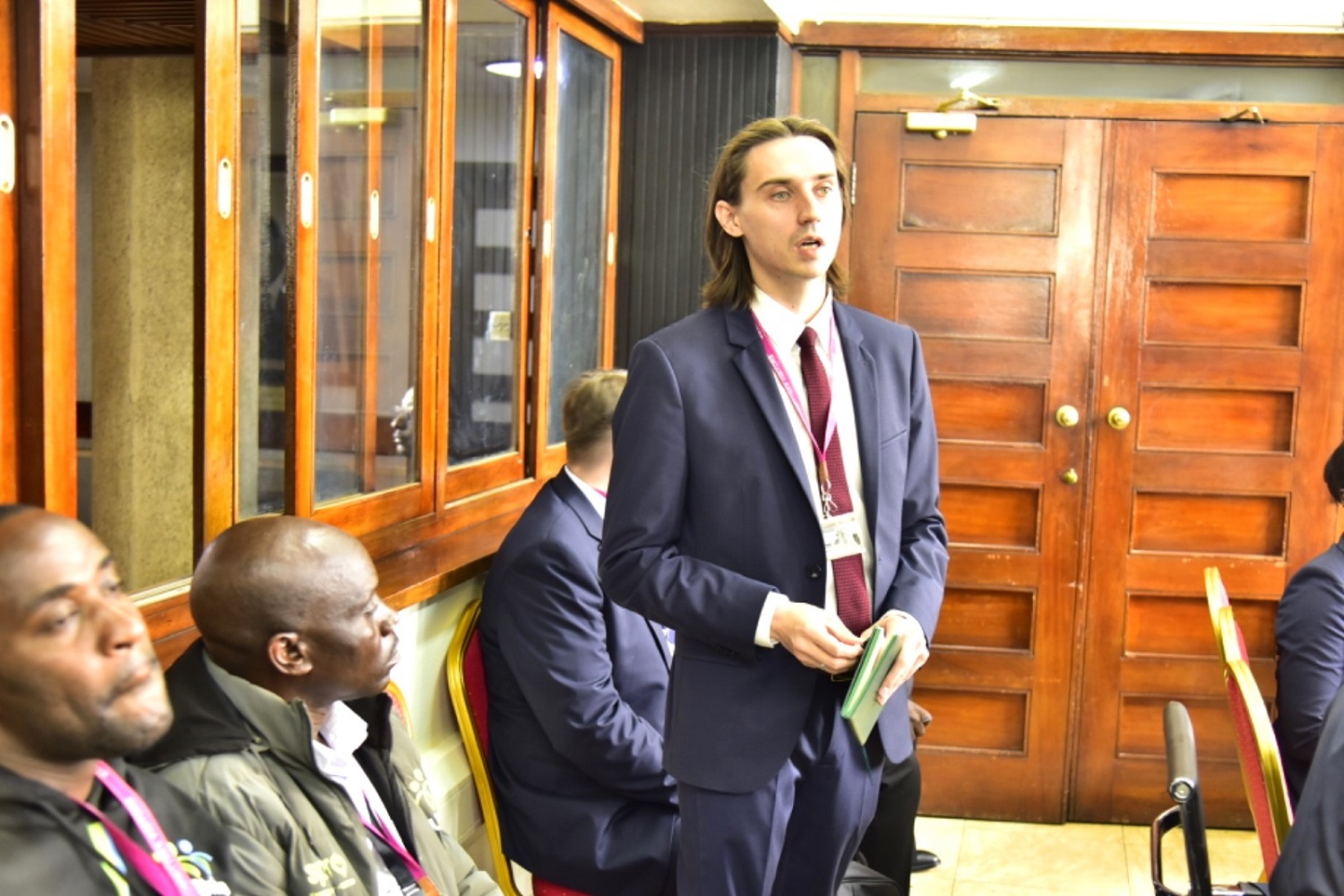
KAMPALA, September 29, 2026 — The Uganda Manufacturers Association [UMA], an umbrella organisation representing manufacturers in the country, has called for the scrutiny of the monopoly being enjoyed by a foreign firm contracted to manufacture digital number plates.
During a meeting with the Parliamentary Committee on Physical Infrastructure and other stakeholders, UMA said the monopoly was contributing to delays, higher costs and disruptions to businesses.
In 2021, government signed a 10-year agreement with Joint Stock Company Global Security, a Russian-based firm, to manufacture digital number plates as the sole contractor in Uganda.
UMA Board Chairperson Richard Mubiru said the digital plates had been introduced to address security challenges associated with counterfeit number plates, but the promised improvements had not been realised.
“From where we sit at UMA, we have not seen a breakthrough in that regard,” Mubiru told the meeting on Monday, chaired by Mwine Mpaka, the Committee Chairperson.
Without naming the firms, Mubiru alleged that the system had sidelined two companies that had previously manufactured number plates.
Members of Parliament on the committee also heard conflicting accounts about delays in the issuance and installation of digital plates, with users reporting waits of several months.
Hassan Ssentongo, a boda boda rider, told the committee that he had paid for his digital number plate on July 28, 2025, but had not received it.
“I paid for a number plate when I was changing from UBD696N to digital, but I paid on July 28, 2025, on order number S43461 and when I complained, they gave me another assessment that I should pay again,” he said.
The chairperson of the National Boda Boda Union, Frank Mawejje, said some customers had been given explanations relating to delays in consignments.
“When you complain to these people, they tell you that there is a war between Israel and Iran and the consignments have delayed on the way,” he said.
He also questioned the effectiveness of the digital plates in recovering stolen motorcycles.
“We have never recovered any motorcycle using a digital number plate. Motorcycles are being recovered using cameras,” he said.
Mawejje further protested the increase in number plate fees from Shs 125,000 to more than Shs 700,000, saying boda boda riders should not pay the same charges as car owners.
Kezekia Bwire, Vice Chairperson of the Uganda Clearing Industry and Forwarding Association, told the committee that the company had been unresponsive to some clients and that several vehicles and motorcycles had gone untraced.
“Honourable Waluswaka [James] has a digital number plate. Can you, as Joint Stock, use your liaison person at police to track the vehicle and tell us where it is?” Bwire asked.
During the interaction, the committee heard of a case in which a vehicle was intentionally kept in a garage and a request was made to track it, but it could not be located.
Mpaka said the committee was examining the security component of the digital number plate system to establish whether it justified the high cost of the plates.
“Several of the stakeholders we have met alleged that it is not working. We are yet to confirm, but it is one of the reasons as to why the cost was pushed to Shs 714,000 or Shs 715,000,” Mpaka said.
He said the committee would engage the Ministry of Internal Affairs to establish whether the security features of the system were functioning as intended and whether they justified the cost to motorists.
“So now eventually we cannot hide away from the security component. We have to establish whether it is working to justify this cost,” Mpaka said.
Mpaka also questioned whether the contractor had sufficient capacity to meet demand, particularly amid complaints about delays in issuing the plates.
“It is also true now that there is a challenge with the number plates. They are delayed. It brings us back to capacity issues. Did you have the capacity then? Do you even have the capacity now?” he said.
Responding to the complaints, Joint Stock Company Global Security’s Project Manager for the Intelligent Transport Monitoring System, Damir Makhmutov, acknowledged that the Government had written to the company over shortages and delays and pushed for faster action.
He attributed some of the delays to wars abroad that had affected consignments.
“We have the technical capability. We have enough staff to perform 1,500 installations per day. But for example, as of the 23rd of September, we have done 1,307 installations,” Makhmutov said.
The committee is expected to conclude its inquiry into the digital number plates and report its findings to parliament.
Buy your copy of thecooperator magazine from one of our country-wide vending points or an e-copy on emag.thecooperator.news


