
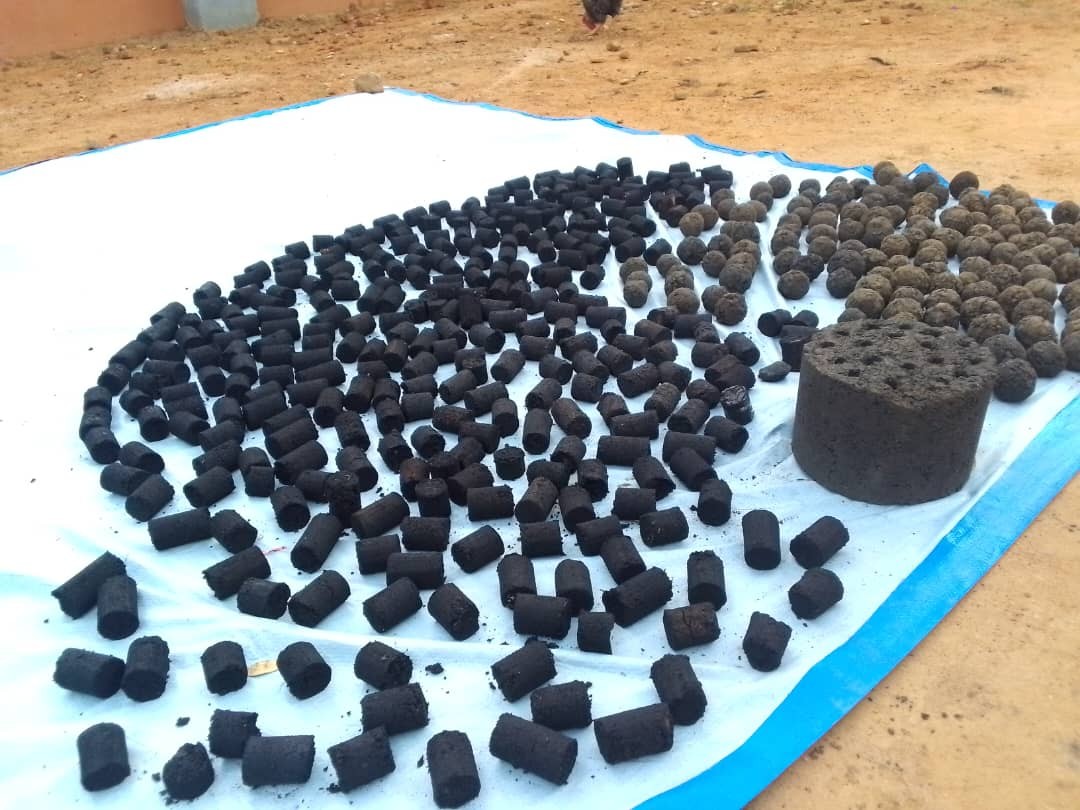
KOTIDO, May 9, 2026 — A major environmental initiative aimed at curbing rapid deforestation caused by charcoal burning in Kotido district is facing significant setbacks.
Despite targeted interventions and technical training intended to transition communities from charcoal and firewood to environmentally friendly briquettes, the project is being hindered by low market demand, deeply rooted cultural preferences, and a critical shortage of production materials.
The initiative, launched to reduce rampant tree cutting for charcoal and firewood, sought to equip local communities with the skills to produce briquettes from waste materials. However, the transition to sustainable energy is proving more difficult than anticipated, as beneficiaries of the training programmes report that their products are struggling to gain acceptance in the local market.
For many producers, the main challenge is not the quality of the briquettes, but consumer attitudes.
Betty Napio, one of the beneficiaries trained in briquette production by Nakere Rural Women Activists [NARWOA], said that despite the efficiency of the alternative fuel source, many residents remain attached to traditional methods.
“We have produced the briquettes, but we continue to face negative attitudes from the locals,” Napio said.
She explained that most residents still prefer charcoal and firewood because they prioritise quantity and immediate availability over the long-term environmental and economic benefits of briquettes.
The sentiment is shared by other producers, many of whom are left with unsold stock. The challenge lies in a market where charcoal is not only a household staple but is also widely perceived as more affordable, despite its environmental cost.
Beyond market resistance, the production of briquettes has also become increasingly difficult. Napio noted that access to essential tools, such as moulds and raw materials, remains a major obstacle.
Without a reliable supply of these materials, producers are struggling to meet even the limited existing demand, making the venture increasingly unsustainable for small-scale manufacturers.
Rose Chilla Namoe, Chairperson of the Star of Wisdom Village Savings and Loan Association [VSLA] group, another beneficiary of the training, confirmed that shortages of production materials remain a recurring concern among members.
However, she believes the problem extends beyond logistics to issues of governance and policy enforcement.
According to Namoe, the briquette industry will continue to struggle as long as the charcoal trade remains largely unregulated and socially accepted. She argued that weak enforcement against illegal charcoal burning creates an uneven playing field for alternative energy producers.
“If the laws against charcoal production and use are not strictly enforced, people will continue to rely on charcoal,” Namoe said.
She added that without policy measures that actively discourage charcoal use through legal and economic pressure, alternative fuels such as briquettes will remain a less attractive option for many households.
Despite the challenges, district authorities are urging producers not to abandon the initiative.
Joel Okello Olal, the Kotido District Forestry Officer, encouraged those who received training to continue production. He said the district leadership is aware of the market gap and is exploring ways to help producers secure reliable buyers.
Olal described the shift to briquettes as an environmental necessity for the region. He pointed to the inefficiency of traditional charcoal production, noting that large amounts of biomass are lost during the burning process.
In contrast, briquette production makes use of waste materials that would otherwise be discarded, offering a more efficient and sustainable approach to energy production.
“I urge the locals to embrace the use of briquettes,” Olal said. “By doing so, they will help protect the environment from destruction. Increased adoption of these alternatives will improve the district’s vegetation cover and ultimately contribute to a more favourable climate.”
The struggle to establish a viable briquette market in Kotido highlights the broader complexities surrounding environmental interventions. While technical training provides communities with the skills needed for sustainable practices, long-term success also depends on market incentives, reliable access to materials, public awareness, and strong policy enforcement.
As the district grapples with these challenges, the success of the initiative is likely to depend on a multi-faceted approach: strengthening supply chains for production materials, intensifying public awareness campaigns to change consumer attitudes, and ensuring strict enforcement of environmental regulations to make sustainable alternatives more competitive.
For now, Namoe and other briquette producers in Kotido remain hopeful, waiting for both the market and policy environment to align with the growing need for cleaner and more sustainable energy solutions.
Buy your copy of thecooperator magazine from one of our country-wide vending points or an e-copy on emag.thecooperator.news


