
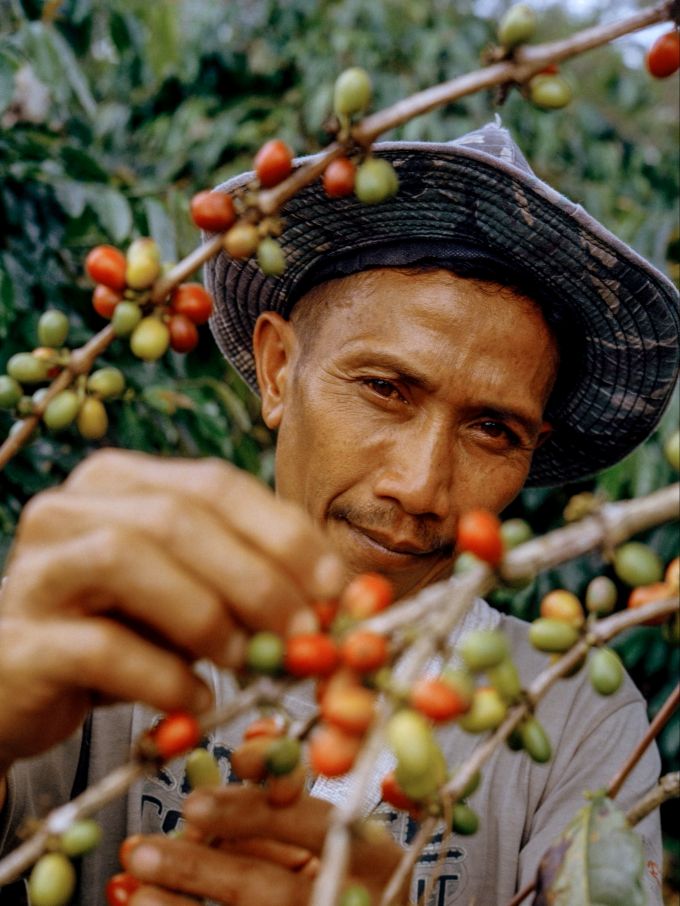
JARKATA, July 22, 2026 — Indonesia’s Agriculture Minister Andi Amran Sulaiman has announced ambitious plans to more than double the country’s coffee export value to Rp 100 trillion [approximately US$ 5.5 billion] in the long term.
The initiative will focus on increasing productivity, introducing high-yielding coffee seedlings, and strengthening the coffee industry from the farm level. The target was announced during a visit to a coffee seedling centre in Bener Meriah, Aceh, where Amran highlighted the international reputation of Gayo coffee.
He recalled a conversation with former US President Bill Clinton, which he said demonstrated the global recognition and importance of Gayo coffee.
“Gayo coffee is already known worldwide. I remember meeting former US President Bill Clinton during a visit to Mexico and Argentina, and the conversation turned to Gayo coffee. It made me proud because it showed that Gayo coffee has earned global recognition. That is why we must continue supporting coffee farmers, especially in Aceh,” Amran said.
To achieve this goal, the government has launched a coffee development programme covering approximately 17,000 hectares in Aceh, including the distribution of 17 million coffee seedlings.
Currently, Indonesia’s coffee exports are valued at around Rp 40 trillion, but Amran said the country has significant potential to increase earnings substantially.
“Coffee exports are currently worth around Rp 40 trillion. We want to increase that to Rp 100 trillion because the potential is enormous,” he said.
The recent increase in coffee prices, which have risen to approximately Rp 110,000 per kilogram from around Rp 50,000, presents an opportunity to improve farmers’ incomes.
The government’s strategy includes strengthening production and marketing systems to ensure coffee farmers retain a larger share of the value generated along the supply chain. Amran added that Indonesia is also strengthening its national export system to improve the country’s bargaining power in global markets.
The minister said Indonesia’s long-term ambition is to move beyond being a supplier of raw agricultural commodities and become a country that can influence prices for key exports, particularly coffee.
“We want Indonesia, as a major producer, to have stronger bargaining power. More of the value created by our commodities should benefit farmers and the country, ultimately improving people’s welfare,” he said.
Amran concluded that increasing the value captured from agricultural commodities would ultimately benefit farmers, strengthen the national economy, and improve overall welfare.
Buy your copy of thecooperator magazine from one of our country-wide vending points or an e-copy on emag.thecooperator.news


