
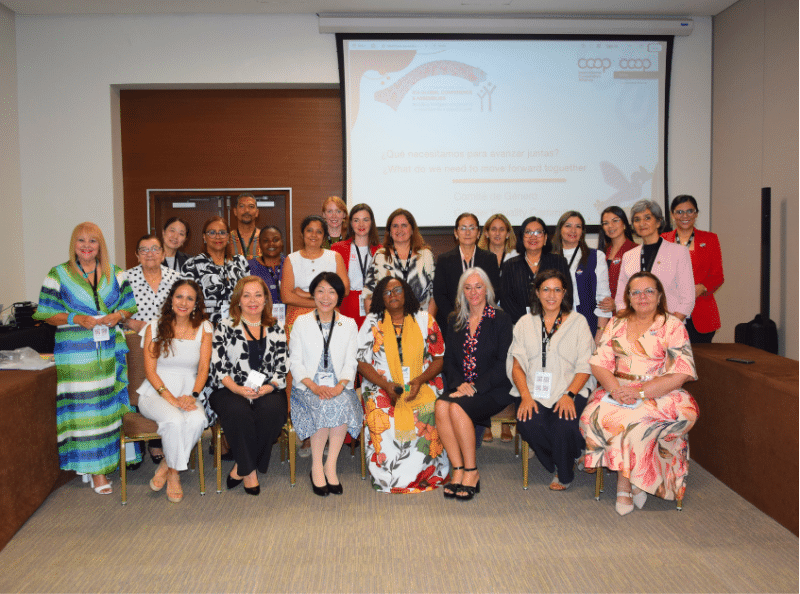
PANAMA CITY, November 13 2026 – The International Cooperative Alliance [ICA] Gender Equality Committee [GEC] has identified four priority areas to advance gender equality across the global cooperative movement, with emphasis on inclusive governance, institutional capacity-building, practical policy implementation and knowledge-sharing.
The priorities emerged from a participatory session held on September 17, 2026, during the ICA Global Cooperative Conference and Assemblies in Panama City, where representatives from different regions, organisations and structures of the international cooperative movement discussed barriers to mainstreaming gender equality within the alliance.
The session, held under the theme “What Do We Need to Move Forward Together?”, explored how existing knowledge, experience and good practices across the ICA network could be harnessed to address gender inequalities and strengthen women’s participation in cooperative leadership and decision-making.
Participants identified four key areas requiring attention: improving knowledge and data on gender equality within the ICA; promoting inclusive governance and leadership; advancing practical policies, training and resources; and facilitating the exchange of experiences and good practices across the cooperative network.
On institutional capacity, participants called for increased training and awareness-raising to help identify gender biases and invisible barriers, as well as integrating gender perspectives into the ICA’s policies and activities.
They also stressed the need for gender-disaggregated data and adequate human and financial resources to support gender equality initiatives, while identifying successful practices that could be replicated across the network.
On governance, the discussions highlighted persistent barriers to women’s participation in leadership and decision-making, including male-dominated leadership structures, lengthy mandates, unequal regional and gender representation, and the financial costs associated with participation.
Participants also called for stronger coordination and information-sharing among the ICA’s different structures and regions to promote more inclusive decision-making.
The committee was further urged to translate gender equality commitments into practical action through policies, training programmes, capacity-building initiatives and increased leadership opportunities for women.
Participants emphasised that organisational culture must also change to ensure gender equality is embedded in the alliance’s operations rather than remaining a general institutional commitment.
The session highlighted existing initiatives among ICA member organisations, including women’s leadership programmes, training, gender data collection, women’s networks, economic empowerment, financial inclusion and policies promoting women’s participation.
Participants said documenting and sharing these experiences would enable organisations to learn from one another, strengthen existing capacities and adapt successful approaches to different institutional and regional contexts.
The discussions further underscored that advancing gender equality should not be left to the GEC alone but requires the active involvement of all ICA structures and sustained commitment to integrating gender perspectives into the organisation’s activities and decision-making processes.
The outcomes will provide a foundation for the committee’s future work, linking existing experience across the cooperative movement to practical institutional reforms aimed at advancing gender equality.
The activity was organised under the ICA-EU Partnership [2024–2028], also known as #coops4dev, a five-year international cooperative development programme aimed at strengthening the ICA network and positioning cooperatives as key development actors within the European Union Development Agenda.
Buy your copy of thecooperator magazine from one of our country-wide vending points or an e-copy on emag.thecooperator.news
-

-

-

-


