
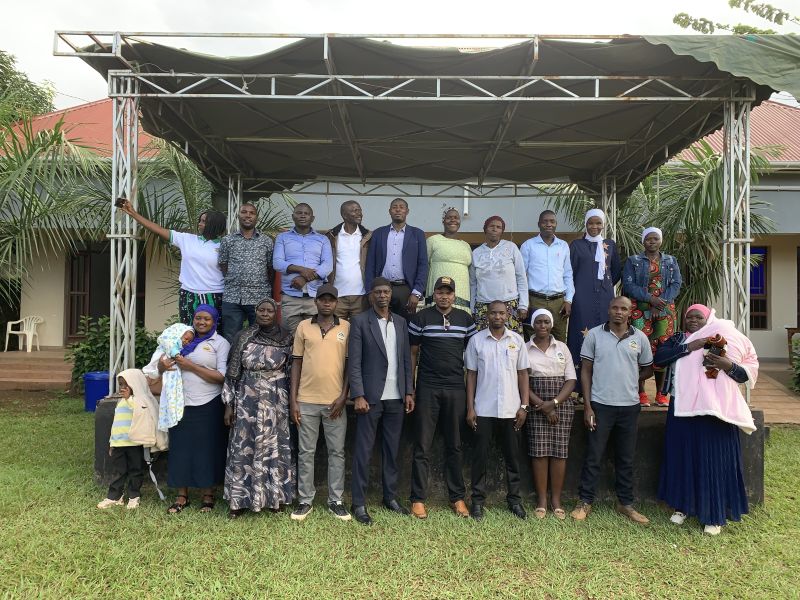
KAPCHORWA, November 12, 2026 — In the heart of the Sebei Sub-region, where many Savings and Credit Cooperative Organisations [SACCOs] continue to grapple with poor management, and a lack of transparency, one SACCO is steadily emerging as a role model for other SACCOs in terms of financial empowerment and transparency.
Wagagai Coffee Farmers’ SACCO, which was established in 2022 with only 30 members, has grown into one of the most respected and trusted SACCOs in the hilly region. Today, it boasts more than 600 active members and over Shs 115 million in share capital.
Founded with the vision of empowering local farmers and small-scale businesspeople, the SACCO introduced an affordable membership registration fee of only Shs 35,000. This low entry requirement enabled many ordinary residents, particularly coffee farmers and young people, to join the organisation without financial strain.
Unlike several SACCOs that rely heavily on loans from commercial banks, Wagagai Coffee Farmers’ SACCO adopted a strategy of building its strength through members’ savings and shares — an approach leaders say has shielded the institution from debt burdens and financial instability.
Speaking during an exclusive interview with this reporter at the SACCO offices in Kapchorwa, chairperson Shaid Mwanga attributed the SACCO’s success to transparency, accountability, and unity among members.
He explained that, from the outset, the leadership focused on building trust by maintaining proper financial records, holding regular meetings, and sharing timely information regarding the SACCO’s operations.
“When we started in 2022, many people doubted us because the region had witnessed several SACCOs collapse due to poor leadership and misuse of funds,” said Mwanga. “But we remained committed to transparency and member participation.
“Every coin saved by members is accounted for. Today, we have over 600 members and more than Shs115 million in share capital because people trust us.”
Mwanga further noted that, unlike other SACCOs that rush to borrow huge sums from commercial banks, Wagagai Coffee Farmers’ SACCO chose to grow gradually using internal resources.
According to him, this strategy has enabled the SACCO to avoid the high-interest burdens that have crippled many cooperative societies in the Sebei Sub-region.
“One of the biggest problems affecting SACCOs is over-borrowing from banks. Some leaders borrow beyond the repayment capacity of members, and in the end the SACCO collapses,” he said.
“We decided to grow within our means, encourage savings, and support productive investments among members.”
Vice-chairperson Doreen Yapsiwa described the SACCO as a life-changing platform that has empowered women, youth, and farmers across the region.
She noted that many members who previously depended solely on subsistence farming have now ventured into business and improved their standards of living through affordable loans and savings programmes offered by the SACCO.
“We are proud that our SACCO has become an example in Sebei,” Yapsiwa said. “Women are now able to save money independently, pay school fees for their children, and invest in businesses. The unity among members has greatly contributed to our success.”
She added that the SACCO’s leadership prioritises financial literacy and continuous engagement with members to ensure that everyone understands the importance of saving and responsible borrowing.
Among the beneficiaries is Alex Maguge, who says joining Wagagai Coffee Farmers’ SACCO completely transformed his financial life.
Before joining the SACCO, Maguge struggled to access affordable capital to support his farming and small business activities.
He explained that commercial bank loans were expensive and difficult to obtain due to strict requirements.
“Before joining the SACCO, life was not easy,” Alex said. “Banks demanded collateral and charged high interest rates. But through this SACCO, I managed to save consistently and later accessed a loan that helped me expand my farming activities.
“Today, my income has improved, and I can support my family comfortably.”
Maguge praised the SACCO leadership for maintaining transparency and ensuring that members receive dividends from their savings and investments.
According to him, this has motivated many people within the community to join the cooperative.
“People trust this SACCO because the leaders are honest,” he added. “Members receive reports, and dividends are distributed fairly. That is why the SACCO continues to grow every year.”
Another inspiring story comes from Chebet Ashura Chebet, whose life changed after joining the SACCO.
Chebet revealed that, through savings and loans obtained from the SACCO, she was able to purchase land, start a goat-rearing project, and establish a small clothing business.
“I joined with little hope because many SACCOs had disappointed people before,” Chebet explained. “But this SACCO gave me confidence. I managed to buy land, start rearing goats, and open a small business selling clothes.
“My life and my family’s welfare have improved greatly.”
She encouraged women and young people in the region to embrace a culture of saving and join trusted SACCOs that prioritise accountability and member welfare.
As the SACCO continues to grow, leaders say their next target is to increase financial inclusion among rural farmers, strengthen coffee production, and expand investment opportunities for members.
The SACCO also plans to introduce more training programmes aimed at equipping members with entrepreneurship and financial management skills.
Local residents and community leaders have praised Wagagai Coffee Farmers SACCO for setting a new standard within the cooperative movement in Sebei.
Many believe the SACCO’s model of transparency, low registration costs, and member-centred leadership could help restore public confidence in cooperative societies across the region.
With more than Shs115 million in share capital and a rapidly growing membership, Wagagai Coffee Farmers’ SACCO is not only transforming individual livelihoods but also demonstrating that properly managed SACCOs can become powerful engines of economic growth in rural communities.
Buy your copy of thecooperator magazine from one of our country-wide vending points or an e-copy on emag.thecooperator.news


