
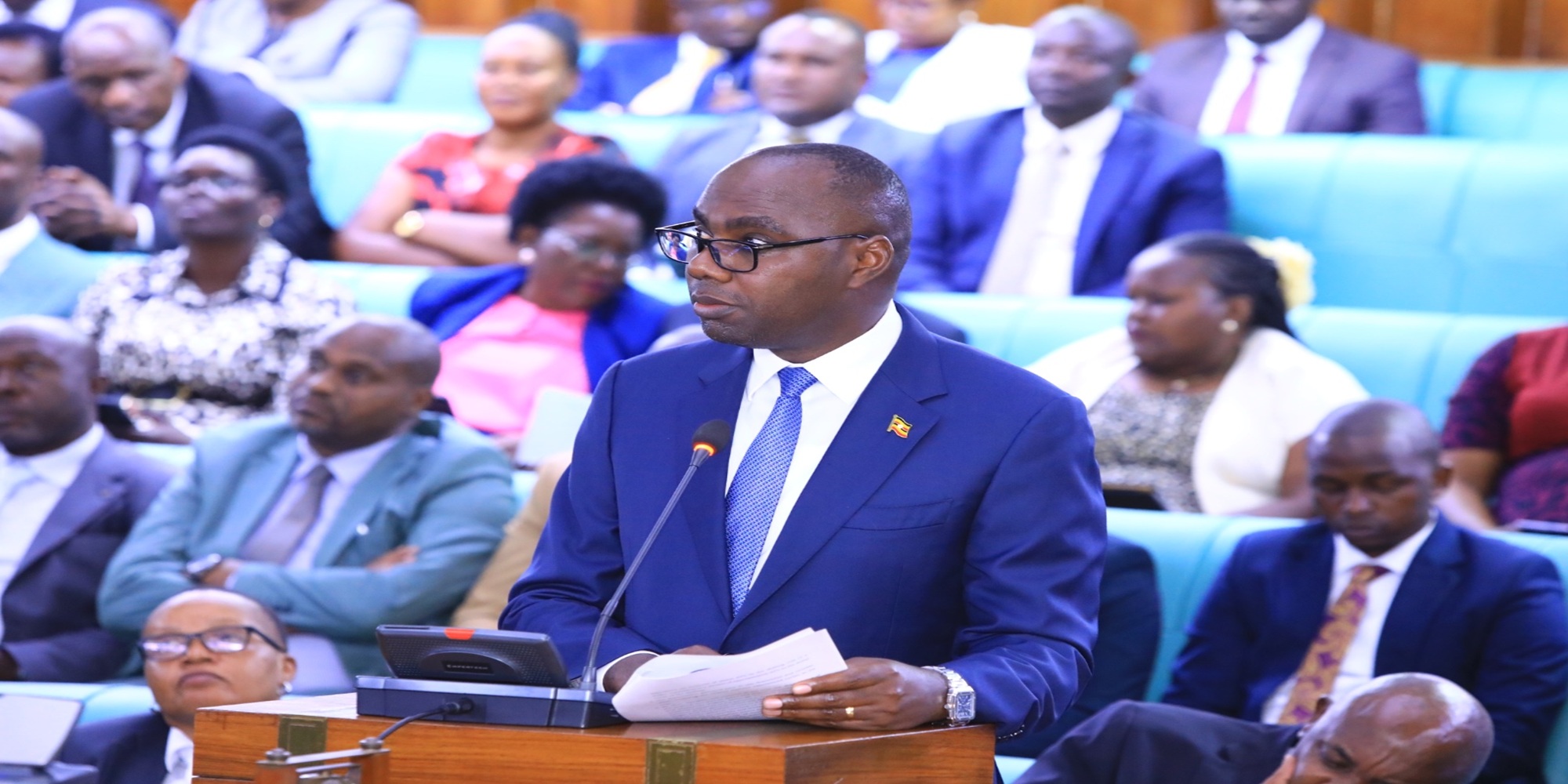
KAMPALA, October 28, 2026 – Government has urged Ugandans to remain calm and avoid panic buying of foreign currency as the shilling faces mounting pressure from increased demand for US dollars, declining export earnings and reduced tourism receipts.
The Minister of State for Finance, Planning and Economic Development, Henry Musasizi, said speculative foreign exchange transactions and panic buying could worsen the situation by creating unnecessary demand for dollars and further weakening the local currency.
Presenting a statement on the state of the economy on Tuesday, Musasizi said the government was working closely with the Bank of Uganda [BoU] to stabilise the foreign exchange market through tighter monetary conditions, expenditure restraint and careful prioritisation of public spending.
“Bank of Uganda has tightened monetary conditions, including raising the Central Bank Rate from 9.75 percent to 12 percent and increasing commercial banks’ cash reserve requirement to 13.5 per cent from 11 percent. These measures are intended to moderate excessive demand, contain inflationary pressures and support confidence in the shilling,” Musasizi said.
The minister attributed the depreciation pressures on the shilling largely to an imbalance between the demand for and supply of foreign exchange, particularly the US dollar, which is widely used to finance imports and other international transactions.
He said increased demand for foreign currency from the energy sector had significantly contributed to the pressure on the local currency.
“According to the Bank of Uganda, net foreign exchange demand from the energy sector increased from US$ 360 million in the three months ending September 2025 to US$ 620mln in the corresponding period of 2026. This represents an increase of US$ 260mln, adding significant pressure to the foreign exchange market,” Musasizi said.
The minister explained that the weakening shilling was also affecting domestic fuel prices, as petroleum importers require more local currency to purchase dollars needed to pay for fuel imports.
He said the government would continue implementing measures aimed at ensuring adequate fuel supplies and protecting consumers against unnecessary price increases.
“To cushion consumers against high fuel prices, government will continue to promote a free, fair and competitive petroleum market that ensures reliable and uninterrupted fuel supplies. This will help prevent supply shortages, maintain healthy competition and moderate avoidable price pressures on consumers and businesses,” he said.
Musasizi further attributed the foreign exchange pressures to declining global prices for Uganda’s key agricultural exports, particularly coffee and cocoa, which have affected the country’s dollar earnings.
He also cited reduced tourism receipts arising from Ebola-related travel restrictions and health-screening measures, saying these had temporarily constrained foreign currency inflows.
The minister said government would prioritise spending on essential services and productive sectors capable of generating employment, stimulating economic activity and increasing foreign exchange earnings.
“In implementing expenditure restraint, government will prioritise essential services, critical obligations and investments that strengthen production, employment and foreign exchange earnings,” Musasizi said.
He added that priority would be given to interventions under the government’s Ten-fold Growth Strategy, particularly agro-industrialisation, tourism, mineral development, science, technology and innovation, alongside the infrastructure and services required to support these sectors.
MPs propose measures to stabilise economy
During the parliamentary debate, legislators proposed several interventions to address the foreign exchange pressures, improve government revenue collection and protect Ugandans against the rising cost of living.
Nyendo-Mukungwe Division Member of Parliament Gyaviira Lubowa urged the Uganda Revenue Authority [URA] to strengthen its engagement with the business community and adopt more flexible approaches to tax collection.
He said excessive enforcement measures, including the auctioning of traders’ merchandise, could undermine businesses already struggling with difficult economic conditions.
“I would request the minister that in the interim, he encourages URA to link up with the business community so that instead of just implementing procedures such as auctioning their merchandise, they can agree on terms to help them meet their tax obligations,” he said.
Rukiga County MP Patrick Kiconco called on government to intensify diplomatic efforts to reassure international travellers that Uganda was free of Ebola, arguing that lingering concerns about the disease were hurting tourism and foreign exchange earnings.
“Uganda has not registered any new Ebola case, but we are still blacklisted and are not receiving tourists. There are people who might be afraid to come to Uganda because going back abroad could become problematic,” Kiconco said.
Kabweri County MP Patrick Wakida cautioned government against drawing down the country’s foreign exchange reserves to defend the shilling, warning that such an intervention could provide only temporary relief while weakening the country’s financial buffers.
“Kenya touched their reserve in April, but if it was in December, they would not have done so. If we touch our reserve now, it will end up in consumer products. Let us advise our constituents to manage what they have for now. We are in a recession but we will recover,” Wakida said.
Upper Madi County MP Martin Drito proposed that the government consider increasing the proportion of gold held in Uganda’s international reserves to reduce reliance on the US dollar and strengthen the country’s financial position.
Meanwhile, Kumi District Woman MP Christine Apolot [Independent] and Paul Mwiru of Jinja South Division East urged the government to consider introducing a national minimum wage to improve workers’ purchasing power amid rising living costs.
The proposals came as government sought to reassure the public that measures were being undertaken to contain inflationary pressures, restore confidence in the shilling and safeguard the country’s economic stability.
As of yesterday, the exchange rate for a US dollar was Shs 4,390.
Buy your copy of thecooperator magazine from one of our country-wide vending points or an e-copy on emag.thecooperator.news
-

-

-

-


