
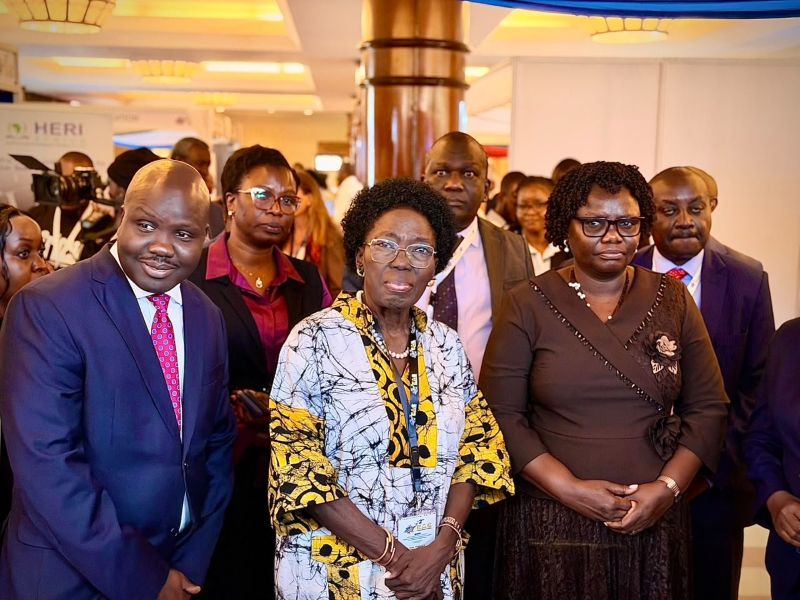
NAIROBI, August 27, 2026 — East African Community [EAC] Partner States have committed to strengthening education systems, improving learning outcomes and increasing investment in teachers, skills and equity as the 2nd EAC Regional Education Conference concluded in Nairobi, Kenya.
The four-day Conference, held from August 25-28, brought together more than 600 education leaders, policymakers and stakeholders from the eight EAC Partner States to address persistent learning gaps, unequal access to education, skills mismatches and growing pressure on education systems.
Opening the Conference, Chief Guest Beatrice Askul Moe, Cabinet Secretary for East African Community and Arid and Semi-Arid Lands, representing the President of the Republic of Kenya, called for increased investment in teacher education, professional development and improved working conditions.
“As regional integration deepens, our systems must become more interoperable. A child moving between Partner States should not have their education interrupted because they crossed a border,” she said.
Askul also called for education systems that promote equity and facilitate greater mobility of learners across the region.
“Curriculum transformation without teacher transformation cannot succeed. As a region, we should regard our teachers not simply as employees of national systems, but as a community of East African professionals,” she said.
The Chairperson of the EAC Council of Ministers, Rebecca Alitwala Kadaga, First Deputy Prime Minister and Minister for East African Community Affairs of Uganda, called for stronger regional cooperation and harmonisation of education systems.
Kadaga said education must support the region’s integration agenda and prepare learners to participate in an increasingly interconnected East African economy.
She emphasised the need to align education policies, curricula and qualifications to facilitate the movement of learners and skills across Partner States while ensuring that education systems respond to shared regional development priorities.
EAC Deputy Secretary General in charge of Productive and Social Sectors, Ariik Malueth, highlighted progress made by the Community in developing regional frameworks to enable Partner States to advance education reforms collectively.
“At basic education level, the EAC has developed strategies to support harmonisation and strengthen the foundations for lifelong learning and skills development. At TVET level, the EAC TVET Qualifications Framework has been developed and is awaiting approval, which will support greater recognition of qualifications, skills mobility and stronger alignment between training and the regional labour market,” he said.
Malueth also highlighted the region’s work on guidelines for compiling education statistics to improve the availability of comparable and reliable evidence for regional education policy.
The programme has also supported the revision of the primary school curriculum to incorporate Statistics, with the aim of strengthening analytical capabilities from an early stage.
At higher education level, the EAC is advancing the East African Common Higher Education and Research Area, with emphasis on harmonisation, innovation, partnerships and the mobility of knowledge and skilled graduates across the region.
“These initiatives demonstrate that regional cooperation in education is already producing practical frameworks. Our responsibility now is to ensure that these frameworks translate into better learning, stronger institutions, relevant skills and greater opportunities for East Africans,” Malueth said.
Tanzania’s Minister for Education, Science and Technology, Prof Adolf Mkenda, called for greater emphasis on foundational learning as the basis for improving education outcomes, alongside continued investment in teachers, quality education and skills development.
Mkenda said education systems must equip learners with the knowledge, competencies and adaptability required to navigate a rapidly changing world of work.
Despite expanded access and major reforms across the region, persistent inequalities continue to affect children in rural and marginalised communities, learners with disabilities and other vulnerable groups.
Learning quality remains uneven, while teacher shortages, resource constraints and weak transitions between education levels continue to limit opportunities for many young people.
Mary Goretti, Executive Director of Uwezo Uganda and Board Chair of RELI Africa, described the Conference as an important platform for policy dialogue, bringing together policymakers, researchers, practitioners and other education actors to exchange evidence and develop practical responses to shared challenges.
She called for stronger links between evidence, policy and implementation to ensure that education reforms translate into improved learning outcomes.
The Conference reviewed progress since the inaugural regional education conference held in Arusha in 2024, while identifying implementation gaps and building consensus around actions requiring greater political, technical and financial commitment.
The priority areas include early and foundational learning, teacher capacity and professional development, inclusive education, digitalisation and innovation, TVET and skills development, stronger links between education and industry, research and data, and sustainable education financing and governance.
Participants included representatives of UNICEF, GIZ EAC, RELI Africa, the Association for the Development of Education in Africa [ADEA], Mzizi Elimu Afrika, PAL Network, EASTECo, IUCEA, FAWE and the Association of African Higher Education Financing Agencies [AAHEFA], among others.
The Conference is expected to produce practical policy recommendations and implementation actions, strengthen regional consensus on education priorities and contribute to a Conference Communiqué or roadmap setting out agreed commitments, priority initiatives, timelines and next steps.
Buy your copy of theCooperator magazine from one of our countrywide vending points or an e-copy on emag.thecooperator.news


