
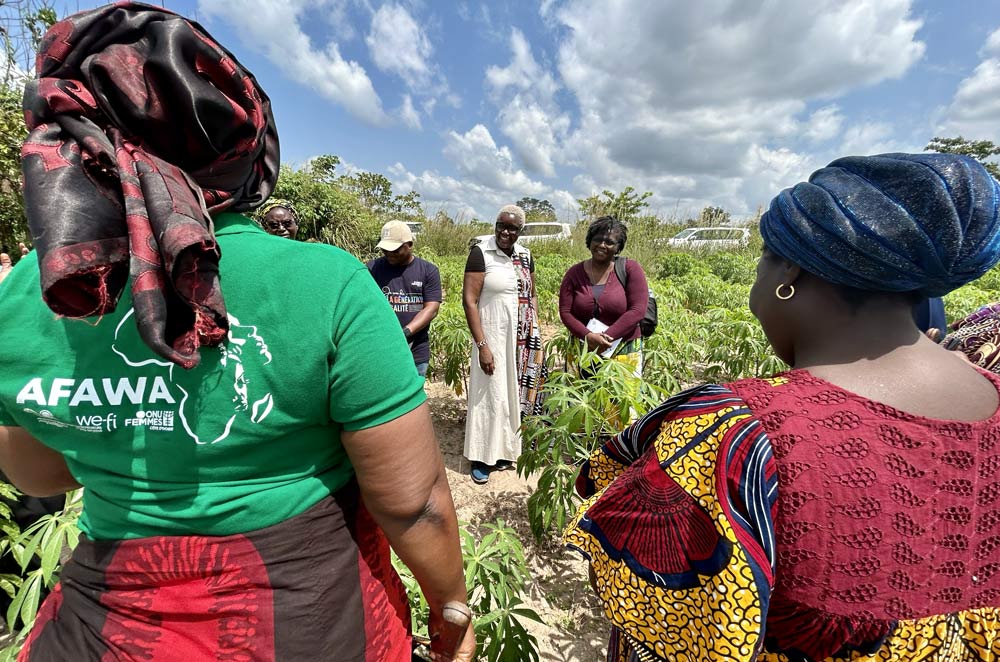
BRUSSELS, April 14, 2026 — Cooperatives worldwide have welcomed the designation of 2026 as the International Year of the Woman Farmer [IYWF], a global initiative aimed at recognising and strengthening the vital role women play in agrifood systems.
The move follows the United Nations’ declaration of 2025 as the International Year of Cooperatives, with the new focus placing women farmers firmly at the centre of efforts to improve food security, livelihoods and gender equality.
Led by the Food and Agriculture Organization of the United Nations [FAO], the IYWF 2026 campaign is being coordinated in partnership with the International Fund for Agricultural Development and the World Food Programme.
The initiative seeks to highlight the often under-recognised contributions of women, who make up nearly half of the global agricultural workforce. Despite their significant presence, women face productivity gaps of up to 24 per cent, largely due to limited access to land, finance, and technology.
According to FAO estimates, closing these gender gaps could increase global GDP by up to US$1 trillion and reduce food insecurity for some 45 million people.
Cooperatives have emerged as a key mechanism for empowering women farmers, enabling them to pool resources, access markets and strengthen their economic resilience. Across the globe, examples of success are evident — from women-led coffee cooperatives in Rwanda to the Benkadi women’s shallot producers’ cooperative in Mali.
In Morocco, women’s argan oil cooperatives in the Sous Valley have transformed traditional practices into globally recognised value chains, while in Paraguay, the Manduvira sugarcane cooperative stands out for its high levels of female participation and ownership.
The International Cooperative Alliance [ICA] and FAO have maintained a long-standing partnership, including collaboration under the Committee for the Promotion and Advancement of Cooperatives (COPAC) and a memorandum of understanding signed in 2018 to support the UN Decade of Family Farming [2019–2028].
Their joint efforts have focused on strengthening agricultural cooperatives and farmer networks to enhance food security and nutrition globally.
More recently, FAO’s Regional Office for Latin America and the Caribbean signed an agreement with ICA in 2024 to boost support for cooperatives across the region. The partnership aims to mobilise resources, promote enabling legislation such as the Model Law on Agri-food Cooperatives, and encourage innovation and knowledge-sharing.
At the 64th session of the Commission for Social Development, FAO also participated in a side event organised by ICA on advancing social development through cooperative and social solidarity economy solutions. The discussion underscored the importance of cooperatives in supporting marginalised groups, particularly women and young farmers.
Among the initiatives highlighted was the Youth Declaration on Cooperatives in Agrifood Systems, developed at the World Food Forum, which brought together young cooperators to address barriers to land, finance, markets and governance.
Looking ahead, stakeholders have emphasised the need for stronger policy alignment and partnerships to enhance the leadership and participation of women farmers.
In March, ICA representatives meeting in Rome for the #coops4dev🌍 Annual Review also held discussions with FAO officials at the organisation’s headquarters, exploring potential collaboration around IYWF 2026. Areas of focus include legislation, cultural heritage, policy development, and support for regions such as the Near East and North Africa [NENA] and the Commonwealth of Independent States [CIS].
With strong overlap between the cooperative movement and women farmers, 2026 is being seen as a pivotal moment to deepen partnerships and scale up efforts to empower women in agriculture worldwide.
https://thecooperator.news/amolatar-women-farmers-ask-fao-for-storage-facilities-tractors/
Buy your copy of thecooperator magazine from one of our country-wide vending points or an e-copy on emag.thecooperator.news


