
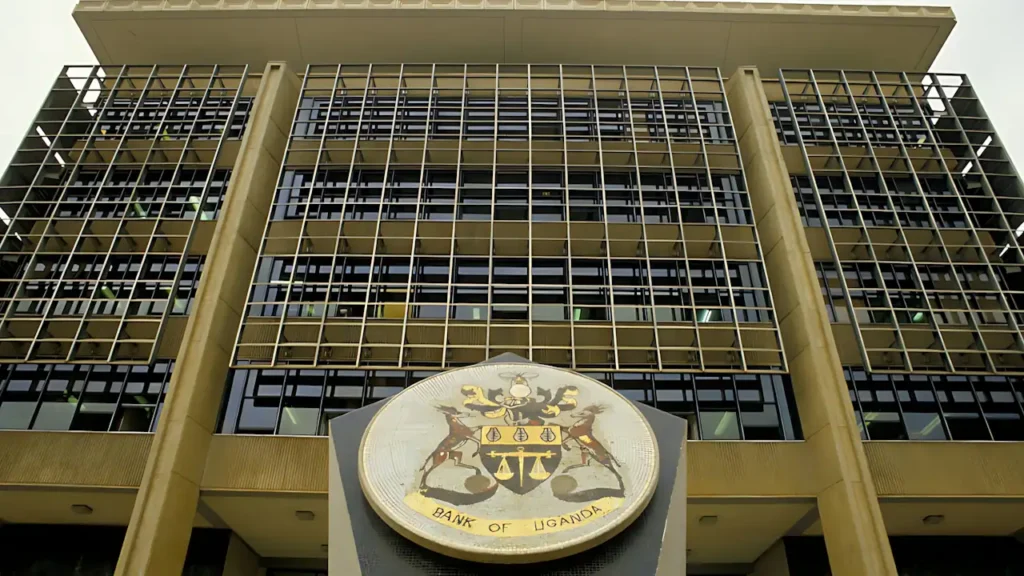
KAMPALA, September 21, 2026 — Large Savings and Credit cooperative Organisations [SACCOs] identified to fall under the Bank of Uganda’s regulatory framework have until September 30, 2026, to submit their licensing applications, with the Central Bank warning that the deadline will neither be lifted nor extended.
The warning is contained in a September 14 letter from Bank of Uganda [BoU] Governor Michael Atingi-Ego to the Chief Executive Officer of Uganda Co-operative Savings and Credit Union Limited [UCSCU], Sylvester Ndiroramukama. UCSCU is the apex organisation for SACCOs in Uganda.
The BoU Governor’s letter followed proposals raised by SACCO stakeholders at a conference held in Kampala in August to seek a collaborative approach to the regulation of SACCOs.
According to Governor Atingi-Ego, BoU’s position remains that from October 1, 2026, regulated financial services providers will be required to transact only with large SACCOs that have obtained the required licences.
“The deadline of 30 September 2026 for Regulated Financial Services Providers [RFSPs] to transact with only licensed large SACCOs remains in effect,” Atingi-Ego said.
He added that the Central Bank had not agreed to an indefinite extension or lifting of the deadline.
The development has prompted the Ministry of Trade, Industry and Cooperatives [MTIC] to direct eligible SACCOs to urgently review their compliance status and address any outstanding requirements before the deadline.
In a circular dated September 18, Registrar of Cooperative Societies Robert Bariyo Barigye, writing for the Permanent Secretary in MTIC, said SACCO boards and management should not rely on ongoing consultations to postpone preparations for the new regulatory arrangement.
“Each eligible SACCO is therefore required to undertake an immediate internal review of its compliance position and identify and address any outstanding matters without further delay,” the circular states.
The Ministry said it recognises concerns raised by SACCOs and other stakeholders over the proposed regulatory transition, but stressed that the proximity of the deadline makes preparations necessary even as consultations continue.
SACCOs affected
The Bank of Uganda said the regulatory framework applies to registered societies providing financial services to their members whose voluntary savings exceed Shs1.5 billion and whose institutional capital exceeds Shs500 million.
According to the Governor’s letter, the applicable framework is the Microfinance Deposit-Taking Institutions Act, Cap. 58, together with the Micro-Finance Deposit-Taking Institutions [Registered Societies] Regulations, 2023.
BoU has consequently asked UCSCU to encourage and support all eligible SACCOs to submit their licensing applications by September 30.
The Central Bank said it remains available to provide regulatory guidance and engage with sector stakeholders on implementation of the framework.
More than 90 large SACCOs across Uganda are earmarked to fall under the Central Bank’s licensing and supervisory framework.
More SACCOs obtain BoU licences
The latest large SACCO to obtain a licence from BoU is Kibaya Youth Development Co-operative Savings and Credit Society Limited in Mbarara City, which received its licence on September 16, 2026.
Other large SACCOs that have already obtained BoU licences include EBO Co-operative Savings and Credit Society Limited, headquartered in Bwizibwera, Mbarara District; Kyazanga-Kwegatta Microfinance Co-operative Savings and Credit Society Limited in Lwengo District; MADFA Co-operative Savings and Credit Society Limited in Masindi District; and Share an Opportunity Zirobwe Co-operative Savings and Credit Society Limited in Luwero District.
The licences are being issued as eligible SACCOs race to meet the September 30 deadline.
Transition concerns
The Ministry said the regulatory transition should be handled in an orderly manner to avoid disruption to SACCO operations and protect members, particularly the safety and security of their savings.
It also warned SACCO boards, chief executive officers, general managers and other responsible officers that they would be expected to take institutional and personal responsibility for ensuring preparations are completed before the deadline.
The Ministry said the objective is to ensure that the transition does not create unnecessary uncertainty, disrupt SACCO operations or expose members’ funds to avoidable risks.
The regulatory deadline comes amid continuing discussions between eligible SACCOs, UCSCU and other stakeholders over how the new regulatory arrangement should be implemented and how institutional mandates and regulatory responsibilities should be harmonised.
For now, however, the Bank of Uganda has maintained that the September 30 licensing deadline remains in force, leaving eligible SACCOs with days to complete the required preparations.
Three institutions and overlapping mandates
The licensing deadline has also brought renewed attention to the wider question of who should regulate SACCOs in Uganda.
At present, SACCOs operate within a regulatory environment involving three government institutions, with their respective mandates arising from different pieces of legislation.
The Ministry of Trade, Industry and Cooperatives regulates cooperative societies under the Cooperative Societies Act, as amended in 2022.
The Microfinance Regulatory Department in the Ministry of Finance, Planning and Economic Development is responsible for financial services under the Tier 4 Microfinance Institutions and Money Lenders Act, 2016, which requires entities providing regulated financial services to obtain a licence.
The Bank of Uganda, meanwhile, is relying on the Microfinance Deposit-Taking Institutions Act, Cap. 58, together with the Micro-Finance Deposit-Taking Institutions [Registered Societies] Regulations, 2023, in licensing and supervising eligible large SACCOs.
The overlapping mandates have generated debate within the sector over how the different laws should operate alongside one another.
Some legal practitioners in Uganda argue that while the Cooperative Societies [Amendment] Act, 2022 contains provisions relating to SACCOs, it does not expressly or impliedly provide for the licensing of SACCOs to offer financial services.
Under this interpretation, SACCO registration and licensing to provide financial services are separate processes arising from different laws.
However, the legal interpretation has also raised practical questions about how the different regulatory requirements can operate simultaneously, particularly where the cooperative regulator registers a SACCO while another institution requires it to obtain a financial-services licence.
Attorney General’s opinion
The debate was further complicated by an opinion issued by the Attorney General in January 2026, which addressed the regulation of large SACCOs.
According to the opinion, large SACCOs in Uganda must be regulated and supervised by the Bank of Uganda under the Tier 4 Microfinance Institutions and Money Lenders Act.
The opinion has since become part of the wider discussion about the respective mandates of the Ministry of Trade, the Ministry of Finance and BoU in relation to SACCOs.
The differing legal provisions and institutional mandates have prompted calls for greater clarity in the law governing SACCO registration, licensing, regulation and supervision.
The need for a licence
The licensing question arises from the broader requirement in Uganda’s financial sector that institutions providing regulated financial services must obtain authorisation from the relevant regulator.
Banks, for example, are licensed under the Financial Institutions Act, while microfinance deposit-taking institutions are regulated under the Microfinance Deposit-Taking Institutions Act.
Legal practitioners who support the licensing requirement for large SACCOs argue that registration as a cooperative does not, by itself, amount to authorisation to provide regulated financial services.
They contend that the cooperative legislation and financial-services legislation can therefore operate separately, with registration governed by cooperative law and licensing of financial services governed by financial-sector legislation.
At the same time, they acknowledge practical difficulties arising from the interaction of the two regulatory regimes.
The debate centres partly on the distinction between a SACCO’s status as a cooperative society and its activities as a provider of financial services to members.
Lessons from other countries
The question of how SACCOs should be regulated is not unique to Uganda. Several countries have established specific arrangements for regulating cooperatives that provide financial services.
In neighbouring Kenya, SACCOs are regulated under the Co-operative Societies Act, the SACCO Societies Act and the SACCO Societies [Deposit-Taking SACCO Business] Regulations, 2010.
Kenya has a dedicated regulator, the SACCO Societies Regulatory Authority [SASRA], responsible for the regulation and supervision of deposit-taking SACCOs.
The Kenyan framework brings together expertise from the cooperative and financial sectors, including representation from government and the Central Bank.
In Tanzania, SACCOs form part of the microfinance sector and are regulated under the country’s financial-sector framework, with the Bank of Tanzania playing a central regulatory role.
In Rwanda, SACCOs are regulated by the National Bank of Rwanda, while in Malawi they are treated as financial institutions and are regulated and supervised within the financial regulatory framework, with registration and licensing involving the Registrar of Cooperatives under the Financial Cooperatives Act, 2011.
In Brazil, credit cooperatives are regulated and supervised by the Central Bank of Brazil, which has powers covering licensing and supervision.
Financial cooperatives in China are subject to banking-sector regulation, while in France and Germany financial cooperatives operate within the broader framework governing mutual and cooperative banking, including the European Central Bank’s supervisory arrangements where applicable.
The regulatory models differ from country to country, but the experience of these jurisdictions illustrates different ways of reconciling the cooperative character of SACCOs with the need to regulate their financial activities.
Calls for a single regulatory framework
The regulatory debate has led to proposals for Uganda to establish a clearer and more unified legal framework for SACCOs.
One proposal is for a single law governing the registration, licensing, regulation and supervision of SACCOs and establishing one central regulatory body.
Supporters of such an approach argue that it could reduce overlapping mandates and provide SACCOs with a clearer regulatory pathway while retaining recognition of their cooperative character.
One model proposed is similar to Kenya’s SASRA, with representation from the major institutions involved in the SACCO sector.
Under the proposal, a dedicated directorate or regulatory body could include representatives of the Bank of Uganda, the Ministry of Finance, Planning and Economic Development, the Ministry of Trade, Industry and Cooperatives, the Microfinance Regulatory Authority, Uganda Cooperative Alliance and UCSCU, together with independent members with expertise in cooperative practice and management, law, finance or economics.
The proposed structure would also include a chief executive officer responsible for the day-to-day administration of the body.
The proposal is intended to bring together the interests and expertise of the institutions currently involved in regulating different aspects of SACCO activities.
However, establishing such a framework would require legislative changes and agreement among the relevant government institutions and stakeholders.
For now, the immediate issue remains the September 30 deadline.
While consultations on the wider regulatory framework continue, the Bank of Uganda has maintained that eligible large SACCOs must submit their licensing applications by September 30, 2026, if they are to continue transacting with regulated financial services providers from October 1 under the current arrangement.
https://thecooperator.news/bou-issues-licence-to-mbarara-citys-kibaya-youth-sacco/
Buy your copy of thecooperator magazine from one of our country-wide vending points or an e-copy on emag.thecooperator.news


