
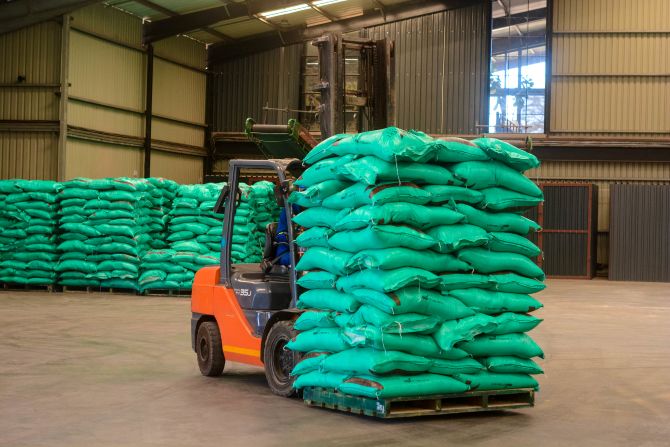
KAMPALA, September 9, 2026 — The African Development Bank [AfDB] Group has approved a framework providing up to US$5.1 billion to help African countries mitigate the impact of the global energy and fertiliser crisis.
The Global Energy and Fertilizer Crisis Response Framework [GEFCRF], approved by the Bank’s Board of Directors on September 1, is intended to provide timely and targeted support to countries facing immediate pressures from the crisis while strengthening their resilience to future shocks.
The framework builds on the Bank Group’s experience with its COVID-19 Response Facility and the African Emergency Food Production Facility. It is designed to provide immediate relief while laying the foundation for stronger, more self-reliant and resilient African economies.
It will be financed through an additional US$ 4.1 billion in African Development Bank lending and up to US$960 million from the African Development Fund [ADF], the Bank Group’s concessional lending arm.
The additional resources will raise the Bank’s 2026 lending target to approximately US$12.7 billion, enabling it to provide targeted assistance to countries affected by the crisis.
The response framework will remain in effect for one year from the date of its approval and will be reviewed before any extension. Support will be demand-driven and tailored to countries’ specific levels of vulnerability, with appropriate financial and policy measures.
The Bank said the continuing crisis in the Middle East was creating a significant external shock for African economies, contributing to higher global prices for energy, food, fertilisers and other commodities on which many African countries rely heavily on imports.
Disruptions to global trade routes and logistics, including key maritime corridors, are adding to the pressure by increasing transport costs, delaying deliveries and exposing weaknesses in supply chains.
The GEFCRF will focus on four main areas.
The first is macroeconomic stabilisation, through rapid counter-cyclical financing, short-term financial buffers and coordinated fiscal, monetary and debt-policy responses during periods of economic stress.
The second is securing critical food, energy and fertiliser supplies, using emergency and trade finance to maintain supplies, support vulnerable populations and stabilise markets.
The third is protecting essential public spending and vulnerable households, including targeted social protection measures aimed at cushioning vulnerable groups, particularly women and young people, while reducing reliance on broad-based subsidies.
The fourth is supporting medium- and long-term resilience, including reforms to reduce dependence on volatile external energy, food and fertiliser markets, diversify supply chains, promote regional solutions and strengthen fiscal resilience and countries’ preparedness to respond to future crises.
“This framework is about listening and responding to the urgent needs of African countries, helping them protect households and vulnerable populations, keep food, fertiliser and energy systems functioning, and preserve hard-won development gains while building greater resilience for the future,” said Abdul Kamara, Acting Vice-President for Country and Regional Operations.
“A crisis response must do more than cushion the shock. It must make countries stronger. That is exactly what this framework aims to achieve,” he added.
Martin Fregene, Officer in Charge of the Vice-Presidency for Agriculture, Human and Social Development, said the framework would help address pressures facing African farmers as the conflict in the Middle East disrupts global trade.
“When fertiliser becomes too expensive or difficult to find, farmers use less and harvests can suffer,” Fregene said.
“Access to finance is part of the solution, helping businesses keep fertiliser moving to farmers, while we work to build stronger fertiliser markets and more local supply in Africa,” he added.
Buy your copy of thecooperator magazine from one of our country-wide vending points or an e-copy on emag.thecooperator.news


