
APAC, September 8, 2026 — A total of 26,000 households in Apac district are set to benefit from land registration programmes aimed at issuing Certificates of Customary Ownership and reducing land-related conflicts.
The initiative is being implemented under two programmes—the Eastern and Southern Africa Small Scale Farmers Forum [ESAFF] land registration project and the government’s Systematic Land Adjudication and Certification [SLAC] programme.
Senior Land Management Officer Eunice Abia said the SLAC programme is targeting 24,000 households, while ESAFF plans to support another 2,000 households to acquire the land titles.
The programmes are intended to help landowners secure legal documentation for their property and protect their land rights.
Speaking to residents during the fifth land camp in Apac, Abia said land conflicts that were previously widespread in the district were gradually declining due to interventions by the government and development partners.
She said that in 2021, under the Development Initiative for Northern Uganda [DINU], a government programme funded by the European Union, 1,507 land certificates were issued to communities.
Abia added that under the SLAC programme, about 4,700 land titles had so far been prepared and were ready for collection out of the 24,000 households targeted.
“Alongside that, we are also happy that ESAFF has come to help us in registering land under Certificates of Customary Ownership and targeting 2,000 households in the district,” Abia said.
She explained that the ESAFF initiative uses a self-financing model under which communities contribute towards the cost of land registration.
Abia commended development partners for supporting land registration, saying their interventions were helping to bridge gaps that government alone could not easily address.
“Land without legal documents is like you don’t have [land],” she said.
Stella Rose Akutui, a programme officer for policy and research at ESAFF, said the organisation had realised that many people struggle to secure their land because they lack knowledge about land rights and procedures for protecting their property.
She said ESAFF was sensitising communities about land rights, registration procedures and the importance of obtaining legal documentation.
Akutui said the organisation was also introducing a self-financing model in which communities, the Ministry of Lands and district authorities share the cost of registering land and acquiring certificates.
She said the land camp, held under the theme “Secured Land for All,” was aimed at closing information gaps on land tenure, providing legal aid and supporting land registration, particularly for vulnerable groups such as women.
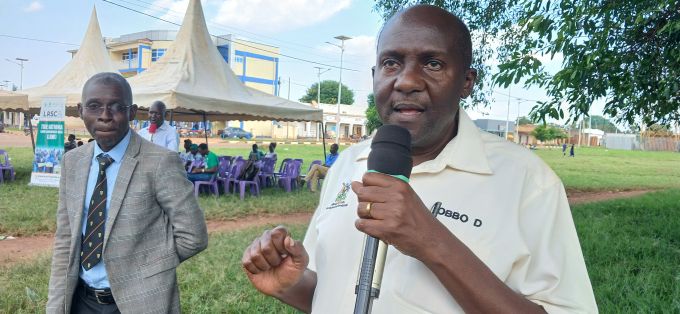
Denis Obbo, the Principal Communication Officer at the Land ministry, said much of the land in northern and eastern Uganda is held under customary tenure, but only a small proportion has been formally registered.
Obbo said Uganda has four land tenure systems—customary, mailo, freehold and leasehold—and urged landowners to register their land and obtain the necessary ownership documents.
He said the growing population was increasing pressure on available land, making it important for people to secure legal documentation before they risk being displaced from land they have occupied for years.
“We have to be careful and they need to be helped in the process. The danger and harm come from our own people,” Obbo said, warning that some people take advantage of others to grab land.
Julius Peter Okai from the Lira Land Zonal Office cautioned leaseholders against selling government land, saying they are required to pay premiums and ground rent and cannot simply sell the land as though they owned it outright.
Abalo Jane, a resident of Apac Municipality, said she owns land but does not have a title.
She said she had constructed a house on the land, but a neighbour later began constructing on a road leading to her home. The municipality stopped the construction but reportedly offered to compensate the neighbour Shs 6 million.
Alinga Charles said his father gave a piece of land to Uganda Prisons in 1971, but the family had never been compensated. He said the family wanted to reclaim the land.
However, Obbo said the land now belongs to the government and cannot be reclaimed, citing constitutional provisions governing land ownership and claims.
uy your copy of thecooperator magazine from one of our country-wide vending points or an e-copy on emag.thecooperator.news
-

-

-

-


