
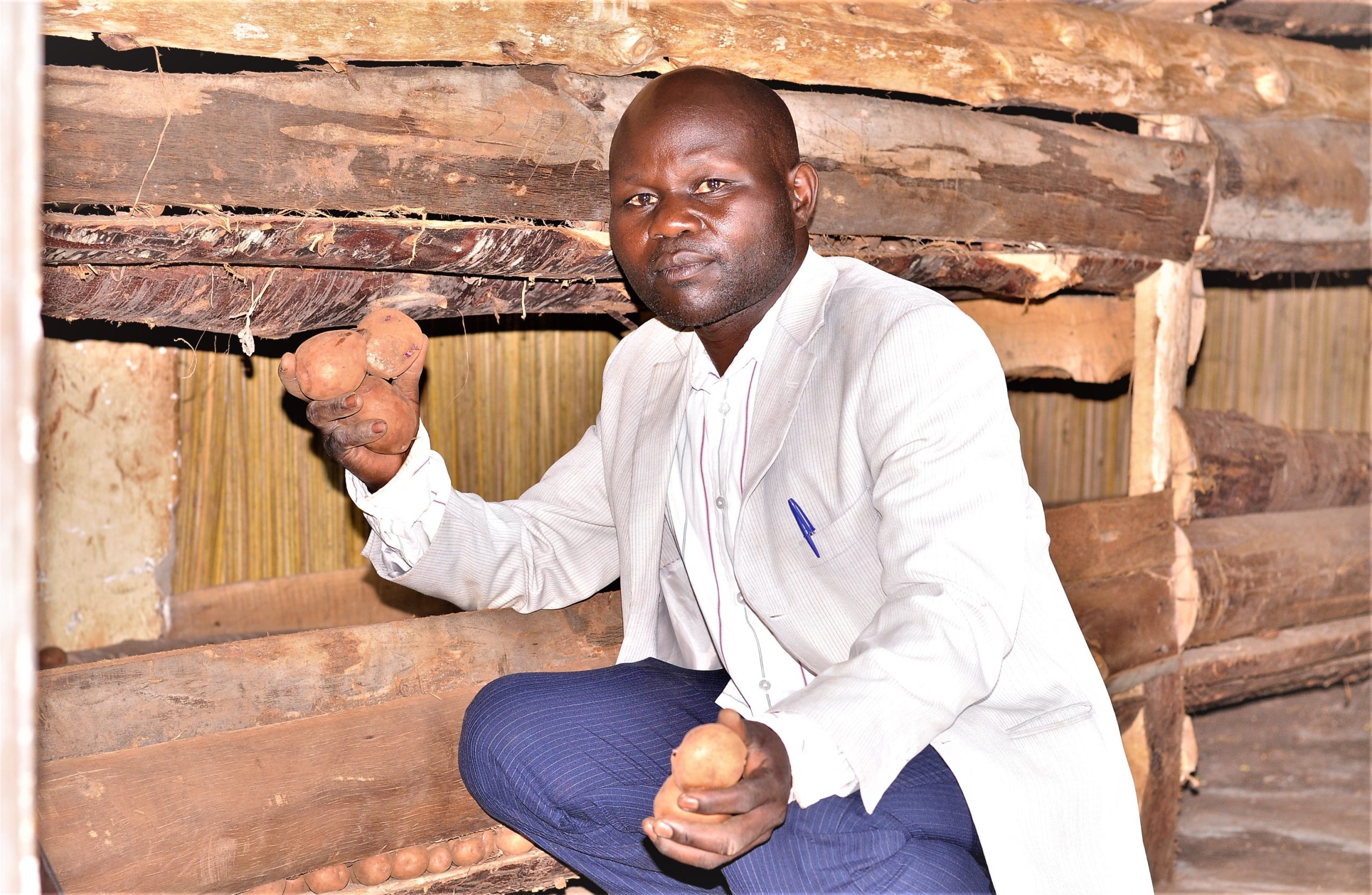
ZOMBO, April 7, 2026 — Irish Potato farmers in Zombo district have urged the government to establish a processing factory, citing growing local and global demand.
The farmers say a factory would enable value addition, improve incomes and create jobs, particularly for young people. They argue that similar investments in other parts of Uganda have transformed livelihoods and strengthened agricultural value chains.
Zombo is increasingly experiencing what farmers describe as a “potato gold rush”, with Irish potato cultivation emerging as one of the district’s most lucrative enterprises. The area’s fertile soils and favourable climate have made it a key production hub, attracting traders from within and beyond the district.
As a result, Irish potatoes have become a staple in many households and a major source of income, supporting employment across the value chain — from farming to trading.
Farmers attribute the sector’s growth to the use of high-quality seeds and improved agronomic practices, which have significantly boosted yields.
One such farmer, Collins Agenonga Wanok, 41, from Nyarka Village in Ayaka Parish, Aka Subcounty, has built a successful seed multiplication enterprise. He says demand for Irish potatoes continues to rise, driven by the growing popularity of potato-based foods such as chips.
“With the right seeds and best farming practices, farmers can harvest up to 40 bags per acre,” he said.
Agenonga began commercial farming in 2023 after receiving Shs 1 million in seed capital under the Parish Development Model [PDM]. Starting with just a quarter-acre, he planted one bag of seed potatoes and harvested 21 basins, earning Shs 945,000.
In subsequent seasons, his output and earnings grew steadily. In the second season, he harvested 80 basins and earned Shs 3.5 million. By the third season, he produced 150 basins, generating Shs 6 million.
In the first season of this year, Agenonga planted 70 basins and harvested 400 basins, earning Shs 18 million. He has since expanded to four acres, planting 80 basins and targeting at least Shs 30 million after costs.
“Irish potatoes require virgin land, constant weeding and close monitoring to control pests and diseases, as well as access to quality seed,” he explained.
He added that many farmers are using PDM funds to establish seed multiplication gardens, describing the programme as a “game changer” that has improved access to inputs, training and markets.
Agenonga noted that adopting practices such as contour ploughing and the use of disease-free and hybrid seeds has significantly improved productivity. However, he cited poor road infrastructure as a major constraint.
“During the rainy season, farmers dealing in perishable goods often get stuck before reaching markets,” he said, adding that climate change is also affecting yields.
Georgina Giramia, another farmer, said Irish potato farming has transformed livelihoods across Zombo within just three years. She said farmers are now planning to form cooperatives to strengthen their case for a processing factory.
“Through proper record-keeping, we have been able to acquire more land and expand into other enterprises such as bananas and pine trees,” she said.
Giramia, however, highlighted limited access to tractor hire services as a bottleneck, urging the government to extend mechanisation support under the PDM.
“Much as we are embracing commercial agriculture, reliance on rudimentary tools limits productivity,” she said.
She added that farmers had hoped for support, including tractor donations, during a past visit by President Yoweri Museveni, but this has yet to materialise.
Another farmer, Silvio Mungujakisa, said about 17 farmers in Nyarka village are engaged in Irish potato growing under PDM but face increasing climate-related risks, including erratic rainfall, floods and drought.
“These challenges call for government intervention, particularly in affordable solar irrigation systems,” he said, noting that many farmers still rely on outdated methods and have limited access to quality inputs.
Zombo District Production Officer, Dr Walter Kumakech, commended farmers for embracing Irish potato farming, describing it as a viable commercial enterprise with high yields and a ready market.
He said about 60 per cent of households engaged in agriculture in the district have improved their livelihoods, thanks largely to soil fertility and strong demand for produce.
“A farmer who follows recommended practices can harvest at least 80 bags per acre and earn about Shs 1.8 million when selling seed,” he said.
Kumakech supported calls for a mini-processing factory, saying it would enhance value addition and boost farmers’ incomes. However, he acknowledged challenges such as under-resourced extension services and limited access to market information.
“To improve productivity, farmers must adopt modern agricultural practices and use high-yielding, improved seed varieties from recognised research institutions,” he said.
He added that Zombo district has so far disbursed Shs 18.7 billion to more than 19,000 PDM beneficiaries, most of whom are engaged in enterprises such as Irish potatoes, coffee and bananas.
https://thecooperator.news/hailstorm-destroys-crops-leaving-zombo-farmers-in-despair/
Buy your copy of thecooperator magazine from one of our country-wide vending points or an e-copy on emag.thecooperator.news


