
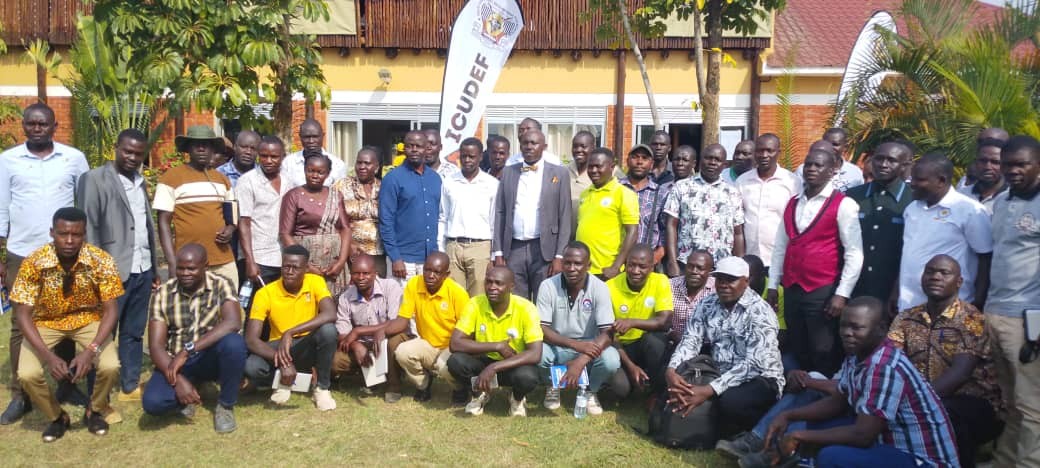
SOROTI, December 10, 2025 — Veterinary professionals in the Teso Subregion have undergone training in artificial insemination [AI] techniques as part of efforts to enhance beef and dairy productivity for the local livestock farmers.
Artificial insemination in animals is a common breeding technique used to collect semen from superior males to impregnate females, significantly improving genetics, preventing disease spread, reducing costs [no need to maintain bulls], and allowing for widespread use of elite sires for livestock [cows, pigs, sheep, turkeys].
The training was organised through a partnership between the Iteso Cultural Union [ICU] and a global cattle-breeding cooperative/company URUS Genex, also known as URUS Group based in the United States.
ICU Prime Minister Andrew Ocole, speaking to theCooperator, welcomed the initiative and highlighted the importance of AI in upgrading the region’s low-yielding breeds and transforming livelihoods in Teso. He stressed the need for a formal agreement with URUS Group, after which service prices will be communicated to the public.
“The programme is expected to strengthen cattle breeding, increase milk production and contribute to long-term economic transformation in the Teso Subregion,” Ocole said.
Derrick Mutungi, URUS Genex Uganda Coordinator for the western region, noted that Teso, historically a prominent cattle-keeping area, remains a key focus as far as improving livestock farming is concerned in Uganda.
“We at URUS Genex hope to engage Teso farmers more deeply to ensure they play their part in improving the livestock sector, especially regarding nutrition of animals, and management,” Mutungi said.
Meanwhile, Dr Peter Emmanuel Eriaku, Executive Director of the Iteso Cultural Development Foundation [ICUDEF], said the organisation is working to build partnerships with ICU, district local governments, URUS Genex and AI technicians to drive progress in the regional livestock sector.
Eriaku expressed optimism that this collaborative effort, coordinated by ICUDEF, will transform local herds into high-productivity ones and ultimately boost household incomes.
“Embracing artificial insemination will significantly increase household incomes and foster economic development across the subregion,” he said.
Stephen Ochola, Chairperson of district LCVs in the Teso Subregion, observed that many farmers have not yet embraced the practice. He said local leaders and veterinary officers will intensify sensitisation to raise awareness of the benefits of AI and encourage adoption.
He noted that artificial insemination allows farmers to select the sex and traits of their cattle, such as milk or meat production, giving them greater control over productivity.
Ochola appealed to the government for Shs 1.2 billion to kick-start the initiative and support farmers more effectively, and urged farmers to form groups for easier management and outreach.
Artificial insemination offers numerous advantages, particularly in livestock breeding, including rapid genetic improvement, improved disease control, cost-effectiveness, increased safety and enhanced reproductive efficiency.
Buy your copy of thecooperator magazine from one of our country-wide vending points or an e-copy on emag.thecooperator.news
-

-

-

-

