
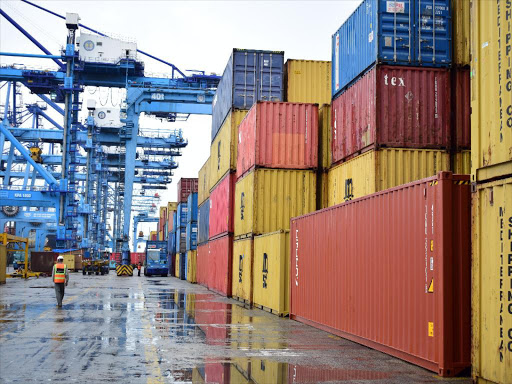
KAMPALA, October 21, 2026 — Uganda’s trade deficit widened sharply in August 2026 as a surge in imports more than offset strong growth in export earnings, while private sector credit in the country continued to expand and government revenue collections fell short of target, according to the Ministry of Finance, Planning and Economic Development.
The Ministry’s latest Performance of the Economy Report for September 2026 shows that exports rose by 40.6 per cent year-on-year to US$ 1.49 billion in August, from US$ 1.06bln in August 2025. The increase was driven by higher export values and volumes of gold, tea, tobacco and oil re-exports.
“The increase was on account of an increase in the value and volumes of items such as gold, tea, tobacco and oil re-exports during this period,” the report said.
However, the strong export performance was partly undermined by a decline in coffee earnings. Coffee export receipts fell by 10.9 per cent month-on-month from US$ 204.08 million in July to US$ 181.65mln in August.
The report attributed the decline to prolonged drought and unusually high temperatures in key coffee-growing areas, including Greater Masaka, Kyotera, Sembabule and Luwero, which affected flowering, cherry development and bean filling.
Coffee harvests in the affected areas were estimated to be 10 per cent below the normal average, while increased supplies from Brazil and Vietnam put downward pressure on global Robusta prices.
Gold continued to dominate Uganda’s export earnings, accounting for about 60 per cent of total receipts in August, with mineral products earning US$ 889.03mln.
Imports surge
While exports increased, Uganda’s import bill rose even faster, climbing 66.5 percent year-on-year from US$ 1.39bln in August 2025 to US$ 2.31bln in August 2026.
The import bill also increased by 41.9 per cent from US$ 1.63bln in July 2026.
“The increase was driven by higher values and volumes of both oil and non-oil formal private sector imports,” the report said, citing mineral products, petroleum products, machinery and equipment, and vehicles and accessories among the major contributors.
Formal private sector imports rose to US$ 2.28bln, with oil imports increasing to US$ 244.59mln and non-oil imports reaching US$ 2.04bln.
The higher import bill also reflected increased freight costs associated with rising global crude oil prices.
The surge in imports pushed Uganda’s merchandise trade deficit to US$ 817.03mln in August, a 151 per cent increase from US$ 325.53mln recorded in August 2025.
On a month-on-month basis, the deficit more than tripled from US$ 224.78mln in July to US$ 817.03mln in August.
The report said the widening deficit was “driven by an increase in the import bill, which more than offset the increase recorded in export receipts over the same period”.
The East African Community remained Uganda’s largest source of imports, accounting for 45.5 percent, or US$ 1.05bln, followed by Asia at 30.5 per cent, equivalent to about US$ 704.88mln. The two regions together supplied more than three-quarters of Uganda’s imports.
Private sector credit expands
Despite the widening trade gap, lending to the private sector continued to expand.
The stock of outstanding private sector credit grew by 1.9 percent to Shs 28.62 trillion in August 2026, from Shs 28.09trn in July.
Shilling-denominated credit increased by 1.1 per cent to Shs 19.50trn, while foreign-currency credit grew by 3.5 percent to Shs 9.11trn.
The report said the growth was “mainly concentrated in trade, manufacturing and personal and household loans, reflecting increased lending to these sectors”.
On an annual basis, outstanding private sector credit increased by 19 percent, from Shs 24.05trn in August 2025 to Shs 28.62trn in August 2026.
The expansion was partly supported by reduced risk aversion among commercial banks, with the ratio of non-performing loans to gross loans falling from 3.68 per cent at the end of June 2025 to 2.61 per cent at the end of June 2026.
New credit approvals also remained significant. Lending institutions approved Shs 2.53trn for disbursement to the private sector in August, out of loan applications worth Shs 3.46trn, representing an approval rate of 73.2 percent.
Personal and household loans received the largest share at Shs 825.57bln, or 32.6 percent of total approvals, followed by trade at 12 percent, agriculture at 11.4 percent and manufacturing at 10.7 percent.
Revenue misses target
Meanwhile, government revenue collections fell below target in September.
Total revenue, including grants, amounted to Shs 2.90trn against a target of Shs 3.18trn, representing a performance rate of 91.3 percent and a shortfall of Shs 275.57bln.
Domestic revenue accounted for Shs 273.67bln, or 99.3 percent, of the overall shortfall.
The report said the revenue underperformance was “largely driven by lower-than-target domestic revenue collections”.
Tax revenue amounted to Shs 2.67trn against a target of Shs 2.88trn, resulting in a shortfall of Shs 218.77bln. Despite missing the monthly target, tax collections grew by 12.4 percent compared with September 2025.
“In spite of the shortfalls registered during the month, tax revenue collections registered growth of 12.4 percent,” the report said.
Indirect domestic taxes recorded the largest shortfall, at Shs 143.10bln. Value Added Tax [VAT] collections were Shs 107.44bln below target, while excise duty fell short by Shs 35.66bln.
The report attributed the VAT shortfall largely to lower collections from the manufacturing sector, particularly cement, soft drinks and beer. Excise duty collections were affected by lower-than-target receipts from beer, motor-vehicle lubricants and spirits, including waragi.
Direct domestic taxes generated Shs 890.23bln against a target of Shs 940.03bln, while international trade taxes brought in Shs 1.10trn, Shs 45.06bln below target.
The report said the shortfall in international trade taxes was largely driven by petroleum-related taxes, which missed their target by Shs 58.37bln, partly because of lower-than-anticipated import volumes, high international petroleum prices and supply-chain disruptions linked to geopolitical tensions.
Overall, the September figures point to an economy recording strong export and private-sector credit growth, but facing pressure from a rapidly rising import bill and weaker-than-target revenue mobilisation.
https://thecooperator.news/ugandas-economy-demonstrates-resilience-as-exports-under-pressure-report/
Buy your copy of thecooperator magazine from one of our country-wide vending points or an e-copy on emag.thecooperator.news


