
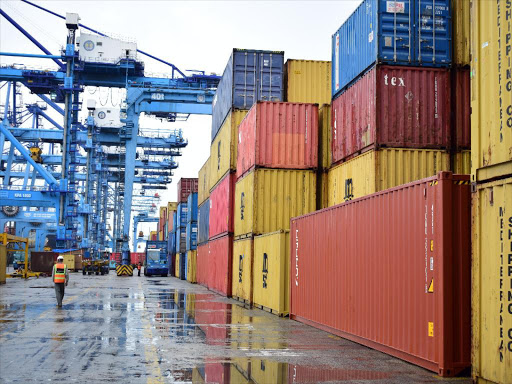
KAMPALA, June 19, 2026 — Uganda’s merchandise exports registered strong growth over the past year, increasing by 24.3 per cent to reach US$ 1.40 billion in April 2026, up from US$ 1.13bln in April 2025, according to the latest Performance of the Economy Monthly Report released by the Ministry of Finance, Planning and Economic Development [MOFPED].
The report shows export earnings grew by US$ 274.18 million year-on-year, largely driven by stronger performance in gold, base metals and related products, electricity exports, oil re-exports, cement, crude oil, cotton, beans, and hides and skins.
According to the report, “the increase in export earnings was mainly driven by higher earnings from gold, base metals and products, electricity, oil re-exports, cement, crude oil, cotton, beans and hides and skins, among others.”
Gold remained Uganda’s strongest export performer, with earnings surging 87.1 per cent from US$ 462.86mln in April 2025 to US$ 866.10mln in April 2026.
Merchandise Exports by Product [US$ Million] Source: BOU and MOFPED
| Product | Apr-2025 | Mar-2026 | Apr-2026 | Apr-2026
vs Apr-2025 % Change |
Apr-2026
vs Mar-2026 % Change |
| Total Exports | 1,126.93 | 1,435.15 | 1,401.11 | 24.33 | -2.37 |
|
Coffee Value Exported |
214.38 |
173.37 |
150.81 |
-29.65 |
-13.01 |
| Volume Exported (Millions of 60 Kg Bags) | 0.69 | 0.67 | 0.59 | -14.91 | -11.97 |
| Average Unit Value (US$ per Kg of Coffee) | 5.15 | 4.31 | 4.25 | -17.33 | -1.18 |
| Non-Coffee Formal Exports | 849.6 | 1,189.62 | 1,180.87 | 38.99 | -0.74 |
| of which:
Mineral Products |
462.86 |
851.35 |
866.1 |
87.12 |
1.73 |
| Cotton | 0.34 | 2.45 | 2.99 | 768.99 | 21.97 |
| Tea | 3.77 | 4.35 | 3.86 | 2.35 | -11.29 |
| Tobacco | 2.62 | 4.09 | 3.88 | 47.98 | -5.22 |
| Fish & Its Prod. (Excl. Regional) | 12.09 | 10.31 | 10.95 | -9.47 | 6.21 |
| Simsim | 2.35 | 1.46 | 1.51 | -35.82 | 3.72 |
| Maize | 9.35 | 7.3 | 7.05 | -24.58 | -3.44 |
| Beans | 1.74 | 4.39 | 2.67 | 53.07 | -39.16 |
| Flowers | 5.2 | 5.6 | 5.03 | -3.12 | -10.13 |
|
ICBT Exports |
62.95 |
72.17 |
69.43 |
10.3 |
-3.79 |
The Finance Ministry attributed the growth to increased export volumes and favourable international market conditions.
“The upward pressure on global gold prices has been attributed to the global shift to gold as a safe haven amidst rising global tensions,” the report noted.
However, coffee, traditionally Uganda’s leading cash crop recorded a significant decline.
Coffee export earnings fell to US$ 150.81mln in April 2026, compared with US$ 214.38mln during the same month last year.
The decline was linked to lower export volumes and falling international prices. Export quantities dropped from 687,299 sixty-kilogramme bags in April 2025 to 591,687 bags in April 2026, while average prices declined from US$ 5.15 per kilogramme to US$4.25 per kilogramme.
According to the report, “coffee prices continue to decline in line with international coffee prices due to an improved global supply outlook following increased supply from Vietnam, Indonesia and Ethiopia.”
On a month-on-month basis, Uganda’s export earnings declined slightly by 2.4 per cent, from US$ 1.44bln in March 2026 to US$ 1.40bln in April 2026, mainly due to lower receipts from coffee, cocoa beans, sugar, tobacco, beans and oil re-exports.
The report further showed that the Middle East remained Uganda’s largest export market, accounting for 54.2 per cent of total exports during April.
At country level, the United Arab Emirates absorbed 99.1 per cent of Uganda’s exports to the region.
Other major export destinations included the East African Community [20.8 per cent], Asia [12.3 per cent] and the European Union [7.6 per cent].
Imports
According to the report, Uganda’s merchandise imports also recorded strong growth.
Imports increased by 23.1 per cent year-on-year from US$1.23bln in April 2025 to US$ 1.51bln in April 2026.
The increase was mainly attributed to growth in formal private sector imports, which offset a decline in government project-related imports.
Key imports included mineral products excluding petroleum, chemicals and related products, base metals, petroleum products, machinery, equipment, vehicles and accessories.
On a monthly basis, imports edged up from US$ 1.49bln in March 2026 to US$1.51bln in April 2026, supported by increased purchases of plastics, rubber products, machinery and transport equipment.
The report showed that the East African Community remained Uganda’s leading source of imports, accounting for 48.4 per cent of the import bill, followed by Asia [37.3 per cent], the European Union [7.1 per cent] and the Middle East [2.7 per cent].
Within Asia, China, India and Japan remained Uganda’s largest trading partners, contributing 48.8 per cent, 29.6 per cent and 7.2 per cent respectively of imports from the region.
Merchandise Imports by Type [US$ Million] Source: BOU
| Apr-2025 | Mar-2026 | Apr-2026 | Apr-2026
vs Apr-2025 % Change |
Apr-2026
vs Mar-2026 % Change |
|
| Total Imports (fob) | 1,226.29 | 1,492.39 | 1,509.28 | 23.08 | 1.13 |
| Government Imports | 9.4 | 11.18 | 5.56 | -40.83 | -50.26 |
| Project | 9.4 | 11.18 | 5.56 | -40.83 | -50.26 |
| Formal Private Sector Imports | 1,207.52 | 1,468.32 | 1,491.23 | 23.5 | 1.56 |
| Oil Imports | 114.31 | 142.95 | 145.26 | 27.08 | 1.62 |
| Non-Oil Imports | 1,093.21 | 1,325.37 | 1,345.97 | 23.12 | 1.55 |
| ICBT Imports | 9.37 | 12.89 | 12.49 | 33.23 | -3.11 |
https://thecooperator.news/ugandas-exports-jump-63-7-percent-year-on-year-in-february-2026/
Buy your copy of thecooperator magazine from one of our country-wide vending points or an e-copy on emag.thecooperator.news


