
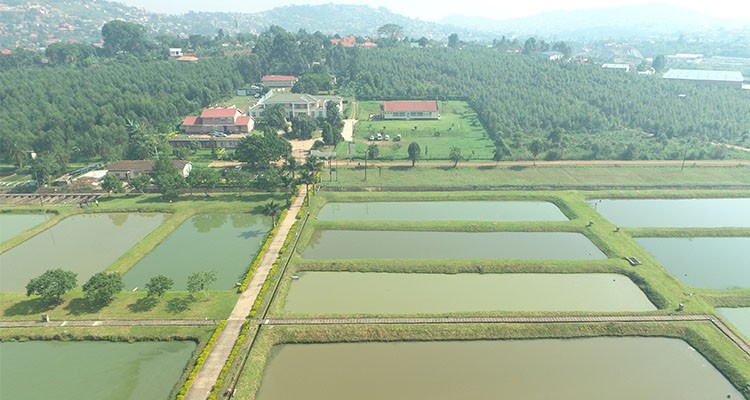
KAMPALA, April 1, 2026 — Uganda is set to partner with Chile on an ambitious research initiative aimed at advancing climate-smart aquaculture, with a particular focus on the Nile tilapia.
The study, to be led by the Bulindi Zonal Agricultural Research and Development Institute [BuZARDI], will harness genomic selection to accelerate the growth performance of Nile tilapia, supporting the development of climate-resilient aquaculture systems within communities.
The research also seeks to establish mechanisms to enable communities, private entities and cooperatives engaged in aquaculture to scale up their participation, while promoting viable commercial approaches to fish farming.
The project’s Principal Investigator, Dr Ivan Abaho, a Senior Research Officer and Team Leader of the Animal Resources Research Programme at [BuZARDI], said the initiative underscores the need to expand fisheries resources to improve community access.
“This will make it easier for communities to practise aquaculture without harming the environment, while also addressing nutrition and boosting household incomes,” he said.
The project brings together multidisciplinary Ugandan and Chilean research teams, marking a significant step forward in applying advanced genomic technologies to strengthen climate-smart aquaculture in Uganda.
It will pioneer the use of genomic selection to develop fast-growing, climate-resilient strains of Nile tilapia, locally known as Engege, adapted to Uganda’s production systems.
By accelerating genetic improvement, the project is expected to shorten production cycles, enhance feed and water-use efficiency, and reduce greenhouse gas emissions from aquaculture operations, contributing to national climate and food security goals.
“By developing a locally adapted and cost-effective genomic selection platform for Nile tilapia, we aim to support farmers with faster-growing, more resilient fish that can perform well under changing climatic conditions,” Dr Abaho added.
The initiative is further strengthened by a strategic scientific partnership with the Aquaculture Genomics Laboratory [LABGEN] at the University of Chile, led by Dr José Manuel Yáñez and Dr Pablo Cáceres.
The Chilean team will provide expertise in statistical genetics, applied genomics, bioinformatics and single-nucleotide polymorphism [SNP] panel development, offering critical analytical and genomic support to the project.
Dr Moses Mwesigwa, Director of Research at [BuZARDI], said the collaboration reflects the institute’s commitment to ensuring research drives improvements in community livelihoods through climate-smart innovations.
“This partnership will not only generate high-impact scientific outputs but also significantly strengthen national capacity in advanced genomic technologies,” he said.
He emphasised the need to prioritise funding for innovations that support Uganda’s climate-smart agricultural transformation agenda to ensure long-term sustainability.
The project represents a strategic investment in scientific innovation, international collaboration and capacity building, with a strong focus on strengthening local research systems.
Tilapia, particularly the Nile tilapia [Oreochromis niloticus], remains a cornerstone of Uganda’s aquaculture and wild-catch fisheries, contributing significantly to domestic consumption and exports. It accounts for approximately 49 per cent of the country’s aquaculture output, with major production centred around Lake Victoria and commercial farms such as Yalelo. Widely consumed across the country, the fish is commonly served grilled or fried and remains a staple in Ugandan cuisine.
https://thecooperator.news/mass-fish-deaths-in-l-kwania-alarm-fishermen-trigger-health-fears/
Buy your copy of thecooperator magazine from one of our country-wide vending points or an e-copy on emag.thecooperator.news


