
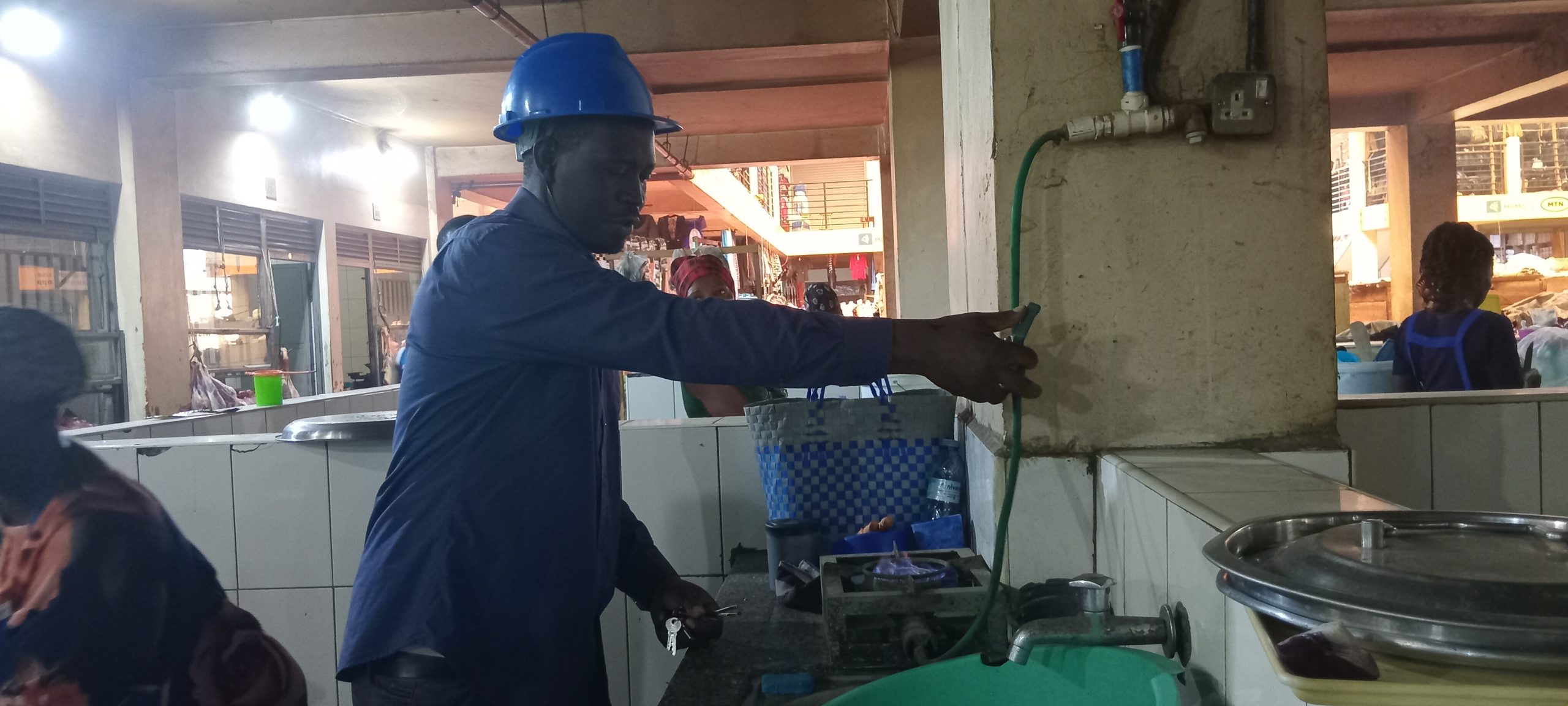
SOROTI CITY, April 28, 2026 — Vendors operating in Soroti Central Market have shunned the use of biogas, citing high costs and limited supply as key barriers.
The biogas plant, set up to provide a cleaner and safer alternative to charcoal and firewood, charges Shs 3,000 per stove, a fee many traders say is unaffordable for daily use.
The plant, installed in July 2024 to promote clean cooking in the market, has remained largely idle for nearly two years. Only two out of the 50 kiosk owners have adopted the service, leaving the market exposed to fire risks associated with widespread charcoal use.
“We spend more than Shs 3,000 on charcoal in two days, but the biogas does not last long enough to cook all our food,” said Zainabu Achiro, a food kiosk owner at the market.
She added that the biogas stoves are inefficient for commercial cooking, slowing down food preparation and affecting daily earnings.
“Our business depends on timing. Customers expect meals to be ready during breakfast, lunch and evening rush hours. If the biogas delays us, we lose those customers to competitors,” she said.
Alfred Wabudeya, Chairperson of kiosk owners, said poor connectivity has crippled uptake of the market biogas project.
“Out of 50 kiosk owners, only four were ever connected, and just two are currently using the biogas,” he said.
Market leadership says the low uptake defeats the plant’s purpose of reducing fire outbreaks.
“We risk losing the entire market if vendors continue relying on open charcoal stoves,” said Stella Arakit, the Market Administrator.
She suggested that heads of departments convene a meeting to address concerns surrounding the biogas plant, noting that such a forum would help sensitise vendors on the safety and cost benefits of switching from charcoal to biogas, which many still view as unreliable.
Ruth Grace Akiteng of the Uganda National Alliance on Clean Cooking criticised the rollout of the project.
“The goal was to provide Soroti Central Market with a sustainable alternative to charcoal. At the moment, the plant is underutilised and failing to deliver that impact. This is disappointing,” she said.
She added that the market was intended to serve as a benchmark for modern market infrastructure, where other modern markets in the country could learn about clean energy solutions such as biogas.
Meanwhile, Denis Elapu, the Sales and Operations Officer in charge of the biogas plant, acknowledged that the market vendors have not embraced the project.
He said many expect to use the biogas free of charge, yet running the plant requires funding, which is why they charge Shs 3,000 per stove.
“We are providing clean energy, but people want it for free, which is not possible,” he said.
He encouraged vendors to sort their waste, explaining that the biogas plant depends on biodegradable market waste to function.
“The plant uses food scraps and organic waste from the market. If vendors segregate it properly, we will not have to spend extra money sourcing materials, and the service can become more affordable,” he said.
Janet Arionget, a Health Inspector, said some market vendors dump household waste in the market bins instead of the organic garbage generated in the market. She noted that this undermines the biogas plant, which relies on organic waste to operate.
https://thecooperator.news/minister-dissolves-soroti-main-market-leadership-over-corruption/
Buy your copy of thecooperator magazine from one of our country-wide vending points or an e-copy on emag.thecooperator.news
-

-

-

-


