
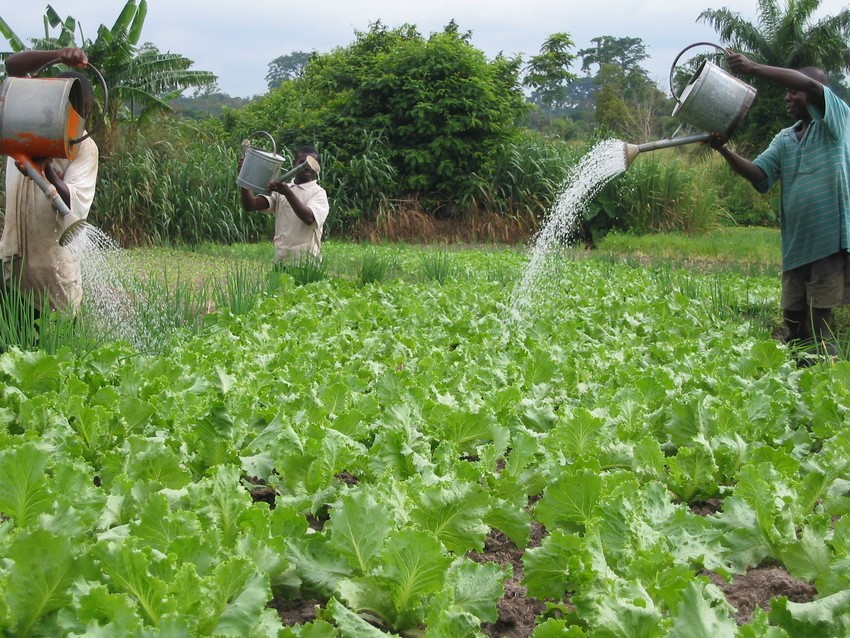
KAMPALA, March 20, 2026 — Rebalancing water use across the global food system will be crucial to meeting future food demand sustainably and could create 245 million long-term jobs, most of them in Sub-Saharan Africa, according to a new World Bank Group report launched today.
The report, Nourish and Flourish: Water Solutions to Feed 10 Billion People on a Livable Planet, says current agricultural water management practices — characterised by overuse in some countries and underuse in others — can sustainably support food production for less than half of the world’s population. By 2050, the global population is expected to reach 10 billion, intensifying pressure on food systems.
It says tackling both the overuse that is depleting water in stressed regions and the underuse that leaves productive capacity untapped in water-abundant areas will be essential to meeting future demand in a sustainable way.
The report introduces a new framework for agricultural water management that links water availability with food production and trade. By grouping countries according to water stress and their food import or export status, the framework helps identify where expanding rain-fed agriculture could raise food output, where irrigation investments could unlock jobs and growth, where water use must be rebalanced to protect ecosystems and long-term productivity, and where trade offers a more sustainable option than local production.
“The way we manage water for food will have profound implications for jobs, livelihoods and economic growth. By making smarter choices about where crops are grown, how water is allocated, and how trade supports food security, we can strengthen resilience, expand opportunity, and safeguard the resources on which we all rely,” said Paschal Donohoe, Managing Director and Chief Knowledge Officer of the World Bank Group.
The report says achieving these outcomes will require stronger private-sector participation and financing alongside public investment, backed by effective policies, institutions and regulations to boost food production, create jobs and support sustainable growth.
It notes that public funding alone cannot provide the sustained services, innovation and scale needed to expand irrigation, improve performance and maintain results. Farmers, who are the main users of irrigation and its principal investors, are already willing to co-invest when access to finance, quality equipment, markets and digital tools reduces the risks and transaction costs they face.
“When investments in infrastructure and natural resources, business-enabling policies, and private capital mobilisation come together, the impact can be greater than the sum of its parts,” said Guangzhe Chen, Vice President for Planet at the World Bank Group.
“By linking global evidence with country realities, this framework can help policymakers navigate trade-offs and adapt food production to today’s water and climate realities — delivering food, jobs and resilience together,” Chen added.
Expanding irrigation where water is available, while modernising existing systems, is estimated to require an additional US$ 24–70 billion a year through to 2050. Governments already spend about US$ 490 billion annually on agricultural support, much of it on subsidies.
The report says redirecting part of that spending, alongside regulatory reform, blended finance and public-private partnerships, could attract private capital — including co-investment by farmers — and support financially sustainable water and food security systems.
The World Bank Group said it is working with countries, companies, partners and communities to turn these insights into action through a combination of policy reform, public investment and private capital aimed at strengthening food systems, creating jobs and protecting natural resources.
It has committed to doubling annual agribusiness financing to US$ 9 billion by 2030 and mobilising an additional US$ 5 billion a year under the AgriConnect initiative to help smallholders move from subsistence to surplus. Through the Water for Food and Water for the Planet pillars of its Water Strategy Implementation Plan, the institution says it is addressing the twin challenge of water and food security by strengthening food production systems and improving farmers’ livelihoods.
https://thecooperator.news/caritas-champions-water-for-production-programme-in-west-nile/
-

-

-

-

