
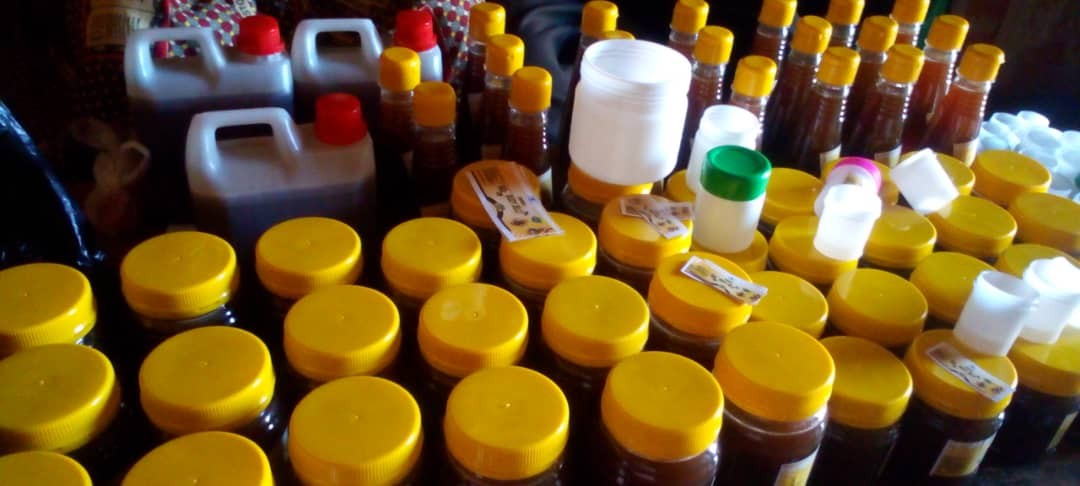
KAPCHORWA, February 10, 2026 — Farmers in the Sebei Subregion are experiencing renewed hope following the rapid growth of Sebei Coffee and Honey Cooperative Society Limited, a farmer-led initiative founded in 2024, to promote sustainable incomes through commercial agriculture.
What began as a modest group of 50 founding members has, within a short time, expanded to approximately 450 members, reflecting growing confidence in cooperative-based farming. Today, about 250 members specialise in honey production, while 150 focus on coffee farming, creating a balanced model that supports year-round earnings.
According to the Chairperson of the cooperative, Connel Kibet, the cooperative was established to address long-standing challenges faced by smallholder farmers, including unreliable markets, low prices, and limited bargaining power.
“We wanted to create a platform where farmers can work together, access better markets, and improve their livelihoods,” Kibet explained.
Honey emerges as a key income driver
Although the cooperative promotes both coffee and honey, beekeeping has quickly become the backbone of its financial success. Members describe honey as a dependable enterprise with ready buyers across the region.
Currently, the cooperative supplies honey to neighbouring districts of Kapchorwa, Kween, and Bukwo, where demand continues to grow among households, retailers, and traders. By bulking their produce, farmers are able to meet large orders that would otherwise be difficult to fulfil individually.
Cooperative leaders note that collective marketing has significantly improved price stability for members.
“Selling as a group protects farmers from exploitation by middlemen and ensures they receive fair value for their effort,” said James Disi Diema, the cooperative’s General Secretary.
From subsistence to commercial farming
For many members, joining the cooperative marked a shift from subsistence farming to agriculture as a business. Previously, some households relied solely on seasonal crops that generated minimal income.
Beekeeping, however, requires relatively small land space and can be practised alongside other activities. This flexibility has encouraged more families to adopt the enterprise.
Farmers receive training in hive management, harvesting techniques, and proper storage to maintain quality standards. The cooperative also promotes the use of modern beehives, which significantly increase production compared to traditional methods.
Modesta Chebet, a farmer from Kween District, said the change has been life-altering.
“Before, I struggled to meet school fees for my children. Since I joined the cooperative and started producing honey, my income has improved, and I can now pay their school fees,” she said.
Coffee complements the business model
While honey provides steady cash flow, coffee remains an important pillar for the long-term financial security of cooperative members. The cooperative supports coffee farmers with guidance on crop management, harvesting, and post-harvest handling.
Leaders believe integrating the two enterprises shields farmers from risks associated with relying on a single commodity.
“When coffee is out of season, honey continues to bring income. This balance keeps households financially stable,” said Emma Sande, the cooperative’s Vice Chairperson.
Agricultural experts often recommend diversification as a key strategy for building resilience among rural farmers, particularly in regions affected by changing weather patterns.
Membership growth signals trust
The growth from 50 to 450 members highlights the cooperative’s rising reputation within the Sebei Subregion. Word of mouth from benefiting farmers has encouraged others to join, strengthening the organisation’s production capacity.
Women and youth are increasingly becoming part of the cooperative, attracted by opportunities to earn independent incomes. Local leaders say such inclusion is vital for community development.
“When young people see farming as profitable, they are less likely to migrate to towns in search of uncertain jobs,” noted a community elder.
Visible impact on households
Across Kapchorwa, Kween, and Bukwo districts, the cooperative’s impact is becoming increasingly visible. Some members have invested their earnings in housing, livestock, and their children’s education. Others are expanding their farms, confident that the cooperative will secure reliable markets.
Keren Chemutai, a honey producer, said the enterprise has restored her dignity. “I no longer wait for support. Honey has given me financial freedom,” she said.
Community observers believe such progress is gradually reducing poverty while strengthening rural economies.
At the centre of the cooperative’s success is teamwork. Members regularly meet to discuss production targets, pricing, and expansion strategies. Transparency and accountability are also emphasised, helping to build trust among members.
Bulk selling remains one of the cooperative’s strongest advantages, as buyers prefer organised groups that guarantee both quality and quantity. This reliability has positioned Sebei Coffee and Honey Cooperative as an emerging force in the regional agricultural value chain.
Challenges along the path of growth
Despite the progress, the cooperative faces several challenges. Limited access to modern equipment, including improved beehives and protective gear, continues to slow expansion for some farmers. Poor road networks in remote areas also complicate transportation, especially during the rainy season.
Leaders further cite the need for larger storage and processing facilities to handle increasing production volumes. Access to affordable credit remains another major hurdle, as many farmers lack the financial capacity to invest in advanced technologies.
“We have the potential to supply even bigger markets, but we need support to scale up,” said a cooperative leader.
Looking ahead
The cooperative has outlined ambitious plans, including expanding membership, increasing production, and exploring new markets beyond the Sebei Subregion. Continuous farmer training remains a priority to ensure quality is maintained as output grows.
Local authorities have praised the initiative, describing it as a model for farmer empowerment and rural transformation. Agricultural analysts agree that cooperatives remain one of the most effective pathways for improving smallholder incomes, particularly when combined with high-demand products such as honey.
A symbol of opportunity
Since its establishment, Sebei Coffee and Honey Cooperative Society Limited has demonstrated the power of collective action. What started with just 50 members has evolved into a vibrant organisation supporting hundreds of households.
By supplying honey across Kapchorwa, Kween, and Bukwo districts while maintaining coffee production, the cooperative is helping farmers secure sustainable incomes and build a more resilient future.
For many families in the Sebei Subregion, the cooperative is more than a marketing platform, it is a source of stability, empowerment, and optimism. As membership continues to grow and markets expand, Sebei Coffee and Honey Cooperative Society is on course to become one of the region’s most influential farmer organisations, proving that unity and innovation can turn small beginnings into lasting prosperity.
https://thecooperator.news/sebei-widows-and-widowers-launch-sacco-to-boost-economic-empowerment/
Buy your copy of thecooperator magazine from one of our country-wide vending points or an e-copy on emag.thecooperator.news
-

-

-

-


