
KAMPALA, January 30, 2026 — The Savings and Credit Cooperative Organisations [SACCOs] sector has secured significant policy commitments from the Government of Uganda following successful high-level lobbying and advocacy engagements led by the Uganda Cooperative Savings and Credit Union Limited [UCSCU].
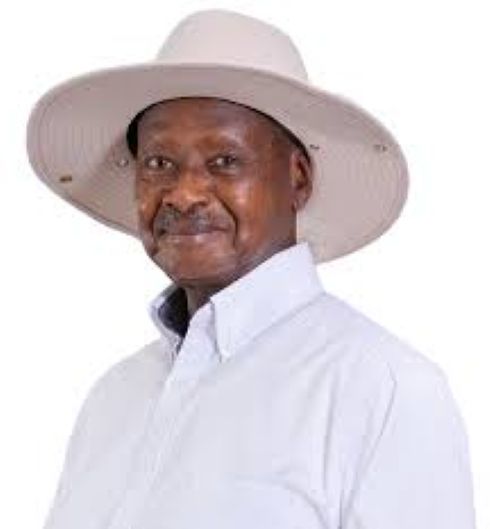
Yesterday UCSCU, and officials from the Uganda Cooperative Alliance [UCA], and others held strategic discussions with President Yoweri Museveni and the Speaker of Parliament, Anita Among over the regulation of large SACCOs by the Bank of Uganda [BoU].
The Microfinance Deposit-Taking Institutions [Registered Societies] Regulations, 2023, define large SACCOs as those with voluntary savings exceeding Shs 1.5 billion and institutional [share] capital, including retained earnings and reserves, of at least Shs 500 million. Due this law, BoU has sought to regulate such SACCOs, even as High Court in Kampala is yet to deliver a ruling on the matter following legal action by UCSCU.
According to BoU, 99 SACCOs met this threshold as of June 2023. The central bank claimed many of these are operating as unregulated financial institutions, given that only three SACCOs have so far applied to be regulated by the central bank.
According to Dr Sylivester Ndiroramukama, Chief Executive Officer of UCSCU, the discussions yielded landmark outcomes that reaffirm the government’s support for SACCOs as key drivers of financial inclusion and community-based economic development.
“Foremost among the resolutions, President Museveni agreed that SACCOs should remain exempt from income tax. Consequently, the current 10-year income tax exemption, scheduled to expire on June 30, 2027, stands to be extended, providing continued relief and sustainability for cooperative financial institutions,” Ndiroramukama stated in today’s communiqué to sector stakeholders.
He said Museveni directed the Bank of Uganda to halt threats and directives aimed at stopping the operations of large SACCOs that have not applied for licensing with the central bank.
“He emphasised that the Bank of Uganda should play an oversight role focused on monitoring the flow of funds, rather than imposing regulatory controls that overlook the unique cooperative nature of SACCOs,” Ndiroramukama said.
Further strengthening the sector, the President guided that a comprehensive stakeholders’ meeting be convened under the leadership of the Rt Hon Speaker of Parliament. The meeting will seek to define and harmonise a fair, enabling and inclusive regulatory framework tailored to the SACCO sector.
“These outcomes reaffirm the Government’s commitment to strengthening financial inclusion and safeguarding community-based cooperative institutions,” UCSCU said in a statement to SACCO leaders nationwide.
On behalf of its chairperson and board, UCSCU’s chief executive expressed appreciation to President Museveni and Speaker Among, the Uganda Cooperative Alliance, and all SACCOs and sector stakeholders for their continued support in advancing the cooperative agenda.
UCSCU has urged SACCOs across the country to remain calm, uphold professional conduct and await further guidance from the Union as implementation of the resolutions progresses.
Together, stakeholders remain committed to building a stronger, more inclusive and sustainable SACCO sector for Uganda.
Background to the dispute
The developments come against the backdrop of a long-running institutional dispute over the multiple regulation of SACCOs in the country where MTIC, Finance ministry, and BoU are the regulators assigned different roles.
Earlier this month, Attorney General Kiryowa Kiwanuka advised BoU, MTIC, and the Ministry of Finance to halt the operations of large SACCOs that have not complied with the legal requirement to obtain a BoU licence.
In a letter dated January 9, 2026 and addressed to the finance minister, the Attorney General’s advice effectively overruled an earlier attempt by MTIC to shield large SACCOs from BoU regulation. MTIC had cited regulatory overlap, the SACCO business model and an ongoing court case filed by UCSCU, the apex body of SACCOs, as justification.
The dispute escalated following a December 19, 2025 letter from David L. Kalyango, BoU’s Executive Director for Supervision and Regulation, in which he stated that non-compliant SACCOs should be de-registered by the Registrar of Cooperatives at MTIC as part of his mandate.
“SACCOs are categorised as financial institutions. As such, the continued operation of large SACCOs in contravention of the MDI Act is likely to adversely affect the assessment of Uganda’s effectiveness in complying with Anti-Money Laundering obligations regarding regulation of market entry,” Kalyango wrote, listing 99 SACCOs falling under BoU regulation as of June 30, 2023.
However, MTIC Permanent Secretary Lynette B. Bagonza rejected BoU’s request, describing the sector as “nascent, highly complex, and deeply rooted in the socio-economic fabric of our communities”.
“While the Bank of Uganda’s position on enforcement of the law is legally sound, MTIC is of the considered view that the sector needs to be approached with a nuanced appreciation of its unique character,” Bagonza wrote in her December 30 response.
She warned that “forceful enforcement actions or mass de-registration of large SACCOs could destabilise the sector and have adverse socio-economic consequences”, noting that the ongoing court case had created “legal ambiguity”.
However, the Attorney General dismissed MTIC’s position, insisting that existing laws be enforced until Cabinet approves a new policy direction.
At present, only three SACCOs nationwide have successfully obtained BoU licences under the new regulations: EBO SACCO in Bwizibwera Town Board [Mbarara District], Kyazanga-Kwegata Microfinance Cooperative [Lwengo District], and Masindi District Farmers Association Savings and Credit Cooperative [MADFA].
With President Museveni’s latest directive, the Attorney General’s legal advice on halting the operations of large SACCOs has effectively been rendered moot.
Kampala Associated Advocates a law farm where Attorney General Kiryowa Kiwanuka is a partner has also posted on its X [formally Twitter] the latest developments in Uganda’s SACCO sector where it was agreed that the law must be harmonised to to take into account the unique nature of SACCOs as member owned, member funded, member managed and member beneficiaries.
The law firm also stated that that it was agreed that regulating SACCOs at the same level as banks and microfinance will counterproductive to the efforts of revitalising the economy through the cooperative model.
https://thecooperator.news/large-saccos-must-be-regulated-by-bou-attorney-general/
Buy your copy of thecooperator magazine from one of our country-wide vending points or an e-copy on emag.thecooperator.news


