
KAMPALA, September 7, 2026 — Parliament has adopted a report on the Uganda Railways Corporation [URC] detailing cases of financial mismanagement, missing wagons, disputed procurement deals, and the loss and encroachment of railway land.
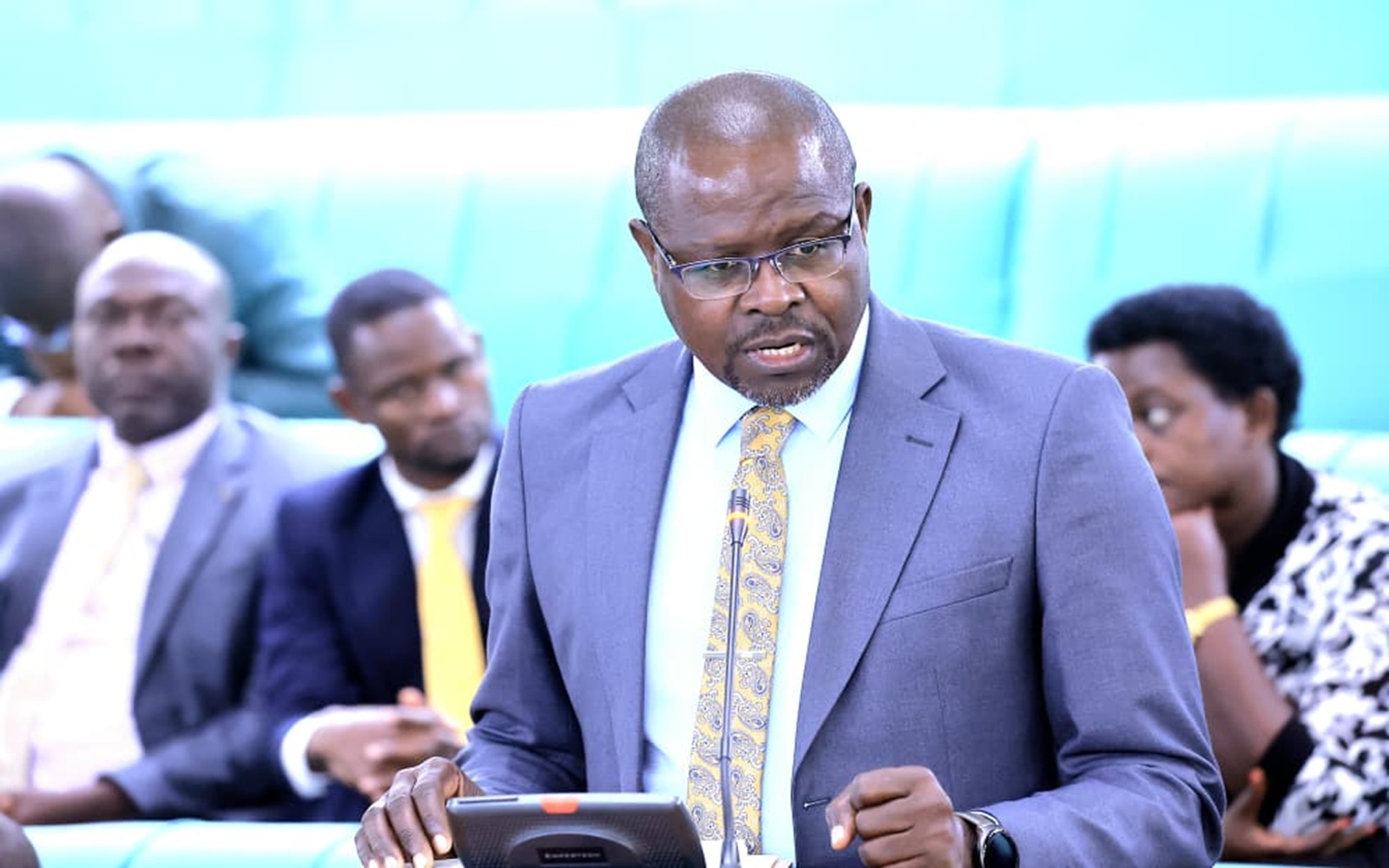
Presenting the report last week, the Chairperson of the Committee on Physical Infrastructure, Mwine Mpaka, said public funds meant to revive the railway had instead been used to benefit consultants and foreign firms.
“We have established a systematic failure where public funds meant to build local railway capacity and rehabilitate critical transport infrastructure were instead deployed to enrich individual consultants and foreign firms under the guise of technical expertise,” Mpaka said.
The report, adopted during a sitting chaired by Speaker Jacob Marksons Oboth, focused on a Shs 125 billion Spanish-funded railway project, which included a Shs 20.8 billion capacity-building component.
The committee found that almost 90 per cent of the capacity-building funds, amounting to €4.33 million, went to five foreign experts, with some earning as much as €32,500 [Shs140 million] a month.
The committee also revealed that some URC employees were allegedly listed as foreign experts to access the higher payments while continuing to receive their normal local salaries of about Shs6.5 million.
The committee further found that Spanish firm Consultrans S.A.U., which designed the project’s feasibility study and assessed URC’s capacity needs, subsequently awarded the works contract to its sister company, Imathia Construction, through direct procurement.
Other irregularities included multi-day workshops being reduced to one-day refresher courses, €79,500 claimed for overseas back-office travel, project-funded second-hand pickup trucks being sold to staff, and €60,000 meant for office furniture being used to equip offices occupied by Spanish consultants.
Mpaka said the findings raised serious questions about the management of URC assets.
“URC cannot account for its own land, its land titles or its rolling stock,” he said, warning that the disappearance and disposal of wagons raised issues of criminal liability.
According to Mpaka, the corporation holds 20,848 acres of land, of which 1,983 acres remain untitled and are affected by more than 24,653 cases of encroachment.
“A further 62 railway land titles misplaced by the Ministry of Finance, Planning and Economic Development during office relocations have never been returned despite reminders dating back to 2016,” Mpaka added.
The committee found that only 269 kilometres of URC’s 1,266-kilometre network is operational, while fleet availability stands at 22 per cent for locomotives, 36 percent for coaches and 30 percent for operational wagons.
It also found that 112 wagons remain unaccounted for after being routed to a “virtual station” in Nyahururu, Kenya, under the tracking system used by the former Rift Valley Railways.
“URC sold 152 wagons domestically as scrap and another 28 in Tanzania, but official records could not account for 82 of the scrap wagons, resulting in a direct financial loss of Shs 2.4 billion,” the report states in part.
The adopted report directs the Inspectorate of Government [IGG] to investigate and prosecute members of URC’s Ad Hoc Board of Survey, Contracts Committee, and Procurement and Disposal Unit implicated in the irregular disposal of scrap wagons and the resulting financial losses.
The IGG was also directed to investigate former URC Managing Director David Musoke Bulega, contract managers and members of management over payments for unexecuted services, questionable travel claims, unprocured software, vehicle misappropriation, and contractual terms that resulted in URC losing ownership of the concrete sleeper plant.
In one of its recommendations, the committee ordered the Ministries of Lands and Works and Transport to submit a joint railway-land recovery strategy within 30 days. The strategy should include measures, with police and military support where necessary, to remove 1,698 identified encroachers.
The Minister of State for Transport, Julius Maganda, acknowledged the extent of URC’s decline but said the government was now working to revive the corporation.
“Completely everything went down… Government is beginning to uplift Uganda Railways. Look at the report but support the agency because we are now moving in the right direction,” he said.
Kalungu West legislator Joseph Ssewungu called for openness and frankness in discussions on the rehabilitation of the railway.
Speaker Oboth urged the ministry to replace URC’s old coaches and increase the frequency of passenger services.
“Replace those old coaches. I want to use that train to come to Parliament. We need some coaches. I have a stage just by my house,” he said.
The Minister of State for Industry David Bahati said the Executive would respond to the report through a Treasury Memorandum.
Buy your copy of thecooperator magazine from one of our countrywide vending points or an e-copy on emag.thecooperator.news


