
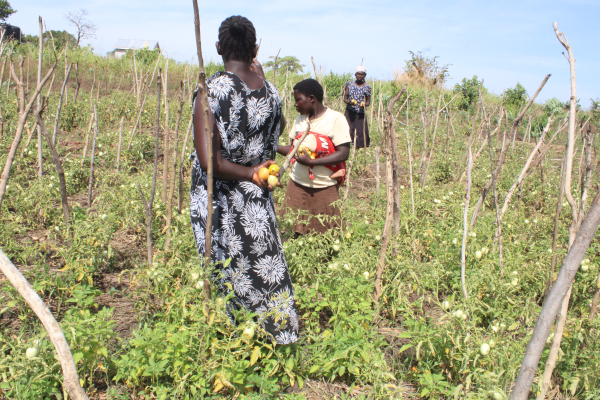
ADJUMANI, February 28, 2026 — Women refugees in Adjumani district are at the frontline of Uganda’s climate crisis, facing mounting hardships as erratic weather patterns intensify food insecurity, health risks, and gender-based violence.
A new report shared by Dr Helen Kezie-Nwoha of Researchers Without Borders, based on focus group discussions with women in five refugee settlements, Ayilo I, Majji II, Mungula I & II, Nyumanzi, and Pagirinya, paints a glaring picture of how climate change is compounding displacement and gender inequality in northern Uganda.
The research highlights the lived experiences of women refugees, the coping strategies they have devised, gaps in policy implementation, and priority actions required to localise climate and gender policies in Adjumani district.
Climate shocks deepen vulnerability.
Adjumani, located in north-western Uganda, is largely semi-arid and dependent on rain-fed subsistence farming. Since 2013, the district has hosted one of the country’s largest refugee populations, predominantly from South Sudan, under Uganda’s progressive refugee policy that allocates small plots of land for cultivation.
However, prolonged displacement, environmental degradation, deforestation, and increasingly unpredictable weather patterns have undermined this model.
Women across the settlements reported a shift from previously predictable rainfall seasons to erratic weather characterised by extreme heat, prolonged droughts, heavy rainfall, flooding, and destructive winds. The result has been repeated crop failure, reduced planting seasons from two to one, water scarcity, and the destruction of homes, schools, and sanitation facilities.
Outbreaks of malaria, cholera, pneumonia, and worm infections have become more frequent, while extreme heat has reportedly contributed to miscarriages and anaemia among pregnant women.
Limited access to land, shrinking humanitarian assistance, especially for households, and weak infrastructure have further deepened vulnerability.
Gendered burden
The study underscores that climate change impacts are not gender-neutral. Women, who form the majority of the refugee population, shoulder the bulk of domestic and care responsibilities such as food production, water collection, childcare, house repairs, and caring for the sick.
When crops fail, it is women who struggle to find food. When floods destroy homes, it is women who organise repairs. When disease outbreaks occur, it is women who provide care.
Participants described severe psychological distress arising from hunger, uncertainty, and declining aid. Many reported that climate stress has aggravated household tensions, increasing the risk of gender-based violence.
While men and boys are also affected by crop losses and housing damage, women are often left as the primary responders to climate shocks due to entrenched social norms.
Women’s resilience
Despite limited resources, women have devised practical and innovative coping strategies.
To manage flooding, they dig drainage channels and trenches, reinforce houses with soil, stones, and sandbags, and raise floors. Some plant trees to provide shade and wind protection, while others use tarpaulins to protect leaking roofs.
To cope with drought, women irrigate small kitchen gardens, plant immediately after rainfall, and shift to drought-resistant crops such as local sorghum. Many diversify livelihoods through petty trade, poultry keeping, tailoring, casual labour, and participation in savings and loans groups.
Social networks — including women’s groups, neighbours, churches, and relatives — serve as vital support systems. Hygiene practices and mosquito control measures are also employed to reduce disease risks.
However, the report notes that these grassroots adaptation efforts remain largely unsupported by formal climate adaptation programmes.
Policy gaps at the local level
Uganda has a strong legal and policy framework recognising the gendered dimensions of climate change, including the National Climate Change Policy [2015], the National Climate Change Act [2021], Uganda Vision 2040, and the country’s Nationally Determined Contributions under the Paris Agreement. The 1995 Constitution of Uganda and the Uganda Gender Policy [2007] also provide a firm foundation for gender equality.
Yet in Adjumani District, the study found limited evidence of local development and climate action plans actively implementing gender-responsive measures.
Women reported that consultations by government and humanitarian actors are often superficial and top-down. Many said they are informed of decisions after they have been made, rather than being meaningfully involved in planning and resource allocation.
Even where women serve as block leaders, representation remains uneven, and their priorities are not adequately reflected in final decisions.
Women defined meaningful participation as being directly consulted, listened to, included in committees, and seeing tangible outcomes from their contributions.
They argued that women’s leadership improves safety, reduces conflict and gender-based violence, and strengthens community responses to climate shocks.
Calls for action
The report makes several recommendations.
For the district local government, it urges support for small-scale climate-resilient agriculture through promotion of drought-tolerant crops such as sorghum, and improved water infrastructure to guarantee reliable access for irrigation and household use.
It also calls for programmes integrating gender-based violence prevention, psychosocial support, and equitable resource distribution between host communities and refugees.
The report urged the Office of the Prime Minister to prioritise investment in drainage systems, replace grass-thatched roofs with iron sheets, review the refugee vulnerability categorisation system, and expand access to climate-smart agriculture training, farming inputs, and food assistance during droughts.
The report also recommends expanding women’s access to capital by supporting savings groups and linking them to microfinance institutions.
Development partners and civil society organisations are encouraged to prioritise children’s nutrition and school feeding programmes, strengthen women’s participation in planning and decision-making processes, and support the formation of women-led groups.
As climate change intensifies, the study warns that without deliberate localisation of climate and gender policies, refugee women in Adjumani will continue to carry a disproportionate share of the burden.
For many of them, adaptation is no longer a future concern, it is a daily struggle for survival.
Local authorities respond to the report.
James Eberu, the Environment Officer of Adjumani, however acknowledge the climate change crisis that is affecting many small-scale farmers in the district, saying the government, through the Uganda Climate Smart Agriculture Transformation Project, is addressing the challenge.
“We have 213 groups that have been formed, and the groups include both refugees and host communities, men and women who are doing specific enterprises, especially acquiring culture, Api-culture soybeans growing, and beef processing,” Eberu said.
The District Education Officer of Adjumani, Robert Dima, emphasised that with the challenges of reduced food ratio for refugees, there is a need to sensitise parents.
Iren Api Adrupio, the Secretary for Finance Planning in Adjumani District Local Government, recommends a mindset change among the youth in order to address some of the challenges that women face.
Brenda Atim, from the Office of the Prime Minister, stated that the office of the Prime Minister Robinah Nabbanja together with partners have drawn projects aimed at addressing gender-based violence in all 19 settlements.
https://thecooperator.news/kiryandongo-refugees-receive-safe-water-systems/
Buy your copy of thecooperator magazine from one of our country-wide vending points or an e-copy on emag.thecooperator.news
-

-

-

-

