
KAMPALA, March 22, 2026 — Government has defended its decision to keep flexible controls in the proposed Forensic and Scientific Analytical Services Bill, 2025, despite concerns over the role of private laboratories, possible regulatory overlap, and the integrity of forensic evidence in criminal cases.
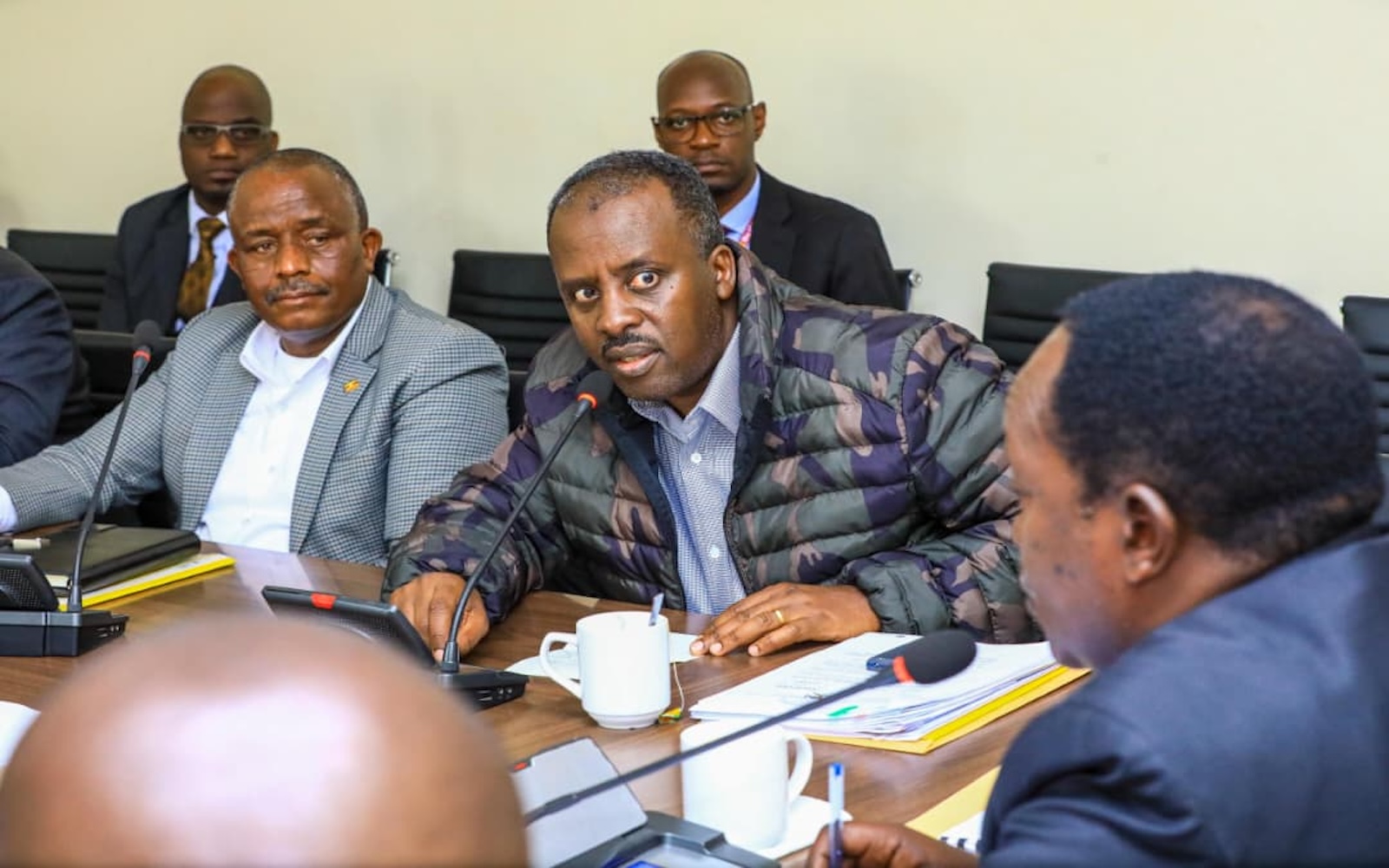
Appearing before Parliament’s Defence and Internal Affairs Committee on Thursday, Minister of Internal Affairs Gen David Muhoozi presented legal advice from Attorney General Kiryowa Kiwanuka indicating that government is reluctant to introduce stricter statutory safeguards.
The meeting, chaired by MP Wilson Kajwengye, focused on harmonising contentious provisions in the Bill, particularly the regulation of forensic laboratories and their role in criminal investigations.
The proposed law follows the withdrawal of the earlier Forensic Evidence Bill, 2024, which government said required substantial changes that would have altered its original intent.
Under the new Bill, private laboratories would be allowed to conduct forensic and scientific analyses under a licensing framework, instead of reserving such work exclusively for state institutions.
The Office of the Director of Public Prosecutions had warned that allowing private entities to handle forensic evidence could weaken the chain of custody and undermine confidence in court processes.
However, the Attorney General advised that the provision should be retained, arguing that private laboratories are already operating without formal oversight.
“I note that several private laboratories in Uganda currently conduct forensic and analytical work without any form of regulation or oversight,” Muhoozi told the committee.
The Bill proposes that all analytical laboratories, including private ones, be licensed and regulated by the Ministry of Internal Affairs, while also requiring them to operate independently.
“An analytical laboratory shall … act independently and shall not be subject to the direction or control of any person,” the Attorney General advised.
Despite those provisions, MPs questioned whether the framework would sufficiently protect the integrity of forensic evidence.
Bukooli Island County MP Peter Okeyoh argued that limiting forensic services to government institutions would undermine the right to a fair hearing, especially where an accused person wants an independent second opinion.
“A person will say … I need another confirmatory test. GAL has tested, maybe police has tested, but he says no, I need another,” Okeyoh said.
Solicitor General Pius Perry Biribonwoha backed that view, saying courts must allow room for independent expert opinions.
“Someone can ask for a second opinion. I do not think we can do much by saying a report from this lab shall be conclusive,” he said.
Concerns were also raised about conflict of interest and institutional overlap, particularly over the proposal to designate the ministry’s Department of Inspection and Legal Services as the regulator.
In response, the Attorney General clarified that the department’s role would be limited and would not extend to directing criminal investigations.
“Its role would not extend to the regulation or direction of criminal investigations, which remain the mandate of the Uganda Police Force and the Office of the Director of Public Prosecutions,” Muhoozi said.
Government also rejected proposals to make international accreditation standards mandatory.
“International accreditation … is voluntary in nature and therefore cannot be imposed as a mandatory legal requirement,” he added.
Instead, the Bill provides for the gradual adoption of best practices through administrative measures.
On concerns about duplication, particularly in relation to the Government Analytical Laboratory (GAL), the Attorney General said the proposed forensic database would complement existing systems rather than replicate them.
“The Bill does not seek to replicate existing biometric or identity databases but rather to supplement them with scientific and forensic data,” the advice states.
Muhoozi said integration with systems such as fingerprints and facial recognition would be handled administratively rather than through statute.
The Bill also retains GAL as the national referral forensic laboratory, which government says will provide a central specialised resource without undermining other institutions.
It further expands GAL’s mandate into poison control, positioning it as the National Poison Information and Control Centre, with a role centred on coordination and technical guidance rather than direct emergency services.
https://thecooperator.news/u-s-mbarara-university-strengthen-technology-and-research-collaboration/
Buy your copy of thecooperator magazine from one of our country-wide vending points or an e-copy on emag.thecooperator.news
-

-

-

-


