
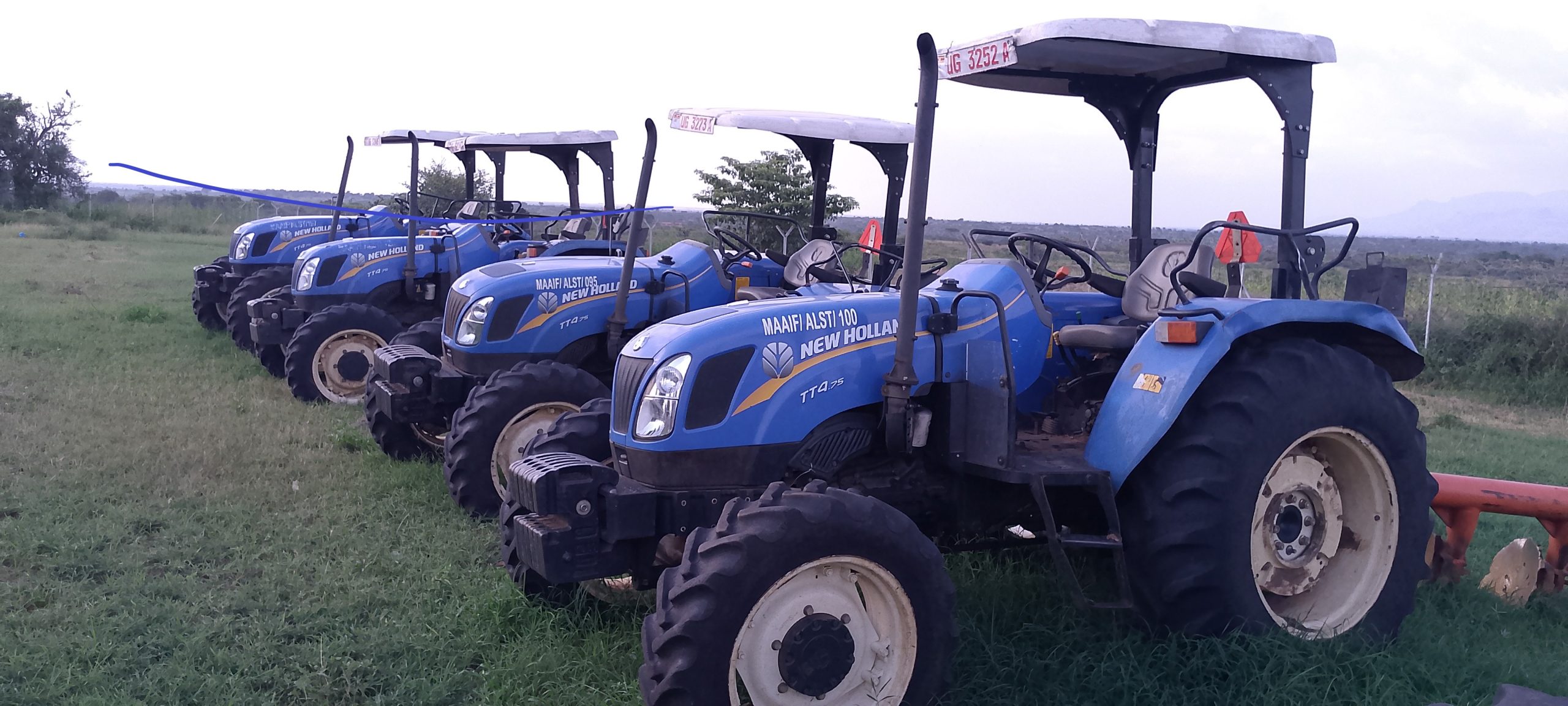
MOROTO, April 8, 2026 — Farmers in the Karamoja Subregion have voiced growing frustration over limited access to tractors, saying the shortage is undermining agricultural productivity and slowing economic development.
Mike Onyang Kidon, a member of the Karamoja Farmers’ Cooperative, has raised concerns about the difficulties he faces in acquiring a tractor from the Nabuin Agricultural Research Institute. The challenge, he says, is affecting not only individual farmers but also the cooperative’s broader efforts to scale up farming in the region.
Onyang said repeated attempts to secure a tractor have proved unsuccessful. “I contacted the responsible officials at Nabuin, and they advised me to come in person to make payments. Travelling there is difficult for many of us, especially given the costs involved,” he said.
Efforts to explore mobile money payment options have also failed, leaving him with no option but to rely on hand hoes, a method he describes as “time-consuming and inefficient”.
The chairperson of the Karamoja Farmers’ Cooperative, Mark Abuku, acknowledged that limited access to machinery is a systemic problem. “The lack of equipment restricts our ability to open up land for commercial farming, which is essential for our agricultural projects,” he said.
Abuku pointed to a recent wheat multiplication initiative involving the government, Sasakawa Global 2000 and the cooperative. “We should be maximising the potential of such programmes, but without the necessary equipment, we are setting ourselves up for failure,” he added.
The issue, farmers say, reflects a wider challenge across the region.
Dr Sidonia Angom, also a cooperative member, emphasised the need for collective action. “Instead of waiting for external support, we should consider pooling resources to purchase our own tractor. This could significantly improve our operations and productivity,” she said.
Attempts to obtain a comment from officials at Nabuin were unsuccessful. Public Relations Officer Carolyn Asapo acknowledged the inquiry but had not provided a response by press time, leaving farmers feeling unheard and unsupported.
Onyang stressed that access to modern agricultural machinery is critical to transforming farming in Karamoja, where traditional methods still dominate. The region largely depends on rain-fed subsistence agriculture, making mechanisation increasingly important in the face of unpredictable weather patterns.
Farmers believe improved access to tractors would not only boost productivity but also open up market opportunities for the wider region.
The cooperative is also grappling with limited training opportunities in modern farming practices, highlighting the need for stronger support systems. “Education and access to technology must go hand in hand,” Abuku said. “We need more training and support services to help farmers make better use of available resources.”
As the challenges persist, calls for government intervention are growing louder. Farmers have proposed stationing at least one tractor in each district as a possible solution to improve access and drive agricultural growth.
For many in Karamoja, the lack of mechanisation remains a major barrier, with farmers like Onyang continuing to rely on hand hoes, unable to realise their full agricultural potential.
https://thecooperator.news/karamoja-cooperative-launches-major-wheat-seed-multiplication-drive/
Buy your copy of thecooperator magazine from one of our country-wide vending points or an e-copy on emag.thecooperator.news
-

-

-

-


