
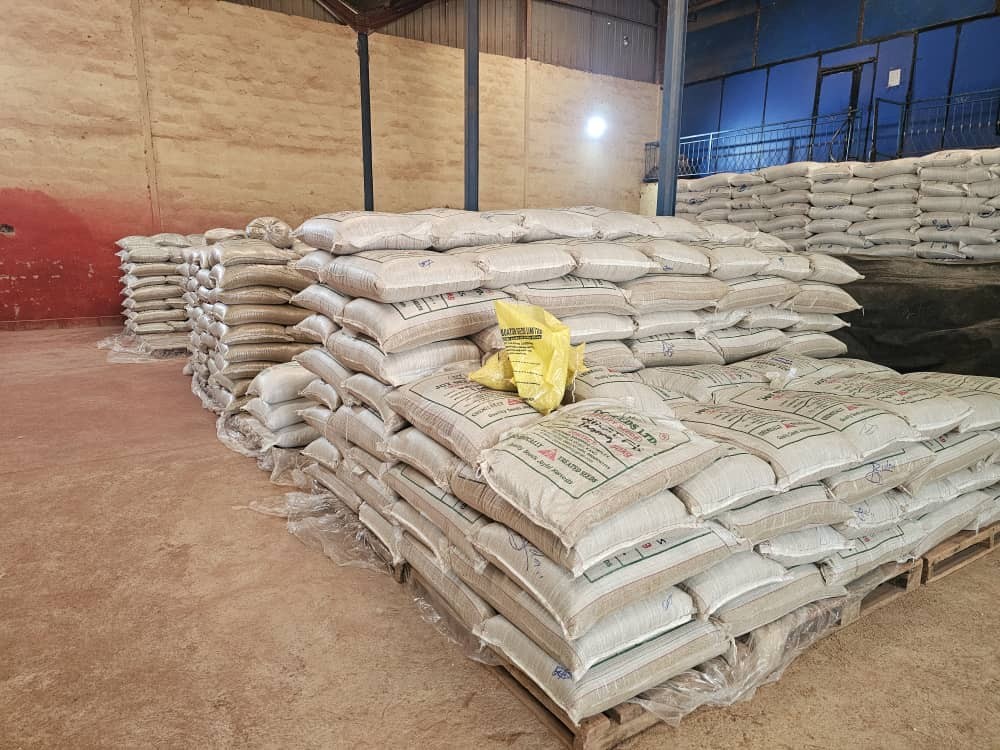
MOROTO, February 18, 2026 — The Karamoja Farmers’ Cooperative Society Limited has launched an ambitious wheat seed multiplication initiative aimed at boosting agricultural productivity and strengthening food security across the Karamoja Sub-region.
Developed in partnership with the Government of Uganda, the programme seeks to establish a self-sustaining seed supply chain within three years, ensuring farmers have reliable access to certified, high-quality seed.
The project builds on an earlier allocation of eight metric tonnes of wheat seed for rain-fed planting this season. Under the scheme, 40 members of the cooperative will be selected to cultivate five acres each.
Mark Abuku, Chairperson of the cooperative, said the Government had committed to a buy-back arrangement for harvested seed, guaranteeing participating farmers a market for their produce.
“This initiative is a game changer for us,” Abuku said at the recent launch. “During the nursery phase, our objective is rapid seed multiplication, with a target of covering 90,000 acres by March 2029. This will not only improve food security but also raise farmers’ incomes and reduce dependence on imported seed.”
Irrigation has been identified as central to the project’s success. Abuku said preference would be given to farmers with the capacity to irrigate in order to meet the March planting window amid increasingly erratic weather patterns.
“We are aware of the challenges posed by climate change, and farmers equipped with irrigation systems will be better able to adapt,” he said.
Some growers have voiced concerns about the suitability of local conditions for wheat cultivation. Bradford Ochieng, a farmer in the area, questioned whether soil texture and prevailing weather patterns would support the crop.
“My worry is that the conditions may not be suitable for wheat cultivation,” he said.
However, Abuku said extensive soil testing had been undertaken, indicating that the region’s black cotton soils were suitable for wheat production when managed correctly.
“We are confident that, with the right agronomic practices, we can achieve strong results,” he added.
Robert Atyang, an Agricultural Development Specialist advising the programme, outlined technical guidelines for participants. He recommended a seeding rate of 45 kilogrammes per acre, with 20 centimetres between rows and continuous drilling to ensure appropriate plant spacing.
“Strict adherence to these practices will be crucial to maximising yields and ensuring the success of the initiative,” Atyang said.
The cooperative believes the programme could mark a significant step towards more sustainable agriculture in Karamoja, combining government support, farmer participation and improved agronomic training to address chronic food insecurity and rural poverty in the region.
Buy your copy of thecooperator magazine from one of our country-wide vending points or an e-copy on emag.thecooperator.news


