
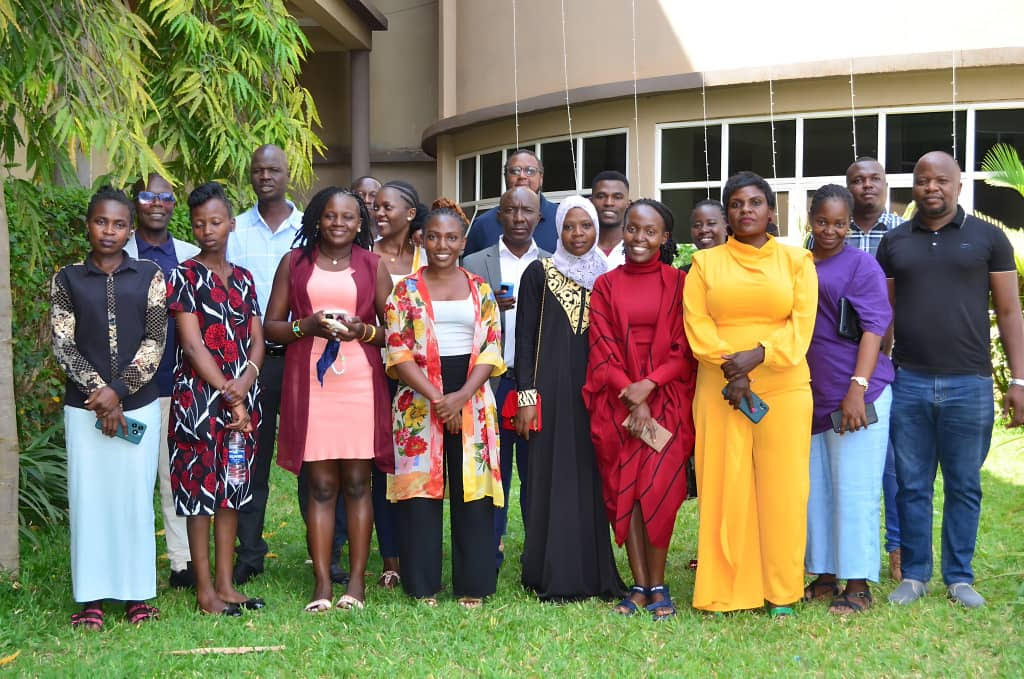
MBALE CITY, January 13, 2025 — Journalists from various media houses in Eastern Uganda have undergone training on safety measures, responsible election reporting and digital security during a four-day workshop held recently at Court View Hotel in Mbale City.
The training was organised by the Collaboration on International ICT Policy for East and Southern Africa [CIPESA] as part of efforts to promote safe, professional and ethical journalism, particularly during the election period. Uganda holds general elections this Thursday.
The workshop brought together print, radio, television and online journalists, as well as other media practitioners actively involved in news gathering and dissemination. The training aimed to prepare journalists to work safely in increasingly complex environments characterised by political tensions, digital threats and evolving technologies.
Opening the workshop, CIPESA representative Brian Byarugahanga emphasised the crucial role journalists play in strengthening democracy, accountability and good governance. He noted that while journalists are expected to inform the public accurately, they often face risks such as harassment, intimidation, surveillance and cyber-attacks, especially during elections. The training was designed to equip participants with practical skills to protect themselves both physically and digitally.
One of the key sessions focused on journalists’ safety and risk assessment. Participants were guided on how to identify political risks while covering rallies, protests and election-related events. Trainers stressed the importance of preparation, situational awareness and teamwork. Journalists were advised to always inform editors about their assignments, avoid dangerous confrontations and prioritise personal safety over exclusive stories.
The session on election reporting emphasised accuracy, balance and fairness. Journalists were reminded of their responsibility to report facts and avoid sensationalism, hate speech and misinformation. Trainers highlighted common challenges during elections, including pressure from political actors, propaganda and the spread of false information on social media. Participants were encouraged to verify information from multiple sources and give all candidates a fair hearing.
CIPESA facilitators also discussed the legal and ethical frameworks guiding election reporting in Uganda. Journalists were urged to understand media laws, electoral guidelines and professional codes of conduct to avoid unnecessary conflicts with authorities and the public. Trainers emphasised that responsible reporting helps build public trust and reduces tension during the electoral process.
A major highlight of the training was the session on digital and online safety. Journalists were informed about how their digital devices and online accounts can be targeted by hackers, particularly when reporting on sensitive issues. Trainers explained common cyber threats such as phishing, malware, account hacking and unauthorised surveillance.
Participants received practical guidance on securing their phones, computers, email accounts and social media platforms. They were trained on creating strong passwords, using two-factor authentication and recognising suspicious links and messages. Journalists were also encouraged to regularly update their software and back up important data.
The training further covered the use of virtual private networks [VPNs] as a tool to enhance online privacy and security. Trainers explained how VPNs work, their benefits and limitations, and demonstrated how they can help protect internet activity, especially when using public Wi-Fi networks in hotels, cafés and other public spaces. However, participants were cautioned to use trusted VPN services and remain aware of local laws governing internet use.
Another session addressed digital hygiene and data protection. Journalists were encouraged to minimise their digital footprints and protect sources—especially whistleblowers and vulnerable individuals—by using secure communication tools and encryption where necessary.
Participants welcomed the training, describing it as timely and relevant. Many journalists shared personal experiences of online harassment, account hacking and threats received while covering political stories, noting that the skills gained would help them work more confidently and safely.
At the close of the workshop, CIPESA reaffirmed its commitment to supporting media freedom, digital rights and the safety of journalists across Uganda and the wider region. The organisation encouraged journalists to continue learning, share knowledge with colleagues and advocate for safer working environments.
The training concluded with a call for stronger collaboration between journalists, media owners, civil society organisations and authorities to promote press freedom, digital security and responsible journalism as the country approaches critical electoral moments.
https://thecooperator.news/teso-journalists-embrace-saving-culture-to-boost-livelihoods/
Buy your copy of thecooperator magazine from one of our country-wide vending points or an e-copy on emag.thecooperator.news


