
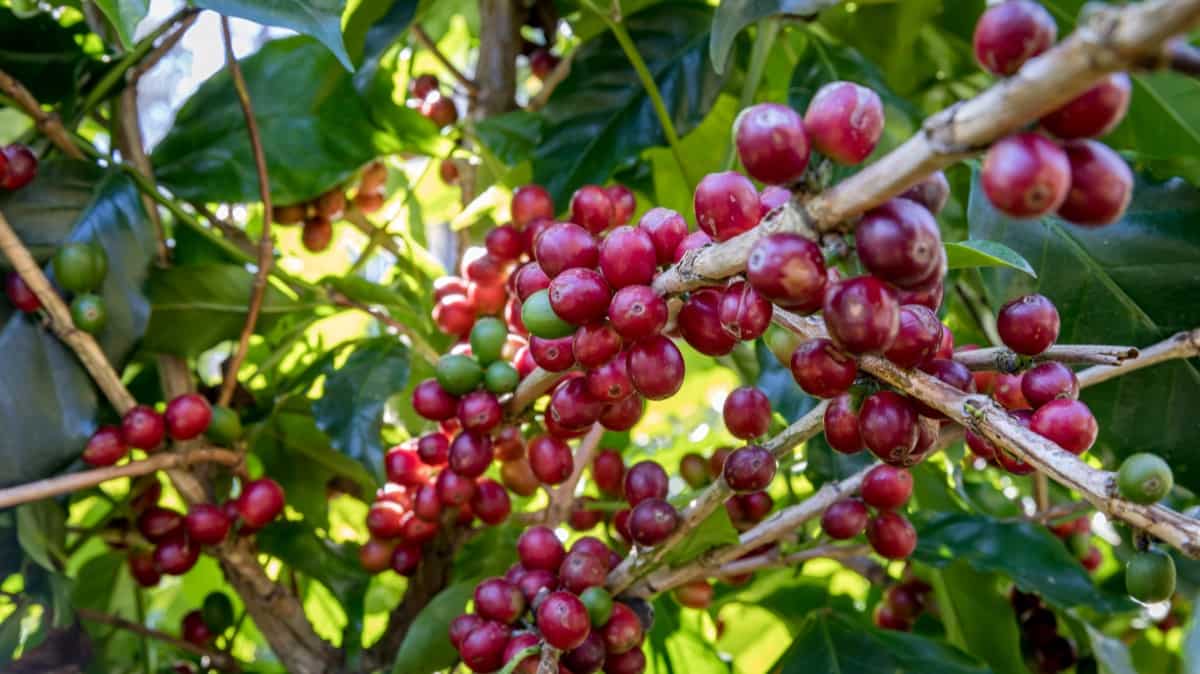
NEW DELHI, May 14, 2026 — India’s coffee production is forecast to decline in the 2026/27 marketing year as erratic weather patterns, rising input costs and pest pressures weigh on yields, particularly for the more climate-sensitive Arabica variety, according to a new report from the United States Department of Agriculture’s Foreign Agricultural Service [USDA].
USDA projects total coffee output at 6.14 million 60-kilogramme bags for the marketing year beginning in October 2026, down from an estimated 6.43 million bags in 2025/26. Arabica production is expected to fall to 1.56 million bags from 1.73 million bags, while Robusta output is forecast to edge lower to 4.58 million bags from 4.7 million bags.
India, the world’s seventh-largest coffee producer after Brazil, Vietnam, Colombia, Indonesia, Ethiopia and Uganda, exports around 95 percent of its coffee production. Robusta accounts for more than three-quarters of national output.
The USDA report said excessive rainfall during January and February, followed by prolonged dry conditions and extreme heat during the flowering and fruit-setting stage, had increased production risks for growers.
“The interval between blossom showers and backing showers is widening,” the report noted, referring to the rains critical for flowering and fruit development in coffee plantations.
The India Meteorological Department has forecast below-normal southwest monsoon rainfall at 92 percent of the long-period average, with a 66 percent probability of below-normal to deficit conditions.
Arabica yields are expected to decline by eight percent year-on-year to 452 kilograms per hectare, while Robusta yields are projected to slip by two percent to 1,239 kilograms per hectare.
Prices fall from recent highs
Farmgate coffee prices have fallen sharply since October as global supply expectations improve and domestic inventories rise.
Arabica prices have declined by 16 percent, while Robusta prices are down 11 percent. Despite the correction, Indian coffee continues to trade at a premium to competing origins such as Vietnam and Indonesia.
Traders estimate domestic stocks at between 15,000 and 17,000 metric tons, with much of the old crop purchased at elevated prices, making liquidation difficult at current market rates.
Small farmers face rising costs
The report highlighted mounting pressure on India’s nearly 250,000 coffee growers, 98 percent of whom are smallholders cultivating less than 10 hectares.
Fertiliser costs remain volatile due to global supply chain disruptions, high energy prices and geopolitical tensions affecting major exporting countries. Labour shortages have also become a growing challenge in the labour-intensive sector, where harvesting requires multiple rounds of handpicking.
Coffee cultivation costs are estimated to be about 70 percent labour-related.
Some growers have reportedly reduced on-farm processing and opted to sell fresh cherries directly to processors to cut operating expenses.
Domestic consumption expands
Despite weaker production prospects, domestic coffee consumption is expected to continue rising, driven by strong demand for soluble coffee and expanding urban coffee culture.
Domestic consumption is forecast at 1.58 million 60-kilogram bags in 2026/27, marginally higher than the estimated 1.575 million bags in 2025/26.
The report said soluble coffee would account for roughly 73 percent of household coffee consumption, supported by growth in home brewing, specialty cafés and changing consumption habits among younger consumers.
India’s per capita coffee consumption remains low at 0.04 kilograms, compared with the global average of 1.3 kilograms.
Exports seen rising on trade deals
Coffee exports are forecast to rise three percent to 6.22 million bags in 2026/27, supported by a higher exportable surplus, strong demand for soluble coffee and recently implemented trade agreements.
Italy remains India’s largest coffee buyer, followed by Germany, Russia, Belgium and the United Arab Emirates.
The report said the India–UK Comprehensive Economic and Trade Agreement and the India–European Free Trade Association Trade and Economic Partnership Agreement are expected to improve market access for value-added coffee products, particularly soluble coffee exports.
Indian exporters also benefited from tighter global supplies and reduced shipments from Vietnam and Uganda earlier in the season, helping India gain market share in Robusta and soluble coffee.
However, exporters face rising freight costs to Middle Eastern markets and increasing competition from African producers in Europe.
Production, supply and distribution
| Category | 2024/25 | 2025/26 | 2026/27 |
| Total Production (million 60-kg bags) | 6.06 | 6.43 | 6.14 |
| Arabica Production | 1.76 | 1.73 | 1.56 |
| Robusta Production | 4.30 | 4.70 | 4.58 |
| Domestic Consumption | 1.15 | 1.58 | 1.58 |
| Total Exports | 6.17 | 6.03 | 6.22 |
| Total Imports | 1.34 | 1.33 | 1.39 |
| Ending Stocks | 0.32 | 0.49 | 0.22 |
Rainfall variability raises concerns
Rainfall patterns in major coffee-growing regions underscored the volatility facing growers.
In Karnataka’s Chikmagalur district, winter rainfall between January and February was 244 percent above normal, while Kerala’s Wayanad region recorded a 48 percent rainfall deficit during the March-April pre-monsoon period.
Industry officials said increasingly erratic rainfall and heat events were creating uncertainty for production planning, even as moderate stress conditions can sometimes improve flowering and bean quality.
Long-term growth plans
India’s Coffee Board is pursuing an ambitious expansion strategy aimed at raising national coffee production to 900,000 metric tons by 2047.
Government-backed initiatives include replanting old bushes with climate-resilient varieties, improving irrigation and farm infrastructure, promoting value addition and supporting exports through trade fairs and training programmes.
The Indian coffee market is projected to grow at an annual rate of 8.9 percent by 2028, while the out-of-home coffee segment is expected to expand by as much as 20 percent annually.
https://thecooperator.news/cooperatives-poised-to-become-indias-second-growth-engine/
Buy your copy of theCooperator magazine from one of our countrywide vending points or an e-copy on emag.thecooperator.news


