
KAMPALA, March 24, 2026 — Prof. Joy C. Kwesiga, Chairperson of the National Council for Higher Education [NCHE], has called for Uganda’s higher education sector to move beyond theory and become a central driver of socio-economic transformation through research, innovation and technology transfer.
Speaking on Monday on Day One of the 7th Annual Higher Education Conference organised by NCHE in Gulu City, Prof. Kwesiga emphasised the importance of science, technology, engineering and mathematics [STEM], digital learning, and stronger partnerships between universities, industry and government to ensure graduates are job-ready and innovations reach the market.
She noted that funding remains a major constraint, urging increased investment in advanced laboratories, incubation centres and the commercialisation of student and staff innovations.
“With deliberate support, higher education can drive productivity, create wealth and position Uganda as a knowledge-based economy,” she said.
Kwesiga reaffirmed NCHE’s commitment to guiding universities and tertiary institutions to evolve into hubs of research, technology transfer, commercialisation and community engagement. She acknowledged progress across institutions but stressed that more effort is required to fully realise this mandate.
“The Council remains committed to enabling a regulatory environment that supports innovation, ensuring higher education becomes a true engine for national development,” she added.
She outlined key priorities, including curriculum innovation through embedding practical skills, entrepreneurship and problem-solving, in line with Ministry of Education and Sports requirements on competence-based pedagogy. She also highlighted digital innovation through expanded Open, Distance and e-Learning [ODeL] platforms to improve access, equity and flexibility.
Other priorities include promoting applied research to address Uganda’s development challenges and strengthening institutional governance through improved accountability, quality assurance and performance management systems.
Meanwhile, the Minister of Justice and Constitutional Affairs, Norbert Mao, urged the government to avoid constraining innovators, noting that a supportive environment would enable innovations to achieve impact more quickly.
Mao was officiating at the opening of the conference being held from March 23 to 24 under the theme: “Harnessing Innovation in Higher Education for Accelerated Economic Transformation.”
He urged scientists to develop the ability to articulate their research in straightforward language, ensuring it is comprehensible to the general public.
He emphasised the need for regulations that support innovation rather than restrict it. He also suggested using the conference to connect authorities with experts and urged academic institutions to work with leaders to protect future advancements.


NCHE Executive Director, Prof. Mary J.N. Okwakol, highlighted the central role of innovation in driving Uganda’s economic transformation and outlined the Council’s strategic interventions.
These include strengthening quality assurance frameworks and implementing the Research and Innovation Policy [2019], promoting digital learning through ODeL frameworks, particularly during the COVID-19 period—and supporting research ecosystems and the commercialisation of academic outputs.
She also pointed to efforts to foster industry collaboration, including a memorandum of understanding with the Private Sector Foundation Uganda [PSFU], to enhance market-relevant skills, as well as advancing regional integration through East African Community higher education initiatives.
Okwakol said NCHE is prioritising accreditation of STEM programmes to drive technological growth, implementing Competence-Based Education and Training [CBET] to produce job-ready graduates, and building institutional capacity through continuous training and workshops.
She called on stakeholders to address systemic barriers to innovation, particularly challenges around patenting, to unlock Uganda’s full potential in sectors such as ICT, agriculture, manufacturing and the pathogen economy.
The official also highlighted partnerships with organisations such as the Research and Education Network for Uganda [RENU], noting their role in strengthening quality assurance and promoting research.
At the regional level, she said NCHE played a leading role in organising the first Regional Ministerial Conference on the East African Higher Education Area [EACHEA], convened by the First Lady and Minister of Education and Sports and jointly organised with the Forum of CEOs of Higher Education Regulatory Agencies and the Inter-University Council for East Africa. The meeting resulted in a ministerial communiqué aimed at advancing regional integration in higher education.
Okwakol said nations that have achieved rapid transformation have leveraged higher education to drive technological innovation, skilled workforce development and knowledge-based economic growth.


She thanked the Ministry of Education and Sports, the Ministry of Finance, Planning and Economic Development, and the Office of the Attorney General for their continued support, including funding and legal guidance in executing NCHE’s mandate.
She noted that this is the third Higher Education Week to be held outside Kampala, following previous editions in Mbale [2024] and Mbarara [2025], in a bid to expand access to information and enhance nationwide visibility of higher education opportunities.
The keynote address is being delivered by Prof. Timothy M. Waema, Professor of Information Systems at the University of Nairobi, on “Reimagining Higher Education as an Engine for Innovation-Led Economic Transformation.”
He urged universities to collaborate with research institutions, government and alumni to mentor students.
“Universities should form strong partnerships by collaborating with industry for research, partnering with government for support, and engaging with the diaspora and alumni for mentorship,” he said.
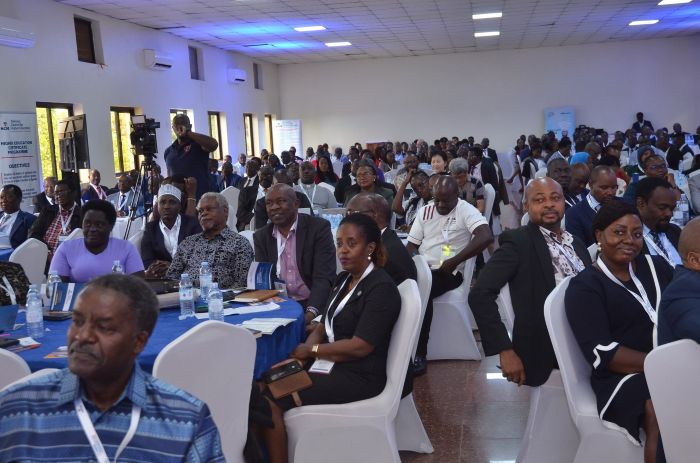
The two-day conference has brought together representatives of higher education institutions, researchers, regulators, development partners, private sector actors and policymakers to discuss innovation and the future of higher education in Uganda.
Participants are also exploring ways to strengthen innovation, entrepreneurship and start-up ecosystems within institutions to support job creation and enterprise development, with discussions focusing on competence-based curricula, innovative teaching approaches and reforms to improve graduate employability and relevance in today’s economy.


Buy your copy of thecooperator magazine from one of our country-wide vending points or an e-copy on emag.thecooperator.news
-

-

-

-

